A recent YouTube video has been making the rounds, claiming that five everyday grocery items beat eggs for building muscle after age 60, 70, even 80. The food choices are genuinely interesting, and several of them are backed by real, peer-reviewed research. But a few of the specific numbers in the video — certain percentages and “landmark studies” — don’t match what’s actually published in the scientific literature.
So instead of simply repeating the video, we went digging. We cross-checked every major claim against research from places like the American Journal of Clinical Nutrition, The Journal of Nutrition, Maastricht University, McMaster University, and systematic reviews on sarcopenia (age-related muscle loss). Below, you’ll find what’s solidly supported, what’s promising but still emerging, and what to take with a grain of salt — all explained in plain English, with practical steps you can start using today.
Why This Matters: Muscle Is Not About Vanity, It’s About Independence
After about age 50, most adults lose roughly 0.5–1% of their muscle mass every year, and that rate accelerates with each decade. This isn’t just a cosmetic issue. Muscle is what lets you rise from a chair without using your arms, catch your balance before a fall, carry your own groceries, and keep your independence. The medical term for this age-related muscle loss is sarcopenia, and it’s estimated to affect roughly 1 in 10 adults over 60 worldwide.
Here’s the encouraging part: research consistently shows that aging muscle never fully loses its ability to grow and strengthen — it just needs the right combination of nutrition and movement to respond. The barrier scientists have identified is something called anabolic resistance.
What Is Anabolic Resistance, in Plain Terms?
As we age, our muscles become less sensitive to the normal signals that trigger muscle building (called muscle protein synthesis, or MPS). A meal that would easily stimulate muscle growth in a 30-year-old may produce a smaller response in a 70-year-old — even if the actual amount of protein eaten is identical. This phenomenon is well documented in exercise science literature and is considered a key driver of muscle loss with age, alongside reduced physical activity, hormonal changes, and chronic low-grade inflammation.
The practical takeaway from decades of research out of the University of Texas Medical Branch (a real research hub on this exact topic) is that older adults typically need more protein per meal, and specifically more of the amino acid leucine, to “open the door” to muscle building. Research suggests adults need roughly 25–30 grams of high-quality protein per meal, containing about 2.5–3 grams of leucine, to reliably trigger muscle protein synthesis after age 65 — a noticeably higher bar than what’s needed in younger adults.
With that foundation in place, let’s look at the five foods.
1. Cottage Cheese: The Slow-Release Protein Most People Skip
What the video claims: Cottage cheese’s casein protein builds significantly more overnight muscle than other proteins, thanks to slow digestion.
What the research actually shows: This part holds up well. Casein — the dominant protein in cottage cheese and dairy in general — digests far more slowly than whey or egg protein, releasing amino acids into the bloodstream over several hours rather than in a quick burst. Multiple controlled trials from Maastricht University in the Netherlands have shown that consuming 20–40 grams of casein protein about 30 minutes before bed measurably increases overnight muscle protein synthesis in older men, compared to a placebo. One well-controlled study reported roughly a 22% increase in overnight muscle-building activity with pre-sleep protein.
Worth knowing: The video’s specific claim that casein beats whey by an exact percentage overnight isn’t well established — some research in fact finds little difference between whey and casein when consumed before sleep. The real, well-supported takeaway is simpler: eating a slow-digesting protein before bed appears to help, regardless of the exact source.
How to use it: A half-cup to ¾-cup serving of full-fat or 2% cottage cheese about 30 minutes before bed is a reasonable, evidence-aligned habit. If you don’t enjoy cottage cheese, plain Greek yogurt or a glass of milk offers a similar slow-protein effect.
2. Canned Sardines: Small Fish, Big Nutritional Punch
What the video claims: Sardines combine vitamin D and omega-3s in a way that dramatically slows age-related muscle wasting.
What the research actually shows: This is one of the better-supported claims in the video. A single can of sardines packed in oil delivers complete protein, a substantial dose of vitamin D, and meaningful omega-3 fatty acids — and the combination of these two nutrients does appear important for muscle health. A widely cited nutrition review on protein, leucine, omega-3s, and vitamin D in sarcopenia prevention concluded that vitamin D supplementation (roughly 800–1,000 IU/day when levels are low) and around 2–3 grams/day of omega-3s are associated with better physical function, muscle mass, and strength in older adults.
There’s also solid biological reasoning behind why vitamin D matters more with age: skin becomes measurably less efficient at converting sunlight into usable vitamin D as we get older, and muscle cells have vitamin D receptors that appear necessary for the muscle-building signal to register properly.
Worth knowing: Some large observational studies find a weaker link between vitamin D and muscle strength in the very elderly, suggesting other age-related factors may dilute the effect. Vitamin D appears to be one piece of the puzzle — important, but not a stand-alone fix.
How to use it: Two servings per week of fatty fish (sardines, salmon, mackerel) is a reasonable, research-aligned target. If sun exposure or diet is limited, ask your doctor about checking your vitamin D blood level before supplementing.
3. Full-Fat Greek Yogurt: Feeding Your Gut to Feed Your Muscles
What the video claims: Live cultures in Greek yogurt improve a “muscle quality index” by restoring gut bacteria diversity.
What the research actually shows: This idea — known as the gut-muscle axis — is a genuinely active and exciting area of research, not something invented for the video. Multiple recent reviews (including a 2024 narrative review and a 2025 systematic review on gut microbiota and sarcopenia) describe how gut bacteria produce short-chain fatty acids that appear to influence muscle metabolism, and several small trials suggest probiotics (particularly Lactobacillus and Bifidobacterium strains) may modestly improve grip strength, gait speed, and muscle mass in older or frail adults.
Worth knowing: This field is still young. Researchers themselves describe the evidence as promising but preliminary, and the dramatic specific percentage improvements claimed in viral videos generally cannot be traced to a single named study. Think of this as a reasonable, low-risk addition to your diet — not a guaranteed muscle-builder on its own.
How to use it: Choose plain, full-fat Greek yogurt labeled with “live active cultures,” and pair it with fiber-rich foods (like ground flaxseed or berries) that feed those beneficial bacteria. ¾ cup typically provides 17–20 grams of protein.
4. Lentils: A Good Food, With an Important Caveat
What the video claims: Lentils are the single most cost-effective, anabolically powerful muscle food available, even outperforming animal protein.
What the research actually shows: Lentils genuinely are an excellent food — rich in fiber, plant protein, iron, and folate. However, the claim that they outperform animal protein for muscle building isn’t well supported, and current research actually leans the other way.
Multiple recent reviews and controlled studies comparing plant and animal protein in older adults have found that plant proteins like legumes tend to produce a lower rise in blood amino acid levels than whey or other animal proteins, largely because they contain less leucine relative to their total protein content and are somewhat less digestible. A 2025 systematic review in Nutrition Reviews concluded that more high-quality trials are still needed before plant protein can be considered equally effective as animal protein for preserving muscle in aging adults.
This doesn’t mean skip the lentils. It means lentils work best as part of a combination, not as a replacement for animal or dairy protein. Pairing legumes with a smaller portion of meat, fish, eggs, or dairy in the same meal raises the overall leucine content enough to help close that gap — which is, encouragingly, close to what the video itself suggested.
How to use it: Aim for a cup of cooked lentils a few times a week, ideally paired with a dairy, egg, or modest meat/fish portion in the same meal. Adding a squeeze of lemon also genuinely does improve iron absorption from plant foods — that part of the video is accurate.
5. Whole Milk (Chocolate or Plain) After Activity — With Real Talk About Creatine
What the video claims: A specific McMaster University study found that whole chocolate milk built significantly more muscle in adults over 65 than commercial protein shakes.
What the research actually shows: We looked specifically for this study and could not verify it. The genuine, well-established research on chocolate milk and exercise recovery — including the type used to support sports-medicine recommendations — was conducted primarily in young runners, cyclists, and soccer players, not specifically in adults over 65. Those studies do show that milk’s combination of fast (whey) and slow (casein) protein alongside natural sugars supports muscle protein synthesis and recovery better than a carbohydrate-only drink. The underlying biology the video describes — a “protein-carbohydrate synergy effect” — is a real, recognized phenomenon. It just hasn’t been specifically proven in seniors the way the video implies.
Where the video is on much firmer ground: creatine. This part of the science is genuinely strong. Multiple meta-analyses (including a 2022 review of over 700 older adults) found that adding 3–5 grams of creatine monohydrate daily to a resistance-training routine measurably increases lean muscle mass and lower-body strength in older adults, with a well-documented safety profile in healthy individuals. Creatine is one of the most extensively studied and inexpensive supplements available, and the evidence in aging populations is some of the most consistent of any of the strategies discussed here.
How to use it: A glass of milk (dairy or fortified soy) after activity is a sensible, inexpensive recovery habit, even if the “65+ beats protein shakes” claim is unproven. If you and your doctor agree it’s appropriate, 3–5 grams of creatine monohydrate daily — with or without exercise — has the strongest research backing of anything on this list. Always check with your physician first, particularly if you have any kidney condition.
What the Science Actually Confirms (Quick Summary)
Strongly supported by research:
Older adults generally need more protein per meal (around 25–30g) than younger adults to trigger muscle building, due to anabolic resistance
Leucine-rich foods matter — the amino acid appears to act as a “trigger” for muscle protein synthesis
Slow-digesting protein before bed (casein-rich foods like cottage cheese, yogurt, or milk) modestly boosts overnight muscle repair
Vitamin D and omega-3 fatty acids are linked to better muscle strength and function in aging adults
Creatine monohydrate plus resistance training is one of the best-studied, most reliable strategies for building strength after 60
Promising but still emerging:
The gut-muscle axis and probiotics’ role in muscle preservation
Specific advantages of casein over whey for seniors overnight
Not well supported as stated:
Lentils as superior to, rather than complementary to, animal protein
Chocolate milk specifically outperforming protein shakes in adults over 65
Practical, Evidence-Based Tips You Can Start Today
Spread your protein out. Instead of saving most of your protein for dinner, aim for 25–30 grams at breakfast, lunch, and dinner.
Pair plant and animal proteins. Add a hard-boiled egg or a spoonful of Greek yogurt to a lentil soup to boost its muscle-building power.
Try a slow-digesting protein before bed. Cottage cheese, plain yogurt, or a glass of milk roughly 30 minutes before sleep is a low-risk, evidence-supported habit.
Eat fatty fish twice a week. Sardines, salmon, or mackerel cover both your omega-3 and vitamin D needs in one food.
Move your muscles, not just feed them. Every nutrition strategy here works far better when paired with regular resistance or strength-based activity — even light chair exercises or resistance bands count.
Ask your doctor about creatine. If appropriate for your health profile, it has some of the strongest research support of any supplement for older adults.
Don’t fear eggs. Nothing here suggests eggs are bad — they remain a high-quality, affordable protein source. The goal is variety, not elimination.
Additional suggestion: “Finally, ‘sustainability’ is just as important as nutrition and exercise. Instead of managing your muscle-focused diet and workouts alone, try sharing the experience with friends or family, or join a community. The joy of eating and walking together helps balance your hormones and reduce stress, ultimately creating the optimal environment for significant muscle growth.”
The Bottom Line
It’s never too late to invest in your muscles. The science is genuinely encouraging: even well into your 70s, 80s, and beyond, your body retains the biological capacity to build and strengthen muscle when given the right combination of adequate protein, key nutrients like leucine, vitamin D, and omega-3s, and regular movement.
The specific foods discussed here — cottage cheese, sardines, Greek yogurt, lentils, and milk — are all genuinely smart additions to an aging-friendly diet, even where some of the more dramatic claims circulating online don’t fully hold up to scrutiny. Real, sustainable strength comes not from one miracle food, but from consistent habits: balanced protein at every meal, key nutrients from a varied diet, and muscles that are challenged regularly through movement.
I hope you have a wonderful day today as well.
This article is for educational purposes and does not replace personalized medical or nutritional advice. If you have kidney disease, are on blood thinners, or take other medications, please talk to your doctor or a registered dietitian before making significant changes to your protein intake or starting any new supplement, including creatine.
Your Cholesterol Numbers Just Changed: What the 2026 Heart Guidelines Mean for You
If your doctor handed you a cholesterol report and said “you’re fine,” that conversation may need a revisit. In March 2026, the American College of Cardiology (ACC) and the American Heart Association (AHA) — along with nine other leading medical societies — released the most comprehensive update to cholesterol management guidance in nearly a decade.
The new document, officially called the 2026 Guideline on the Management of Dyslipidemia, replaces the 2018 rules entirely. And the changes are significant.
Here’s what you need to know — in plain language.
Why the Old Rules Needed an Update
The 2018 cholesterol guidelines moved away from specific LDL targets and focused instead on broad risk categories and percentage reductions. While well-intentioned, this approach left many clinicians and patients without a clear number to aim for.
Since then, science has moved fast:
New medications have proven they can reduce heart attacks and strokes dramatically
Research confirmed that lower LDL is better across the board, not just in high-risk patients
Two biomarkers — Lp(a) and ApoB — emerged as critical pieces of the heart risk puzzle
Data showed that starting treatment earlier in life produces lifelong benefits
The result is a guideline built around one central theme: “Earlier, lower, and longer” — meaning earlier intervention, lower LDL targets, and lifelong management.
The Big Picture: What’s New in 2026?
Here’s a quick overview of the headline changes before we dive deeper:
What Changed
Old (2018)
New (2026)
LDL targets
Percentage-based reductions
Clear number-based goals by risk level
Lp(a) testing
Optional
Recommended for everyone at least once
ApoB testing
Rarely mentioned
Selectively used to guide treatment
Risk calculator
Pooled Cohort Equations (PCE)
New PREVENT-ASCVD equations
New medications
Statins + ezetimibe dominant
Bempedoic acid added with Class I recommendation
When to start
Primarily middle age
Begins in childhood for high-risk families
New LDL Targets: Know Your Number Again
One of the most welcome changes for both patients and doctors: specific LDL-C goals are back.
Think of LDL-cholesterol (the “bad” cholesterol) like water pressure in a pipe — the lower the pressure, the less damage to your arteries over time. Here are your new targets:
If You’ve Already Had a Heart Attack or Stroke (Secondary Prevention)
Very high risk: LDL goal < 55 mg/dL
High risk (not “very high”): LDL goal < 70 mg/dL
Very high risk means you’ve had multiple cardiovascular events, or you have ASCVD plus conditions like diabetes, kidney disease, or elevated Lp(a).
If You’ve Never Had a Heart Event (Primary Prevention)
Borderline or intermediate risk: LDL goal < 100 mg/dL
💡 The bottom line: An estimated 1 in 4 U.S. adults has high LDL cholesterol, and over 80% of cardiovascular disease is considered preventable. Your number matters — and now there’s a clearer target to hit.
Beyond LDL: Meet Lp(a) and ApoB
This is where the 2026 guidelines get genuinely exciting for preventive medicine.
Lp(a): The Hidden Risk Factor You’ve Probably Never Heard Of
Lipoprotein(a) — pronounced “L-P-little-a” — is a cholesterol particle in your blood that’s largely determined by your genetics. It’s been known for years to increase heart risk, but it was rarely measured.
The 2026 guideline now gives it a Class I recommendation: every adult should have their Lp(a) measured at least once in their lifetime.
≥ 250 nmol/L (or ≥ 100 mg/dL): Very elevated — approximately 2× higher risk
If your Lp(a) is elevated, lifestyle changes won’t lower it much (it’s largely genetic), but the guideline recommends aggressively managing your other risk factors and intensifying LDL-lowering therapy.
🔬 New Lp(a)-specific medications are in late-stage clinical trials and may be available in the coming years.
ApoB: The “Carrier Count” That LDL Misses
Apolipoprotein B (ApoB) is a protein that coats every atherogenic (plaque-forming) particle in your blood — including LDL, VLDL, and remnant particles.
Think of it this way: your LDL cholesterol tells you how much cargo is in the trucks. ApoB tells you how many trucks are on the road.
The 2026 guideline recommends selective ApoB testing — particularly for:
People with high triglycerides
People with diabetes
Anyone who has reached their LDL goal but may still have residual risk
ApoB gives a fuller picture of cardiovascular risk when LDL cholesterol alone might be misleading.
A New Way to Calculate Your Risk
The 2026 guideline replaces the old Pooled Cohort Equations (PCE) with the AHA’s PREVENT-ASCVD equations for adults aged 30–79.
Why does this matter? The PREVENT equations:
Are more accurate for diverse populations
Estimate both 10-year and 30-year risk
Tend to run 40–50% lower than the old PCE estimates — meaning fewer people may be classified as high risk simply based on age
This is a major shift. Your 10-year cardiovascular risk might be lower under the new calculator — which doesn’t mean you should ignore cholesterol, but that treatment decisions should be personalized rather than age-driven.
Your risk categories are now:
Low: < 3% 10-year risk
Borderline: 3–< 5%
Intermediate: 5–< 10%
High: ≥ 10%
Coronary Artery Calcium: The Tie-Breaker Test
Not sure whether to start medication? A coronary artery calcium (CAC) score can help.
This CT-based test (no dye, low radiation) detects calcium deposits in your heart arteries — an early sign of atherosclerosis, even before symptoms appear.
Under the new guideline:
CAC = 0: Can reasonably delay medication and focus on lifestyle
CAC 1–99: LDL goal < 100 mg/dL
CAC ≥ 100 or ≥ 75th percentile for your age/sex: LDL goal < 70 mg/dL — start medication
The CAC score is particularly valuable when you and your doctor are on the fence about whether to start a statin.
Treatment: The New Medication Toolkit
Step 1: Lifestyle First — Always
The guideline is emphatic: healthy lifestyle is the lifelong foundation, not just a prelude to medication.
Key lifestyle recommendations include:
Diet: Emphasize vegetables, fruits, whole grains, legumes, and healthy fats (Mediterranean or DASH-style). Reduce saturated fat, trans fat, and refined carbohydrates.
Tobacco-free living: Smoking cessation remains one of the single most impactful changes you can make
Weight management: Particularly important for triglyceride levels
Step 2: Statins — Still the Foundation
For most people needing medication, a high-intensity statin (like atorvastatin or rosuvastatin) remains the first choice. The goal is at least a 50% reduction in LDL-C from baseline.
Step 3: If Statins Aren’t Enough — Or Tolerated
This is where the 2026 toolkit has genuinely expanded:
Ezetimibe: An affordable, oral pill that lowers LDL by ~20%. Still a strong first add-on therapy.
Bempedoic acid (Nexletol): A newer oral option now given a Class I recommendation. Works upstream of statins in the cholesterol pathway, lowering LDL by approximately 15–25%. Particularly useful for statin-intolerant patients. A major clinical trial (CLEAR Outcomes) showed a 13% relative reduction in major cardiovascular events.
PCSK9 inhibitors (evolocumab/Repatha, alirocumab/Praluent): Injectable medications given every 2–4 weeks that can reduce LDL by up to 60% on top of statin therapy. Now placed alongside ezetimibe in the treatment sequence — not just as a last resort.
Inclisiran (Leqvio): A twice-yearly injection targeting PCSK9 via a different mechanism (siRNA). Still being evaluated for cardiovascular outcomes, but included in the guideline as an alternative to PCSK9 monoclonal antibodies.
Icosapent ethyl (Vascepa): For people with persistently elevated triglycerides despite statins.
The era of “you’re on a statin, good enough” is over. If your LDL isn’t at goal, current guidelines support escalating treatment — with multiple proven options.
Starting Earlier: Children, Young Adults, and Special Populations
One of the strongest themes in the 2026 guideline is starting prevention earlier.
Children and adolescents with familial hypercholesterolemia (FH) — a genetic condition causing very high cholesterol — should begin lipid-lowering therapy early
Young adults with LDL ≥ 160 mg/dL or a strong family history of premature heart disease should consider medication sooner
Adults 40+ with Type 2 diabetes, CKD Stage 3+, or HIV should routinely be initiated on lipid-lowering therapy
Universal lipid testing — checking cholesterol from childhood — is now strongly endorsed
The guideline also recognizes that South Asian ancestry is an independent risk enhancer for cardiovascular disease, reflecting growing awareness of disparities in heart health risk.
Monitoring: How Often Should You Check?
Once you start or adjust treatment, the guideline recommends:
A repeat lipid panel 4–12 weeks after starting or changing therapy
Then every 6–12 months thereafter
Non-fasting testing is acceptable for most people (unless hypertriglyceridemia is a concern).
The goal isn’t just to hit a number once — it’s to maintain it long term.
Conclusion: Actionable Takeaways for Your Next Doctor’s Visit
The 2026 cholesterol guidelines represent a meaningful shift in how cardiologists think about heart disease prevention. Here’s what you can do right now:
Ask for your numbers — specifically LDL-C, non-HDL-C, and triglycerides. If you don’t know them, request a fasting lipid panel.
Get your Lp(a) tested at least once. This is now a Class I recommendation. If it’s never been measured, ask your doctor.
Know your risk category. Ask your doctor to calculate your 10-year cardiovascular risk using the new PREVENT-ASCVD equations.
If your LDL isn’t at goal, push for a treatment review. New medications are available. Bempedoic acid, PCSK9 inhibitors, and ezetimibe can be combined with statins — or used instead, if you’re statin-intolerant.
Don’t underestimate lifestyle. Medication works far better when supported by a heart-healthy diet, regular exercise, good sleep, and not smoking. These aren’t optional add-ons — they’re the infrastructure.
If you’re in a borderline zone, ask about a CAC score. It can clarify whether you need medication now or can safely delay.
⚕️ Medical Disclaimer: This article is for educational purposes only and is based on the 2026 ACC/AHA/Multisociety Guideline on the Management of Dyslipidemia (Blumenthal RS, Morris PB, et al.; published in JACC and Circulation, March 13, 2026). It is not a substitute for personalized medical advice. Please speak with your physician or cardiologist about your individual risk and treatment options.
Sources
Blumenthal RS, Morris PB, et al. 2026 ACC/AHA/AACVPR/ABC/ACPM/ADA/AGS/APhA/ASPC/NLA/PCNA Guideline on the Management of Dyslipidemia. Journal of the American College of Cardiology. Published online March 13, 2026. doi: 10.1016/j.jacc.2025.11.016
2026 Guideline on the Management of Dyslipidemia. Circulation. American Heart Association. Published March 13, 2026. doi: 10.1161/CIR.0000000000001423
American College of Cardiology. ACC/AHA Issue Updated Guideline for Managing Lipids, Cholesterol. Press release, March 13, 2026. acc.org
National Lipid Association. 2026 ACC/AHA/Multisociety Dyslipidemia Guideline Released. lipid.org, March 2026.
A Note on Mindset: Do not get too caught up in individual numbers; LDL-C levels, in particular, do not change overnight. The core principle of the 2026 guidelines is not an obsession with short-term figures, but rather sustainable, lifelong management. Following your doctor’s prescriptions for medication while making gradual lifestyle changes tailored to your personal situation is the most powerful and safe preventive approach.
Don’t ignore your family history: If a parent or sibling developed heart disease before the age of 55 (for men) or 65 (for women), you should begin screenings earlier. The most dangerous mindset is thinking, “I’m still young, so I’ll be fine.” The core principle of the 2026 guidelines is that, if you have a genetic predisposition, you should start regular consultations as early as your 20s.
These guideline changes are designed to give you more options and greater confidence. While treatment choices were once limited, we have now entered an era where you can develop a personalized strategy tailored to your needs. You can schedule an appointment with your doctor today to explore new approaches for your heart health.
A vital program is helping seniors on fixed incomes stop runaway property tax increases — and the window to apply is closing fast.
The deadline is just days away — act now
Senior Property Tax Freeze: How to Check Your Eligibility and Save Money Before the Deadline
Is Your Property Tax Rising Unfairly? The Senior Property Tax Freeze Program Could Save You Thousands
Don’t Miss the Deadline: Everything Seniors Need to Know About the Property Tax Freeze Program and Who Qualifies
If you’re a senior homeowner, you already know how much harder it’s become to stretch a fixed income. Groceries, utilities, healthcare — everything costs more. But few expenses have climbed as sharply, or as unfairly, as property taxes. The good news? There’s a program specifically designed to protect you from those skyrocketing bills — and it’s called the Senior Property Tax Freeze.
This program can lock in your property tax assessment at its current level, shielding you from the inflated valuations that have been hitting homeowners across the country. But the application deadline is almost here. Read on to find out if you qualify, what documents you need, and exactly how to apply before time runs out.
Why Property Taxes Are Rising Unfairly for Seniors
Here’s a situation that’s playing out in neighborhoods everywhere: a senior homeowner has lived in their home for 20 or 30 years. The kitchen still has the original cabinets. The carpet hasn’t been replaced since the ’90s. The roof is aging. In short — the house is a beloved, lived-in home, not a renovated showpiece.
So why is the tax bill soaring?
The culprit is blanket property re-assessments. In recent years, housing market values have skyrocketed in most parts of the country. County assessors, required to reflect market conditions, have raised assessed values across entire neighborhoods — all at once. The problem is that your home’s assessment is being compared to flipped, fully renovated homes being sold nearby, not to the actual condition of your property.
30yrs
Average time many seniors have lived in their home without major updates
↑↑
Market-driven re-assessments raising bills regardless of your home’s actual condition
$0
What you should owe in extra taxes on improvements you never made
The result is that thousands of seniors are paying taxes on a home value they’ll never see — and likely never want. They’re not selling. They’re not renovating. They’re simply trying to stay in the home they love. The Senior Property Tax Freeze exists to make that possible.
💡
Why this matters on a fixed income: When your Social Security or pension doesn’t increase at the same rate as your property taxes, you’re effectively losing ground every single year. For many seniors, unchecked property tax increases are one of the leading reasons they’re ultimately forced out of their own homes.
Who Qualifies for the Senior Property Tax Freeze?
The eligibility requirements are straightforward, and many seniors are surprised to find they already meet every single one. Here’s what you need to qualify:
✓ Age Requirement: 62 Years or OlderYou must be at least 62 years of age to apply. This applies to the property owner or co-owner on record.
✓ Ownership of the PropertyYou must own the property outright, or hold a legal or equitable interest in it. This includes many trust arrangements and life estates — so don’t assume you’re excluded if your situation is a little complicated.
✓ Primary ResidenceThe property must be your primary, principal place of residence — the home where you actually live. This program is designed for homeowners, not landlords or investors.
✓ One Property OnlyYou cannot claim this credit on more than one property. If you own multiple homes, you’ll need to designate your primary residence — the one where you live most of the time.
Important: If you have a trust, a life estate, or another form of ownership interest, you may still qualify. Contact your county assessor’s office if you’re unsure — don’t disqualify yourself before you check!
Checklist of Required Documents
Getting your paperwork together before you start the application will make the whole process much smoother. Here is everything you will need:
Document Type
What’s Accepted
Why It’s Needed
Proof of Age & Identity
Driver’s license State-issued ID Birth certificate
Confirms you are 62 years of age or older.
Parcel Identification Number (PIN)
Property tax bill County assessor website (searchable by address)
Uniquely identifies your specific property in the county system.
Proof of Ownership
Warranty deed Quitclaim deed Trust documentation
Confirms you own or hold a legal interest in the property.
Confirms that this property is where you actually live.
Quick Tip: Finding Your Parcel Identification Number
Your PIN (also called a Parcel ID or Parcel Number) is on your annual property tax bill. If you can’t find that, simply visit your county assessor’s website and search by your home address — it only takes a minute, and the number will be right there on screen.
How to Apply — or Renew — Step by Step
Whether you’re brand new to this program or you’ve applied before, the process is designed to be quick and simple. Here’s exactly what to do:
Gather Your Documents FirstBefore you sit down at the computer, pull together everything from the checklist above. Having it all in one place — your ID, your deed, and your PIN — will make the process seamless from start to finish.
Visit Your County Assessor’s WebsiteOpen a web browser and go to your local county assessor or property tax office website. Search for “Senior Property Tax Freeze” or “Senior Exemption” in the search bar. If you need help finding the right site, a quick search for “[Your County Name] property tax senior exemption” will get you there.
Complete the Online Application (First-Time Applicants)If this is your first time applying, you will fill out the full online application form. Take your time, enter your information carefully, and upload or input your documents as prompted. Most applicants find the form takes about 15 to 20 minutes to complete.
Submit and Save Your ConfirmationOnce you submit, you should receive a confirmation number or email. Save or screenshot this — it’s your proof that the application was received. Hang onto it until you receive official notification from the county.
Already Applied Last Year? Renewal Is Even Easier
Great news for returning applicants — you do not need to resubmit all of your documents. Because your information is already on file with the county, you simply need to complete a quick, streamlined renewal. Log back in to the county portal, confirm that your information is still current, and submit. That’s it. The whole process may only take a few minutes.
Need help applying? If you’re not comfortable doing this online, you don’t have to go it alone. Call your county assessor’s office directly — many offices have staff specifically available to walk seniors through the application over the phone or in person. Your local Area Agency on Aging can also help connect you with free assistance.
The Deadline Is Just Days Away — Don’t Wait
This program won’t wait, and neither should you. Every day you delay is a day closer to missing out on real, meaningful savings on your property taxes — savings that can make a genuine difference on a fixed income.
Take five minutes right now to check your county assessor’s website and confirm the exact deadline for your area. Then apply, or renew, before that date passes.Visit Your County Website NowShare This Article
Know a neighbor or family member who could benefit? Please share this article with them today. A quick text or phone call could save someone you love thousands of dollars.
Here are three things you can do right now. If you vaguely tell yourself you’ll handle it later, the deadline will slip by before you know it. Just complete these three steps today: Mark your calendar now: Write the [deadline] in big letters on your smartphone calendar or the calendar on your refrigerator. Find the official website: Search for “[Name of your county] property tax exemption” and bookmark the results page. Share this with your family: Send this post to your children or acquaintances via KakaoTalk. Simply asking, “I’m planning to apply for this—could you help me get the documents ready?” more than doubles the likelihood that you’ll actually get it done.
Disclaimer: This article is intended for general informational purposes only and does not constitute legal or financial advice. Eligibility requirements, deadlines, and application processes may vary by county and state. Please verify all program details directly with your local county assessor’s office or official government website.
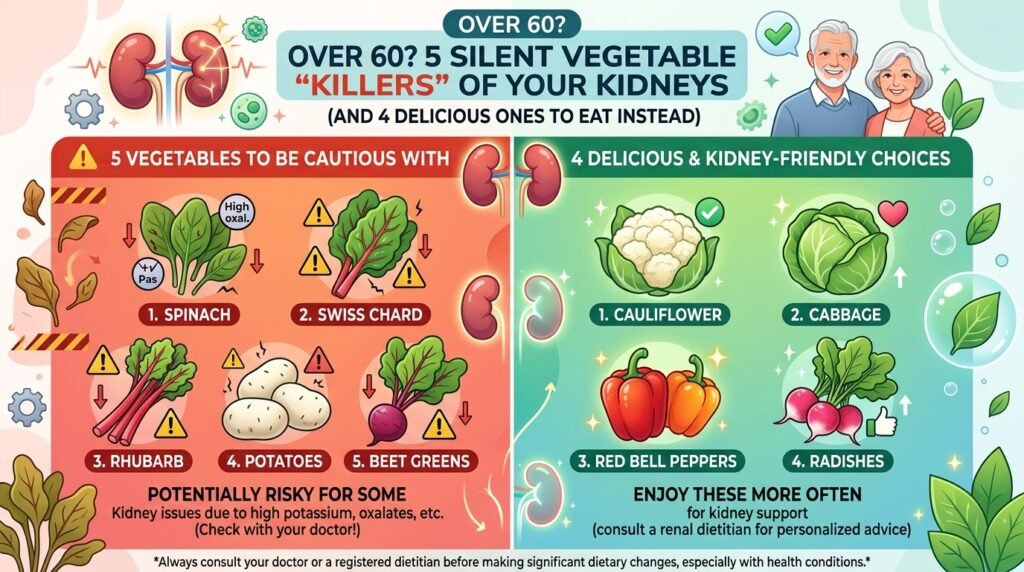
Over 60? 5 Silent Vegetable “Killers” of Your Kidneys (And 4 Delicious Ones to Eat Instead)
What your doctor wishes you knew about the “healthy” vegetables that can quietly burden aging kidneys — and the science-backed swaps that protect them.
Medically Reviewed Content | 10–12 min read | Updated June 2026
Key Takeaways — Read This First
Your kidneys change after 60. Kidney function naturally declines with age, making mineral management more critical than ever.
Some “healthy” vegetables can be problematic for aging kidneys — not because they are bad foods, but because their high potassium or oxalate content can overwhelm kidneys already working harder to keep up.
The 5 vegetables to be mindful of: Spinach, Potatoes & Sweet Potatoes, Beet Juice, Concentrated Tomato Products, and Swiss Chard.
The 4 delicious alternatives: Cauliflower, Red Bell Peppers, Garlic, and Cabbage — all low in potassium and oxalates, and full of protective nutrients.
No drastic changes without guidance. Always consult a nephrologist or renal dietitian before significantly altering your diet. Individual lab values matter enormously.
Why Kidney Health Becomes Your Silent Priority After 60
You have eaten your spinach. You have roasted your sweet potatoes. You have added beet juice to your morning smoothie. For decades, these choices felt like the definition of taking care of yourself. And for much of your life, they were exactly right.
But here is something your body may have quietly been trying to tell you: after 60, your kidneys are working under entirely different conditions.
According to the National Kidney Foundation, kidney function naturally declines with age. By the time most people reach their late 60s, their kidneys may be filtering blood at only 60–75% of the efficiency they had at 30. This age-related decline is so gradual — and so symptomless in its early stages — that the American Kidney Fund estimates 9 out of 10 people with early chronic kidney disease (CKD) don’t even know they have it.
The warning signs that do appear are easy to dismiss: a little more fatigue than usual, mild puffiness around the ankles in the evening, the occasional sensation of being foggy. Many people chalk these up to “normal aging.” Sometimes they are. But sometimes they are the kidneys’ first, quiet whispers asking for help.
This is where nutrition enters the picture — and where the story gets genuinely surprising for many seniors. The same vegetables celebrated in mainstream health media as superfoods can, in some circumstances, place a real and measurable burden on kidneys that are already working overtime. This article explains exactly why, names the specific vegetables to approach with more caution after 60, and then — crucially — gives you a satisfying, flavorful roadmap of what to eat instead.
⚠️ Important Note: The information in this article is for educational purposes only. Kidney dietary needs are highly individual and depend on your specific stage of kidney disease, current lab values (especially potassium, phosphorus, and creatinine), and other health conditions. Please work with your nephrologist and a registered renal dietitian before making significant dietary changes.
The 5 Vegetables to Watch and Limit After 60
To be clear: none of the vegetables below are “bad” in an absolute sense. For people with healthy, fully functioning kidneys, most of them are nutritional powerhouses. The issue is one of context and capacity. When kidney filtration slows, two specific compounds — potassium and oxalates — can accumulate in ways that create real health risks. The vegetables below happen to be particularly concentrated sources of one or both.
⚠️ Vegetable to Watch #1
🥬 Spinach — The Double Burden of Oxalates & Potassium
Very High OxalatesHigh Potassium (~558mg/cup cooked)Kidney Stone Risk
Spinach is one of the most celebrated vegetables in nutritional culture — and with good reason, for most people. But for those over 60 managing kidney health, it earns a unique distinction: it is simultaneously one of the highest-oxalate and highest-potassium vegetables you can eat.
The Science
A normal portion of spinach (50–100 g) delivers approximately 500–1,000 mg of dietary oxalate and can significantly increase urinary oxalate excretion, according to a widely cited review published in Frontiers in Nutrition (PMC6459305). A prospective study published in PMC Nutritional Epidemiology (PMC9632065) found that higher dietary oxalate intake was positively associated with incident CKD (Hazard Ratio 2.59) and lower eGFR values over time — meaning kidneys filtered less efficiently as oxalate consumption increased. One cup of cooked spinach also contains approximately 558 mg of potassium — nearly 28% of the daily allowance for someone in CKD stages 4–5.
When oxalates are not properly filtered (as is more likely in aging or compromised kidneys), they can bind with calcium to form calcium oxalate crystals — the most common type of kidney stone. For those who have already had a calcium oxalate stone, nephrologists often specifically recommend eliminating, not merely limiting, spinach.Practical Tip:
If you are in early-stage CKD (stages 1–2) and not hyperkalemic, small amounts may be acceptable — but confirm with your dietitian.
Boiling spinach and discarding the water can reduce oxalate content by 30–80%, but spinach starts so high that even reduced levels remain significant.
Consider switching to arugula or kale, which are far lower in oxalates while still offering iron and vitamins.
⚠️ Vegetable to Watch #2
Potatoes & Sweet Potatoes — The Potassium Powerhouses
Very High Potassium (700–900mg per medium serving)Hyperkalemia RiskHeart Rhythm Concern
Potatoes — in all their comforting forms — are one of the most consumed vegetables in the world. They are also among the most potassium-dense, which makes them a specific area of concern for seniors with declining kidney function.
The Science
A 2024 clinical study published in Kidney International Reports (PubMed ID: 38621432), involving 285 CKD patients across hospitals in Tokyo, found a direct association between potassium intake specifically from potatoes and hyperkalemia (serum potassium ≥5.0 mEq/L). Importantly, this association held even when total potassium intake from other sources did not predict hyperkalemia — suggesting something specific about the bioavailability of potassium from potatoes. Hyperkalemia is not merely a laboratory number. According to a review in Clinical and Experimental Nephrology, elevated potassium can cause dangerous cardiac rhythm changes and is associated with increased all-cause mortality in CKD patients.
A medium baked potato contains around 900 mg of potassium. A medium sweet potato comes in at approximately 540 mg. Both figures can represent an enormous portion of the daily 2,000 mg limit recommended for those in CKD stages 4–5.The Leaching Method — A Practical Reduction Strategy:
Peel and cut the potato into thin, small pieces (1-inch cubes or thinner slices).
Soak in a large bowl of warm water for a minimum of 2 hours (or overnight in cold water in the refrigerator).
Drain the water completely, rinse the pieces well, then boil in fresh water using a large water-to-potato ratio.
Drain again before eating. This process can remove up to 50% of the potassium content.
Note: Avoid skin-on preparations or baking, as these concentrate and retain more potassium.
Even with leaching, portion control remains essential. Check your own lab values with your care team before deciding how much — if any — potato to include.
Beets have earned a legitimate reputation for supporting blood pressure through their natural nitrate content. But there is a critical distinction that the health food industry rarely makes clearly: whole beets and beet juice are not the same thing from a kidney risk perspective.
The Science
Research on dietary oxalates and kidney inflammation, published in PMC Nutrients (PMC11193404), includes beets among the high-oxalate foods that may contribute 40–50% of urinary oxalate in individuals with compromised kidney function. Crucially, a review examining juiced vegetables (PMC6459305) notes that “juiced” vegetables represent a particular concern because the concentration effect dramatically increases oxalate load per volume consumed. When you juice beets, you remove the fiber that slows oxalate absorption, and you condense the oxalate and potassium content of multiple beets into a single glass. A 2026 clinical commentary noted that people with pre-existing CKD have impaired oxalate excretion, “dramatically increasing the risk of calcium oxalate crystal deposition in kidney tubules” — making concentrated beet preparations especially problematic for this population.
Think of it this way: drinking a cup of beet juice is roughly equivalent — in oxalate and potassium terms — to eating several whole beets in rapid succession, without any of the fiber that would slow absorption and signal satiety.Practical Advice:
If you enjoy beets, prioritize whole, boiled beets in small portions over juice. Boiling is the most effective preparation method to reduce oxalate content, as it leaches into the cooking water.
If you love the flavor of beet juice, diluting a small amount (2–3 tablespoons) with water or pairing it with a calcium-rich food can help bind oxalates in the gut before they reach the kidneys.
If you have a history of kidney stones or are in CKD stage 3 or higher, discuss beet products specifically with your nephrologist before consuming them regularly.
⚠️ Vegetable to Watch #4
🍅 Concentrated Tomato Products — A Hidden Potassium Trap
Very High Potassium When ConcentratedHigh Sodium (Canned)Processing Changes Everything
A single medium fresh tomato contains a moderate 290 mg of potassium — perfectly manageable for most seniors, even those in early CKD. The danger is not the tomato; it is the form the tomato takes when it passes through modern food processing.
The Science — The Numbers Tell the Story
When tomatoes are cooked down into concentrated forms, their water content evaporates but their potassium stays. A cup of tomato sauce contains approximately 728 mg of potassium — the equivalent of 2.5 medium fresh tomatoes. Tomato paste reaches approximately 670 mg per quarter cup. Sun-dried tomatoes top out at around 925 mg per half cup. Kidney Care UK’s clinical nutritional guidelines specifically advise CKD patients who need to lower potassium to avoid tomato juice and use tomato purée only in very small amounts. For context, a typical pasta dinner with one cup of tomato sauce delivers more potassium from the sauce alone than an entire banana — a food most kidney patients already know to limit.
Canned tomato products compound the issue with a second problem: added sodium. Canned tomatoes can contain 100–300 mg of sodium per serving — a serious concern for seniors managing blood pressure alongside kidney health. High sodium intake causes the body to retain fluid, raises blood pressure, and increases the kidneys’ filtration workload.Smart Swaps at the Stove:
Use one or two fresh, diced tomatoes in recipes instead of canned tomato sauce or paste.
When a recipe calls for tomato paste for depth of flavor, use just a teaspoon, then bulk up the sauce base with roasted red bell peppers or zucchini — both kidney-friendly and delicious.
Always choose “no added salt” canned tomato products and drain the liquid before using.
At restaurants, request pasta with olive oil and garlic rather than marinara, or ask for sauce “on the side” to control the amount used.
⚠️ Vegetable to Watch #5
🌿 Swiss Chard — The Double Burden Leafy Green
High Potassium (~960mg/cup cooked)Very High OxalatesDouble Risk
Swiss chard is genuinely beautiful — its colorful stalks and rich, earthy leaves make it a favorite in health-conscious kitchens. It is also, for seniors managing kidney health, one of the most important greens to monitor carefully, because it carries both of the major kidney concerns simultaneously: very high potassium and very high oxalates.
One cup of cooked Swiss chard delivers approximately 960 mg of potassium — nearly half the daily limit for someone in advanced CKD. It sits alongside spinach and beet greens as one of the leafy vegetables highest in oxalates, making it a genuine “double burden” for kidneys already under strain. Research published in NCBI on the relationship between dietary oxalate, hypertension, and CKD found that participants with higher oxalate intakes had measurably lower eGFR values (kidney filtration rates) over time — and Swiss chard is classified among the highest-oxalate foods in peer-reviewed food composition tables.
For seniors who are otherwise healthy with well-functioning kidneys and normal potassium levels, small amounts of Swiss chard are unlikely to be harmful. But for anyone navigating CKD stages 3–5 or monitoring elevated potassium, it warrants the same caution as spinach.Practical Tip:
Substitute with green cabbage, kale, or arugula for that leafy-green satisfaction with significantly lower potassium and oxalate loads.
If you love Swiss chard’s flavor, small amounts boiled and drained (discarding the water) can reduce both potassium and oxalate content modestly.
At a Glance: Vegetables to Limit vs. Vegetables to Enjoy
The table below offers a practical quick-reference comparing the key nutritional profiles of the vegetables discussed in this article. All potassium values are approximate and based on cooked/prepared servings; individual lab results should always guide specific decisions.
Vegetable
Approx. Potassium
Oxalate Level
Sodium Concern
Status
Spinach (1 cup cooked)
~558 mg
Very High (~750 mg)
Moderate
Limit
Potato (1 medium baked)
~900 mg
Very Low
Low (plain)
Limit / Leach
Sweet Potato (1 medium)
~540 mg
Low-Moderate
Low
Limit
Beet Juice (1 cup)
~440–650 mg
High (concentrated)
Low
Limit / Avoid
Tomato Sauce (1 cup)
~728 mg
Low
Very High (canned)
Limit
Swiss Chard (1 cup cooked)
~960 mg
Very High
Low-Moderate
Limit
Cauliflower (1 cup cooked)
~176 mg
Very Low
Very Low
✓ Enjoy Freely
Red Bell Pepper (1 cup raw)
~314 mg
Very Low
Very Low
✓ Enjoy
Garlic (2–3 cloves)
~36 mg
Very Low
Very Low
✓ Enjoy Freely
Cabbage (1 cup cooked)
~147 mg
Very Low
Very Low
✓ Enjoy Freely
Note: Values are approximate; always verify with a registered renal dietitian based on your personal lab results and CKD stage.
4 Kidney-Friendly Vegetables Your Kidneys Will Actually Thank You For
Here is the good news — and there genuinely is good news. You do not have to trade comfort, flavor, or satisfaction to eat in a way that supports your kidneys. These four vegetables are not just “safe” choices; they are actively nutritious, delicious, and deeply versatile.
Kidney-Friendly Choice #1
🥦 Cauliflower — The Ultimate Low-Potassium Comfort Food
Only ~176mg Potassium/CupLow OxalatesHigh in Vitamin CVersatile
If there is one vegetable that renal dietitians recommend above all others, it is cauliflower. At just 176 mg of potassium per cooked cup, it is safe for all stages of CKD. It is low in phosphorus (approximately 40 mg per cup), virtually sodium-free, and delivers around 55 mg of Vitamin C per serving — meeting over 60% of the daily requirement without the potassium penalty that comes with citrus or tomatoes.
But cauliflower’s greatest gift to seniors limiting potatoes and sweet potatoes is its incredible versatility. It can be steamed and mashed into a creamy, buttery texture nearly indistinguishable from mashed potato. It roasts beautifully with garlic and herbs. It can be riced, used as a pizza crust base, or puréed into a silky soup. When you discover cauliflower as a potato replacement, the sacrifice feels less like a restriction and more like a discovery.Try This:
Steam cauliflower florets until very tender, then blend with a small amount of unsalted butter, white pepper, and garlic — a mashed potato substitute that genuinely satisfies.
Roast cauliflower florets at 425°F with olive oil, garlic powder, and turmeric for a golden, caramelized side dish.
Kidney-Friendly Choice #2
🫑 Red Bell Peppers — Antioxidant Power in a Low-Potassium Package
~314mg Potassium/Cup (Moderate-Low)Very Low OxalatesRich in Vitamins A, C & B6Anti-Inflammatory
Red bell peppers are a standout in the renal diet — they add bold color, natural sweetness, and a satisfying crunch while keeping potassium remarkably low relative to their nutritional punch. They are an excellent source of Vitamins A, C, and B6, as well as folic acid and fiber, all without the potassium and phosphorus load that makes so many colorful vegetables problematic in kidney disease.
The National Kidney Foundation and numerous renal nutrition guidelines specifically list red bell peppers among the top recommended vegetables for CKD patients. Their natural sweetness also makes them a superb flavor replacement for high-sodium seasonings — roasted red peppers, in particular, create sauces with remarkable depth that can stand in for tomato-based preparations.Try This:
Roast red bell peppers under the broiler until charred, then blend into a smooth sauce with olive oil and garlic — a kidney-friendly pasta sauce alternative to tomato.
Stuff with a mixture of cauliflower rice, herbs, and lean protein for a satisfying one-dish meal.
Eat raw with hummus as a snack — naturally sweet, hydrating, and wonderfully crunchy.
Kidney-Friendly Choice #3
🧄 Garlic — Nature’s Most Powerful Salt Replacement
Only ~36mg Potassium per 2–3 ClovesNegligible OxalatesSupports Blood PressureAnti-Inflammatory Allicin
Garlic holds a special position in the kidney-friendly kitchen: it is one of the most powerful flavor-building ingredients in cooking, yet it contributes negligible amounts of potassium, phosphorus, or oxalates. Two to three cloves contain only approximately 36 mg of potassium — a rounding error in the context of a day’s eating.
Beyond its minimal kidney burden, garlic brings genuine benefits. Its active compound, allicin, has been studied for anti-inflammatory and cardiovascular protective properties. For seniors who need to reduce sodium — one of the most important dietary interventions in CKD for blood pressure control — garlic is arguably the single best natural flavor amplifier available. Roasting garlic mellows its bite into something sweet and complex; fresh garlic adds vibrancy; garlic powder seasons without any sodium.Try This:
Roast an entire head of garlic at 375°F for 45 minutes, then squeeze the softened cloves onto cauliflower mash, bread, or vegetables — a rich, sweet-savory condiment with virtually no kidney burden.
Use garlic powder (not garlic salt) liberally as a sodium-free seasoning on everything from roasted cauliflower to grilled chicken.
Kidney-Friendly Choice #4
🥬 Cabbage — The Underestimated Kidney Superfood
Only ~147mg Potassium/Cup CookedVery Low OxalatesCruciferous AntioxidantsAffordable & Versatile
Cabbage is perhaps the most underrated vegetable in senior nutrition. Affordable, widely available year-round, and extraordinarily versatile, it offers a genuinely impressive nutritional profile for kidney patients. At roughly 147 mg of potassium per cooked cup, it is one of the lowest-potassium vegetables you can eat, and its oxalate content is negligible.
As a cruciferous vegetable, cabbage is rich in phytochemicals and antioxidants — including glucosinolates and Vitamin K — that help the body manage oxidative stress, a key factor in CKD progression. It also provides fiber to support gut health, which in turn helps the body manage waste products that declining kidneys struggle to clear. Green cabbage, red cabbage, savoy, and bok choy all carry similar benefits, making it easy to rotate for variety.Try This:
Sauté shredded green cabbage in olive oil with garlic and a pinch of caraway seeds for a deeply satisfying, German-inspired side dish.
Use large cabbage leaves as wraps instead of bread or tortillas for a low-potassium, low-phosphorus meal base.
Add shredded red cabbage raw to salads for crunch, color, and a mild peppery note — no cooking required.
Make a simple coleslaw with white wine vinegar, a touch of olive oil, and herbs — no mayonnaise needed, and minimal sodium required.
Your Kidneys Are Whispering — It Is Time to Listen
The most important thing to take away from this article is not a list of foods to fear. It is a shift in perspective. Eating for your kidneys after 60 is not about restriction — it is about recalibration. It is about understanding that the same body that thrived on spinach salads and sweet potato fries at 40 now has different needs, different capacities, and different quiet messages it is trying to send you.
The vegetables to be mindful of — spinach, potatoes, beet juice, concentrated tomato products, and Swiss chard — are not villains. They simply carry nutrients that aging kidneys can struggle to process efficiently. And the alternatives — cauliflower, red bell peppers, garlic, and cabbage — are not consolation prizes. They are genuinely wonderful foods full of flavor, color, and nourishment.
Before making any significant dietary changes, please take this information to your nephrologist, your primary care physician, or — ideally — a registered renal dietitian. Your specific lab values (potassium, phosphorus, eGFR, creatinine) should always guide individual decisions. What is right for someone in CKD stage 2 may be very different from what is appropriate for someone in stage 4.
“Your body speaks in whispers long before it speaks in shouts. Learning to hear those whispers — and respond with intention — is one of the most loving things you can do for yourself.”
Keeping a record will put your mind at ease and facilitate productive conversations with your doctor: The best way to understand how the food you eat affects your body is to take a little time to keep a simple food diary. Briefly note down what you ate and whether you experienced any changes in fatigue or bloating afterward. The data you gather will serve as invaluable information when consulting with a nephrologist or a dietitian later on. During these consultations, you can ask specific questions about how your body reacts to certain foods; this helps in designing a more accurate, personalized diet plan and plays a crucial role in safeguarding your health. In closing: This article conveys a positive message: you have the power to manage your own health, and even small changes can dramatically reduce the burden on your kidneys. Incorporating these insights will help you view dietary management not as a chore, but as an enjoyable process of caring for yourself. Health comes first!
Medical Disclaimer: This article is intended for general educational and informational purposes only and does not constitute medical advice, diagnosis, or treatment. The content draws on published nutritional research and clinical guidelines but should not replace individualized guidance from a qualified healthcare professional. If you have been diagnosed with chronic kidney disease or are experiencing symptoms of kidney dysfunction, please consult your nephrologist, primary care physician, or a registered renal dietitian before making dietary changes. Individual nutritional needs in CKD vary significantly by disease stage and personal lab values. Sources referenced include research indexed in PubMed/NCBI (PMC6459305, PMC9632065, PMC10298248, PubMed ID 38621432, PMC11193404), the National Kidney Foundation dietary guidelines, and clinical kidney nutrition guidance from Kidney Care UK.
Introduction: You Are Not Imagining It — And It Is Not Your Fault
You know the feeling. It’s 3:07 in the morning. The room is completely dark, the house is silent, but your mind is suddenly and inexplicably wide awake — as if someone flipped a switch. You stare at the ceiling. You check the clock. You try to drift back. An hour passes.
If this happens to you regularly, you are far from alone. And here is the most important thing to understand before reading another word:
This is not simply “what getting old feels like.”
That is one of the most persistent and harmful myths in senior healthcare. The assumption that fragmented, restless sleep is an inevitable consequence of aging has led millions of older adults to silently suffer through years of exhausted mornings — and to never raise the issue with their doctor.
According to the National Institute on Aging (NIA), while sleep architecture does shift naturally with age, chronic nocturnal awakenings are not a normal or unavoidable feature of healthy aging. They are a signal — often a precise and diagnostically meaningful one — that something specific is happening inside the body.
Published research in the journal Sleep Medicine Reviews (Ohayon et al., 2004) — one of the most comprehensive meta-analyses on age-related sleep changes, covering over 65,000 subjects — found that sleep efficiency decreases and nighttime awakenings increase significantly with age. But the causes are identifiable and, in many cases, highly treatable.
There are seven distinct physiological and psychological mechanisms that conspire to pull older adults out of sleep in the second half of the night — most commonly between 2 and 4 AM. Understanding each one is the first step toward sleeping through it.
Why the Second Half of the Night Is Different: A Quick Primer
Before diving into the seven causes, it helps to understand why 3 AM is such a vulnerable time — rather than, say, midnight or 5 AM.
Human sleep follows a cyclical architecture. Each cycle lasts roughly 90 minutes and progresses through:
N1 and N2: Light sleep stages (easy to wake from)
N3: Deep, slow-wave sleep (restorative, hardest to disrupt)
REM: Rapid Eye Movement sleep (dreaming, emotional processing, memory consolidation)
In the first half of the night (roughly 10 PM to 2 AM), sleep cycles are dominated by deep, slow-wave N3 sleep — the most physically restorative stage, during which growth hormone is released and tissue repair occurs.
In the second half of the night (2 AM to 6 AM), the balance shifts dramatically. Slow-wave sleep nearly disappears, and sleep cycles become increasingly dominated by REM sleep — a neurologically active, physically lighter state.
This means the body between 2 and 5 AM is already sleeping more lightly — and is far more vulnerable to being tipped into full wakefulness by any of the seven triggers below.
“The proportion of REM sleep increases across the night, meaning that the final cycles before waking contain the highest density of REM. Any physiological disruption occurring in this window is far more likely to produce a full awakening than the same disruption earlier in the night.” — Carskadon MA, Dement WC. Principles and Practice of Sleep Medicine, 6th Edition, 2017.
Cause 1: Nocturnal Hypoglycemia — When Your Blood Sugar Drops and Your Body Panics
The Medical Reason
This cause is most prevalent — but least discussed — among seniors with type 2 diabetes, those on certain blood sugar medications, or even non-diabetic individuals who ate their evening meal very early.
Here is what happens inside the body:
In the early hours of the morning, if blood glucose drops below a threshold the brain perceives as dangerous, the body activates its emergency stress response. The adrenal glands release a surge of cortisol and adrenaline (epinephrine) — the same hormones triggered by fear or physical danger — to rapidly mobilize stored glucose and restore blood sugar levels.
The problem? This hormonal surge doesn’t just raise blood sugar. It also raises heart rate, sharpens mental alertness, and creates a physiological state of arousal — the exact opposite of sleep.
A study published in Diabetes Care (Cryer PE, 2004) characterized this as a “hypoglycemic counterregulatory response” and noted that even mild nocturnal hypoglycemia — episodes that never become symptomatic enough to wake someone fully — can produce measurable increases in cortisol and catecholamines that fragment sleep architecture.
In older adults, the glucagon response (the body’s first line of defense against low blood sugar) becomes blunted with age, making the fallback adrenaline-cortisol surge more likely and more pronounced.
⚠️ Clinical Warning: If you wake between 2 and 4 AM with a racing heart, sweating, trembling, or an intense feeling of hunger or anxiety, discuss nocturnal hypoglycemia with your physician. This is particularly urgent if you take insulin, sulfonylureas (glipizide, glibenclamide), or other hypoglycemic agents.
The Actionable Solution
Do not skip dinner. A small, balanced evening meal stabilizes overnight glucose. Aim for meals that combine complex carbohydrates with protein and healthy fat to slow glucose absorption.
Consider a small bedtime snack if your dinner is before 6 PM. A tablespoon of nut butter with a small piece of whole-grain toast, or a small handful of nuts, can buffer overnight glucose drops. Always discuss this with your physician if you are diabetic.
Avoid high-glycemic evening snacks (sweets, white bread, fruit juice). These cause a spike followed by a rapid drop — worsening the overnight hypoglycemic risk.
If you use a continuous glucose monitor (CGM): Review your overnight glucose traces with your care team. Many seniors on glucose-lowering medications run low between 2 and 4 AM without realizing it.
Cause 2: Sleep-Disordered Breathing — The Silent Interrupter
The Medical Reason
Obstructive Sleep Apnea (OSA) is dramatically underdiagnosed in adults over 60 — and it is among the most common causes of nocturnal awakening in this population.
As we age, the muscles of the upper airway — the throat, soft palate, and tongue — gradually lose tone and elasticity, just as muscles elsewhere in the body do. During sleep, when these muscles relax, a loss of sufficient muscle tone causes the airway to partially or completely collapse, blocking airflow. The brain, registering falling oxygen levels, fires an emergency arousal signal — pulling the sleeper briefly to consciousness just long enough to reopen the airway. The sleeper may or may not remember these awakenings.
According to the American Academy of Sleep Medicine (AASM), OSA affects approximately 17% of women and 34% of men in the general adult population — but prevalence rises steeply with age. Data published in the American Journal of Respiratory and Critical Care Medicine (Peppard et al., 2013) suggests that among adults over 65, more than 50% may have clinically significant OSA that remains undiagnosed.
Why does OSA cluster around 3 AM? Because as established above, REM sleep predominates in the second half of the night — and during REM, upper airway muscle tone reaches its lowest point, making airway collapse most likely and most prolonged.
Beyond sleep disruption, untreated OSA is associated with significantly elevated risk of hypertension, atrial fibrillation, stroke, and cognitive decline, as documented in the landmark Sleep Heart Health Study (NEJM, 2000, Shahar et al.) and multiple subsequent analyses.
⚠️ Warning Signs of OSA to Share With Your Doctor:
Loud, chronic snoring (often reported by a bed partner)
Waking with gasping, choking, or a feeling of breathlessness
Waking with a headache or dry mouth
Excessive daytime sleepiness despite adequate time in bed
Memory or concentration difficulties
You do not need to witness your own apneas to have OSA. The majority of patients are completely unaware of their nocturnal breathing events.
The Actionable Solution
Sleep position matters. OSA is significantly worsened by sleeping on the back (supine position), which allows the tongue and soft palate to fall toward the throat. Lateral (side) sleeping reduces apnea events meaningfully. Sewing a tennis ball into the back of a sleep shirt is a low-tech but evidence-supported method to prevent back-sleeping.
Reduce evening alcohol (addressed in detail in Cause 7). Alcohol is a potent upper airway muscle relaxant and dramatically worsens OSA.
Elevate the head of the bed 4–6 inches using risers or a wedge pillow — this uses gravity to assist airway patency.
Ask your doctor for a sleep study. Modern home sleep testing devices make diagnosis more accessible than ever. If OSA is confirmed, CPAP (Continuous Positive Airway Pressure) therapy is the gold-standard treatment and has been shown to dramatically improve sleep quality, daytime energy, cardiovascular markers, and cognitive function in older adults.
Cause 3: Nocturia and Fluid Redistribution — The Hidden Cardiovascular Mechanism
The Medical Reason
Many seniors simply assume that waking to urinate at 2 or 3 AM is an unavoidable consequence of an aging bladder or prostate. This is an oversimplification — and missing the real mechanism means missing the real solution.
Here is what is actually happening in many cases:
During the day, when older adults are upright and sedentary (sitting in a chair, walking slowly), fluid tends to pool in the lower extremities — the legs and ankles. This is exacerbated by venous insufficiency, heart failure, or the side effects of calcium channel blockers (as discussed in our companion blood pressure article). This pooled fluid does not get processed by the kidneys while you are upright.
When you lie flat in bed, gravity is no longer pulling fluid downward. That fluid — accumulated over hours of daytime inactivity — is gradually reabsorbed into the circulation and delivered to the kidneys for filtration. The kidneys process this volume surge and produce urine. This process tends to peak 2–4 hours after lying down — right around 2 to 4 AM.
This mechanism is distinct from and in addition to age-related changes in antidiuretic hormone (ADH, vasopressin) secretion. Research published in the Journal of the American Geriatrics Society (Asplund, 2004) found that older adults produce less ADH at night compared to younger adults, reducing the kidney’s ability to concentrate urine and suppress overnight urine production.
A third contributor is bladder capacity and detrusor overactivity — the aging bladder becomes less compliant and may trigger urgency signals at lower volumes. These three mechanisms often operate simultaneously.
⚠️ When Nocturia Signals Something More Serious: If you are waking more than twice per night to urinate, or if the urge is sudden and irresistible (urgency incontinence), speak with your physician. Nocturia can be a symptom of heart failure, uncontrolled diabetes, UTI, prostate enlargement (BPH), or medication effects — all of which require specific evaluation.
The Actionable Solution
Taper fluid intake in the evening. The evidence-based recommendation from the European Association of Urology (EAU) guidelines on nocturia suggests restricting fluids to small sips (not abstinence) in the 2–3 hours before bed, while maintaining adequate daytime hydration. Front-load your fluids earlier in the day.
Elevate your legs in the afternoon. Spending 30–60 minutes with your legs elevated at or above heart level in the late afternoon (3–5 PM) allows that pooled fluid to return to circulation while you are still awake — reducing the midnight redistribution surge.
Wear compression stockings during the day. Graduated compression garments reduce peripheral pooling throughout the day. Remove them at bedtime. A randomized controlled trial published in JAMA Internal Medicine (Sugaya et al., 2008) found that afternoon leg compression significantly reduced nighttime urinary frequency.
Review your diuretic timing with your physician. If you take a diuretic (water pill) like furosemide or hydrochlorothiazide, taking it early in the morning rather than the evening reduces peak urine production during sleeping hours. Do not adjust medication timing without physician guidance.
Cause 4: Circadian Cortisol Misfiring — When the Stress Clock Runs Early
The Medical Reason
Under ideal physiological conditions, cortisol — the primary stress and alertness hormone — follows a precise 24-hour rhythm. It reaches its lowest point around midnight, begins a gradual rise at approximately 4–5 AM, and peaks around 8–9 AM. This morning peak is what makes you feel alert upon waking and ready to engage with the day.
This rhythm is orchestrated by the suprachiasmatic nucleus (SCN) — a tiny cluster of neurons in the hypothalamus that serves as the master circadian clock. The SCN synchronizes bodily rhythms using environmental cues, primarily light.
In older adults, the SCN undergoes measurable structural and functional changes. Research published in Current Biology (Farajnia et al., 2012) demonstrated that the SCN’s network synchronization — the coordinated “ticking” of its individual neurons — becomes less precise with age, resulting in earlier and blunter circadian peaks.
The practical consequence: cortisol begins its morning rise prematurely, peaking at 3 AM instead of 6 AM. This generates an artificial state of physiological alertness — increased heart rate, heightened mental activity, and reduced melatonin — in the middle of the night.
This premature cortisol surge is further amplified by chronic psychological stress, social isolation, grief, and depression — all disproportionately prevalent in the senior population. The HPA axis (Hypothalamic-Pituitary-Adrenal axis), which regulates cortisol release, becomes dysregulated under chronic stress, producing flatter diurnal rhythms with higher nighttime cortisol floors.
A landmark study in Psychoneuroendocrinology (Vgontzas et al., 2001) found that patients with chronic insomnia showed significantly elevated 24-hour cortisol secretion compared to normal sleepers, with the most pronounced elevations occurring in the evening and early morning hours — exactly the window of 3 AM awakenings.
“Insomnia appears to be a disorder of hyperarousal that is present both during the day and night, mediated largely through dysregulation of the HPA axis and sympathetic nervous system.” — Bonnet MH, Arand DL. Journal of Clinical Sleep Medicine, 2010.
The Actionable Solution
Morning bright light exposure is the most powerful circadian anchor available. The SCN uses light as its primary reset signal. Sitting near a bright window (or using a 10,000-lux light therapy lamp) for 20–30 minutes within 30 minutes of waking recalibrates the circadian cortisol rhythm. A meta-analysis in Sleep Medicine Reviews (Lack & Wright, 2007) found bright light therapy to be highly effective in advancing and stabilizing circadian phase in older adults.
Consistent wake time — even after a poor night. This is among the most evidence-supported behavioral interventions for insomnia in any age group (Cognitive Behavioral Therapy for Insomnia, CBT-I). A fixed morning wake time, regardless of how little or how well you slept, stabilizes the cortisol rhythm over 7–14 days.
Manage chronic stress actively. Practices that measurably reduce HPA axis activity include: diaphragmatic breathing, progressive muscle relaxation, mindfulness meditation, and gentle yoga. A review in the Journal of Alternative and Complementary Medicine (Chen et al., 2012) found that mindfulness-based interventions significantly reduced nighttime cortisol in older adults with sleep complaints.
Reduce screen exposure at night. Blue-wavelength light from screens suppresses melatonin and confuses the SCN. The Harvard Health Letter recommends avoiding screens for at least 60–90 minutes before bed, or using blue-light filtering glasses and screen settings.
Cause 5: Nocturnal Inflammation and the Pain That Gets Louder at Night
The Medical Reason
If you have arthritis, back pain, or any chronic musculoskeletal condition, you have likely noticed that pain feels more intense, more insistent, and harder to dismiss at 3 AM than it does at 3 PM. This is not psychological. It has a well-characterized biological mechanism.
Your body’s primary natural anti-inflammatory, cortisol, is at its lowest circadian level precisely around midnight to 3 AM — its daily nadir. With minimal cortisol suppressing inflammatory processes, the pro-inflammatory cytokines (particularly IL-6, IL-1β, and TNF-α) are free to act without modulation.
Research published in the Journal of Experimental Medicine and reviewed in The Lancet has documented that IL-6, a key driver of joint inflammation in rheumatoid arthritis and osteoarthritis, follows a circadian pattern with peak production occurring in the early morning hours — precisely when cortisol is lowest and sleep is lightest.
The cruel synergy: you are sleeping in the lightest, most fragile stage of sleep (REM-dominant), at the exact time when inflammatory pain signals are at their biological peak and natural anti-inflammatory protection is at its lowest. The threshold for pain to wake you is minimized; the pain signal itself is maximized.
This is not coincidence. It is circadian biology.
A study published in Arthritis & Rheumatism (Straub & Cutolo, 2007) noted that this nocturnal inflammatory peak explains why many arthritis patients report morning stiffness — a direct clinical consequence of overnight inflammation that accumulated without adequate cortisol suppression.
The Actionable Solution
Timed anti-inflammatory dosing (chronotherapy). For patients on prescribed anti-inflammatory medications, timing matters. The concept of chronotherapy — taking medication to coincide with the body’s biological vulnerability windows — suggests taking certain NSAIDs or anti-inflammatory medications in the late afternoon or early evening to provide coverage during the overnight inflammatory peak. This must be discussed with your physician, particularly given the kidney risks associated with NSAIDs outlined in our companion article.
Gentle evening stretching. 10–15 minutes of gentle range-of-motion exercises before bed reduces nocturnal joint stiffness by maintaining synovial fluid circulation. Focus on the joints most affected (hips, knees, shoulders, spine).
Thermal support. An electric blanket, heated mattress pad, or hot water bottle directed at affected joints reduces stiffness and discomfort. Warmth increases circulation and reduces muscle guarding around inflamed joints.
Strategic pillow positioning. For hip and knee arthritis: a pillow between the knees in the lateral sleeping position dramatically reduces joint compression. For back pain: a pillow under the knees in supine position reduces lumbar strain.
Discuss low-dose evening acetaminophen with your doctor for arthritis-related nighttime pain. Unlike NSAIDs, it does not carry the kidney interaction risks described in our companion article.
Cause 6: Emotional Processing and the Weight of Sleepless Nights
The Medical Reason
This cause is perhaps the most personal — and the most frequently dismissed. But it is supported by robust neuroscientific evidence.
The brain uses REM sleep for emotional regulation and memory consolidation. During REM, the brain replays emotionally significant experiences, integrating them and “detoxing” their emotional charge — a process neuroscientist Matthew Walker of UC Berkeley describes as “overnight therapy” in his widely cited work Why We Sleep (2017).
In older adults carrying grief, chronic loneliness, anxiety, or unresolved psychological burden, the emotional processing load that REM sleep must handle becomes heavier. This creates a state of cortical hyperarousal — particularly in the amygdala (the brain’s emotional alarm center) and the prefrontal cortex — that makes the transition from REM back into deeper sleep difficult.
Research published in Biological Psychiatry (Nofzinger et al., 2004) using PET scanning demonstrated that individuals with insomnia showed significantly greater brain metabolic activity — particularly in emotion-processing regions — during all stages of sleep, including periods when they should have been in quiet, restorative states.
The COVID-19 pandemic and the increased social isolation of older adults it accelerated has made this mechanism dramatically more relevant. A 2021 study in The Lancet Psychiatry reported sharply elevated rates of loneliness, grief, and anxiety-related sleep disorders among adults over 65, with nighttime awakenings as the predominant complaint.
“REM sleep appears to function as a nocturnal soothing balm that strips the painful emotional charge from experiences, allowing us to remember facts without the raw emotional sting.” — Walker MP. Why We Sleep. Scribner, 2017.
Grief, specifically, has been associated with profoundly disrupted sleep architecture. Research in Psychosomatic Medicine (Hall et al., 1997) found that bereaved individuals showed significantly reduced REM sleep continuity and more frequent awakenings compared to age-matched controls — a biological signature of unprocessed emotional material.
The Actionable Solution
Name what you are carrying. If grief, worry, loneliness, or fear are present — acknowledge them explicitly, rather than trying to “outrun” them into sleep. The brain’s emotional processing system works with material that is recognized and named more effectively than with suppressed material.
The “worry window” technique. This evidence-based CBT-I strategy involves setting a designated 15–20 minute period earlier in the evening (not near bedtime) to intentionally write down worries, concerns, or unresolved matters. Research in Behaviour Research and Therapy (Borkovec et al.) shows this reduces intrusive nighttime cognitive arousal by “scheduling” the brain’s worry processing to a protected waking window.
Social connection as medicine. Chronic loneliness measurably elevates the HPA axis stress response and nighttime cortisol. The National Academies of Sciences, Engineering, and Medicine 2020 report on social isolation in older adults documented its profound effects on sleep quality. Regular social engagement — phone calls, community activities, video calls with family — has measurable physiological effects on sleep architecture.
Professional support.Cognitive Behavioral Therapy for Insomnia (CBT-I) is the first-line recommended treatment for chronic insomnia by the American College of Physicians and the AASM — above and before sleep medication. It directly addresses hyperarousal, anxiety, and dysfunctional sleep beliefs. Many therapists now offer telehealth sessions, removing mobility barriers for older adults. Digital CBT-I programs (Sleepio, Somryst) have also demonstrated clinical efficacy in peer-reviewed trials.
Cause 7: Caffeine’s Long Shadow and Alcohol’s Broken Promise
The Medical Reason: Caffeine After 60
Caffeine is the world’s most widely consumed psychoactive substance — and its relationship with the aging body is far more complex than most people realize.
Caffeine works by blocking adenosine receptors. Adenosine is the chemical that accumulates in the brain throughout the day, progressively increasing sleep pressure. When caffeine occupies adenosine receptors, it masks the feeling of sleepiness — not by creating energy, but by hiding the signal that tiredness exists.
The critical issue for seniors is caffeine half-life — the time it takes the body to eliminate half of a given dose.
In a healthy adult in their 30s, caffeine’s half-life is approximately 3–5 hours. But this clearance rate declines with age, as liver enzyme activity (specifically CYP1A2) slows. Research published in the Journal of Pharmacology and Experimental Therapeutics demonstrates that caffeine half-life in adults over 70 can extend to 7–10 hours or longer.
This means a 2 PM cup of coffee — entirely reasonable for most of an adult’s life — now delivers active caffeine stimulation well into the 10 PM–2 AM window. A senior who has always tolerated afternoon coffee finds, inexplicably, that it now disrupts sleep. The coffee hasn’t changed. The metabolism has.
Additionally, caffeine-containing substances extend well beyond coffee:
Source
Caffeine Content (Approximate)
Brewed coffee (8 oz)
95–200 mg
Black tea (8 oz)
40–70 mg
Green tea (8 oz)
25–45 mg
Cola drinks (12 oz)
30–45 mg
Dark chocolate (1.5 oz)
25–35 mg
Decaffeinated coffee (8 oz)
2–15 mg (not zero!)
Some headache medications
30–65 mg per dose
⚠️ Practical Rule for Seniors: The American Academy of Sleep Medicine recommends avoiding caffeine for at least 6 hours before bed. Given the extended half-life in older adults, a conservative recommendation moves the caffeine cutoff to 12–1 PM, particularly for those with sleep complaints.
The Medical Reason: Alcohol’s Broken Promise
Alcohol is the most common self-prescribed sleep aid in older adults — and one of the most pharmacologically counterproductive choices for sleep quality.
A glass of wine at dinner feels sedating. And in the first phase of the night, it is sedating — alcohol facilitates N2 and N3 sleep in the early part of the night. This is the promise.
Here is the betrayal: Alcohol is metabolized relatively quickly. As its blood concentration falls in the second half of the night (around 2–4 AM), it triggers a rebound sympathetic activation — increased cortisol, adrenaline, and brain arousal activity.
Critically, alcohol is a potent suppressor of REM sleep. A meta-analysis published in Alcoholism: Clinical and Experimental Research (Ebrahim et al., 2013) reviewed 27 studies and found that alcohol consumption before bed consistently reduced REM sleep in the first half of the night and caused a REM rebound with sleep fragmentation in the second half. The paper noted:
“Alcohol may aid sleep onset, but its overall effect on sleep architecture is disruptive, particularly for REM sleep in the second half of the night.”
The second-half rebound awakening is precisely the 3 AM pattern that millions of seniors experience after an evening drink — never connecting the two events because hours have passed between them.
Alcohol also significantly worsens obstructive sleep apnea (Cause 2), relaxing upper airway muscles further and increasing both the frequency and duration of apnea events.
The Actionable Solution
For Caffeine:
Identify and map all caffeine sources in your day (including tea, cola, chocolate, medications)
Establish a personal caffeine cutoff of noon to 1 PM — especially if you have sleep complaints
If you enjoy the ritual of a warm evening beverage, transition to herbal teas (chamomile, valerian root, lemon balm) — none of which contain caffeine and several of which have mild, evidence-supported anxiolytic and sedative properties
For Alcohol:
Reframe the “nightcap” habit. Recognize explicitly that the relaxation felt from evening alcohol is borrowed from the second half of your night’s sleep quality
If complete elimination is not desired: limit to one drink, consumed with dinner (not after), allowing maximum clearance time before sleep
Replace the evening ritual with non-alcoholic alternatives: warm herbal tea, sparkling water with citrus, alcohol-free wine or beer
If alcohol has become a regular sleep aid, speak with your physician. Dependence can develop quietly, and abrupt cessation of heavy alcohol use can carry its own medical risks requiring supervised management
A Note on Polypharmacy: Your Medications May Be Part of the Picture
Because this guide is aimed at seniors — many of whom manage multiple chronic conditions — it would be incomplete without acknowledging that medications themselves are a major and underappreciated cause of nocturnal awakenings.
The following medication classes are commonly prescribed in older adults and known to affect sleep architecture:
Paradoxical stimulation in older adults; cognitive risks
Cholinesterase inhibitors
Donepezil (Aricept)
Increases REM; can cause vivid dreams and nocturnal awakening
⚠️ Bring a complete medication list — including over-the-counter products and supplements — to your physician when discussing sleep. Never assume an OTC product is “safe” from a sleep perspective.
Conclusion: 3 AM Is Not Your Enemy — It Is a Messenger
Waking at 3 AM, night after night, is exhausting in a way that is difficult to fully convey to someone who hasn’t experienced it. The fatigue accumulates. The mornings feel compromised before they begin. The frustration of lying awake in a silent house, waiting for sleep that won’t return, carries its own quiet weight.
But you have now read what the science says: these awakenings are not random. They are not inevitable. They are not simply aging. Each one has a mechanism — and most of those mechanisms have specific, practical, evidence-based responses.
You may not find that a single intervention transforms your sleep. Sleep restoration in older adults is frequently a layered process, addressing multiple contributing factors simultaneously. But every factor you identify and address reduces the total nocturnal burden — and over days and weeks, those changes accumulate.
The most powerful next step you can take is the one that happens in daylight, at your doctor’s office, armed with the right questions.
Smart Questions to Ask Your Doctor at Your Next Visit
About Nighttime Awakenings — Understanding Your Specific Pattern:
I wake consistently around 2–4 AM and can’t get back to sleep. Can we investigate what’s causing this specifically in my case?
Could any of my current medications be contributing to my nighttime awakenings or reducing my sleep quality?
Should I track my sleep patterns in a sleep diary before our next appointment?
About Sleep-Disordered Breathing:
Given my age and symptoms, should I be evaluated for obstructive sleep apnea?
What type of sleep study would you recommend — an in-lab study or a home sleep test?
If I have sleep apnea, what are my treatment options beyond CPAP?
About Nocturia:
I wake 2–3 times per night to urinate. Is this a bladder issue, a fluid redistribution issue, a medication issue, or something else?
Should I change the timing of my diuretic to reduce nighttime urination?
Would compression stockings help with my leg fluid and reduce nighttime bathroom trips?
About Blood Sugar and Nocturnal Hypoglycemia:
Could my blood sugar be dropping in the early morning hours and triggering wakefulness?
Should I monitor my blood glucose at 3 AM for a few nights to check for nocturnal hypoglycemia?
Is a small bedtime snack appropriate for my situation?
About Stress, Mood, and Emotional Wellbeing:
Could anxiety, grief, or depression be contributing to my sleep disruption? Can you refer me for an assessment?
Is there a CBT-I therapist or sleep specialist you would recommend?
Are there non-medication approaches to sleep you’d suggest before considering prescription sleep aids?
About Medications and Sleep Hygiene:
Are any of my current medications known to disrupt REM sleep or cause nighttime wakefulness?
Is melatonin appropriate for my situation — and if so, what dose and timing would you recommend?
I drink a glass of wine most evenings. How might this be affecting my sleep, given my current medications?
“On Mindset: Quieting the Anxiety of Sleeplessness” Anxiety, worry, and racing thoughts—such as the fear of waking up at 3 a.m. again—are the biggest obstacles to sleep. It is only natural for sleep quality to differ in your sixties compared to your twenties. Let go of the “obsession with perfect sleep”—the idea that you must sleep for seven hours straight. Even if you get a little less sleep, your body will naturally recover as needed, provided you remain active and energetic during the day. If you do wake up at 3 a.m., view it with a relaxed attitude: simply tell yourself your body is taking a brief rest. Instead of forcing yourself to fall back asleep, lie there with the mindset of enjoying a peaceful meditation. Sleep will come naturally.
References & Further Reading
Ohayon MM, et al. Meta-analysis of quantitative sleep parameters from childhood to old age in healthy individuals. Sleep. 2004;27(7):1255–1273.
Carskadon MA, Dement WC. Normal human sleep: an overview. In: Kryger M, Roth T, Dement WC, eds. Principles and Practice of Sleep Medicine. 6th ed. Elsevier; 2017.
Cryer PE. Hypoglycemia: the limiting factor in the glycaemic management of type I and type II diabetes. Diabetologia. 2002;45(7):937–948.
Peppard PE, et al. Increased prevalence of sleep-disordered breathing in adults. American Journal of Epidemiology. 2013;177(9):1006–1014.
Shahar E, et al. Sleep-disordered breathing and cardiovascular disease: cross-sectional results of the Sleep Heart Health Study. American Journal of Respiratory and Critical Care Medicine. 2001;163(1):19–25.
Asplund R. Nocturia in relation to sleep, somatic diseases and medical treatment in the elderly. BJU International. 2002;90(6):533–536.
Farajnia S, et al. Evidence for neuronal desynchrony in the aged suprachiasmatic nucleus clock. Journal of Neuroscience. 2012;32(17):5891–5899.
Vgontzas AN, et al. Chronic insomnia is associated with a shift of interleukin-6 and tumor necrosis factor secretion from nighttime to daytime. Metabolism. 2002;51(7):887–892.
Ebrahim IO, et al. Alcohol and sleep I: effects on normal sleep. Alcoholism: Clinical and Experimental Research. 2013;37(4):539–549.
Walker MP. Why We Sleep: Unlocking the Power of Sleep and Dreams. Scribner; 2017.
Straub RH, Cutolo M. Circadian rhythms in rheumatoid arthritis: implications for pathophysiology and therapeutic management. Arthritis & Rheumatism. 2007;56(2):399–408.
Nofzinger EA, et al. Functional neuroimaging evidence for hyperarousal in insomnia. American Journal of Psychiatry. 2004;161(11):2126–2128.
National Academies of Sciences, Engineering, and Medicine. Social Isolation and Loneliness in Older Adults. National Academies Press; 2020.
A 15-Minute Emergency Plan for Waking Up at 3 AM If you suddenly wake up at 3 AM and struggle to fall back asleep, avoid the urge to check the clock or force yourself to sleep; doing so actually makes your brain more alert. Instead, try the 15-minute routine below. Try not to overthink it or let worries weigh on you. This process isn’t about forcing your body to sleep, but rather recreating an environment conducive to sleep for your brain. 15-Minute Routine: Switching Your Brain Back to Sleep Mode Step 1: Don’t Check the Time (Immediate) The moment you look at the clock, your brain starts calculating, “How much time do I have left to sleep?” This pressure instantly wakes up your brain. Avoid keeping a clock right next to your bed. Step 2: Apply the ’20-Minute Rule’ (5 Minutes) If you’ve been tossing and turning in bed for more than 20 minutes, get up. You don’t want your brain to associate the bed with the stress of being unable to sleep. Go to the living room and sit in a comfortable chair. Step 3: Minimize Lighting (5 Minutes) Don’t turn on all the lights in the bathroom or living room. Use only indirect lighting or a small nightlight. Bright light suppresses melatonin production and signals to your brain that it is daytime. Step 4: Engage in a Calm Activity (Remaining 5 Minutes) Absolutely avoid looking at your smartphone. Instead, read a boring book, listen to soft classical music, or simply close your eyes and focus on your breathing. Step 5: Return to Bed (When Sleepy) Once your eyelids feel heavy and you start yawning, go back to bed and try to sleep. ⚠️ Habits to Avoid Checking your smartphone before bed: Checking social media, news, or emails instantly shifts your brain into an active state. Opening the fridge at night: Eating a late-night snack activates your digestive system and raises your body temperature, making it difficult to return to deep sleep. Perfectionism: Obsessing over the need to get a full eight hours of sleep can worsen insomnia. A flexible mindset—knowing that you can still be energetic tomorrow even with a little less sleep—is the most powerful sleep aid. Remember: Waking up at 3 a.m. doesn’t mean something is wrong with your body; it is simply a brief pause in rest. Instead of forcing yourself to sleep, try lying there with a calm, meditative mindset, and you will soon drift back into a peacefu slumber.
This article was written for educational purposes only. Sleep medicine is a specialized field, and the appropriate evaluation and treatment of sleep disorders requires individualized clinical assessment. Please discuss any concerns with your qualified healthcare provider.
⚠️ Medical Disclaimer: This article is for informational purposes only and does not constitute professional medical advice, diagnosis, or treatment. Always consult a qualified healthcare provider before altering your sleep routine, diet, or medication regimen.
Every morning, millions of Americans over 60 reach for a small pill — often without a second thought. It’s become as automatic as brushing teeth. But that tiny tablet is doing something remarkable inside your body: it’s actively pushing back against one of the most silent, persistent threats to your heart, brain, and kidneys.
According to the American Heart Association (AHA), nearly 70% of adults aged 65 and older have hypertension — and the majority of them are managing it with at least one prescription medication. Many are on two or three.
Here is the truth that most appointment rooms don’t have time to fully explain: the safest patient is an informed patient. Knowing how your medication works, why certain everyday habits can quietly sabotage it, and what warning signs to never ignore can make the difference between a medication that protects you and one that harms you.
This guide is written with one goal: to give you — or the person you love and care for — the knowledge to take these medications as effectively and safely as possible.
We will focus on the three most commonly prescribed antihypertensive drug classes in patients over 60:
Let’s start with how they work — because understanding the mechanism is the foundation of taking them wisely.
Part 1: How These Three Medications Actually Lower Your Blood Pressure
The Garden Hose Analogy
Imagine your circulatory system as a garden hose connected to a pump (your heart). High blood pressure means the water pressure inside that hose is dangerously high. This can happen for two main reasons: either the hose walls are too stiff and narrow, or the pump is pushing too forcefully, or both.
Each of the three drug classes attacks this problem from a completely different angle. Understanding those angles helps you understand the side effects — and why certain combinations with food or other drugs can be risky.
Calcium is the key that tells your blood vessel smooth muscle cells to contract and tighten. Amlodipine works by physically blocking the calcium channels on these cells — preventing that contraction signal from getting through.
The result? Arterial walls relax and widen (vasodilation). A wider “hose” means less resistance, and less resistance means lower blood pressure.
According to the 2017 AHA/ACC Hypertension Guidelines (Whelton et al., Hypertension, 2018), calcium channel blockers are a first-line recommended therapy, particularly effective in older adults and patients of African American descent, populations in whom the renin-angiotensin system tends to be less active.
Clinical Note: Amlodipine has a uniquely long half-life of approximately 30–50 hours, which means it works gradually and steadily. This is why missing a single dose rarely causes an immediate crisis — but consistent daily use is still critical for sustained blood pressure control.
The Mechanism: Blocking the Body’s “Pressure Hormone” Factory
Your kidneys and lungs participate in a hormonal relay race called the Renin-Angiotensin-Aldosterone System (RAAS). Think of RAAS as your body’s internal pressure-management department. When it senses low blood pressure or low blood volume, it releases a cascade of hormones that ultimately produce Angiotensin II — a potent vasoconstrictor that tightens blood vessels and tells the kidneys to retain more sodium and water.
ACE (Angiotensin-Converting Enzyme) is the factory worker that converts an inactive precursor into Angiotensin II. Lisinopril blocks that factory worker.
No ACE = No Angiotensin II = Blood vessels stay relaxed = Lower blood pressure.
As documented in landmark studies including the HOPE Trial (NEJM, 2000, Yusuf et al.) and the ALLHAT Trial (JAMA, 2002), ACE inhibitors have demonstrated not only blood pressure reduction but also significant reduction in cardiovascular events and protection of kidney function in diabetic patients.
Clinical Note: ACE inhibitors are especially beneficial for patients with diabetes, chronic kidney disease (CKD), or heart failure, as they reduce the filtration pressure inside the kidneys, slowing the progression of renal damage.
Key Characteristics at a Glance:
Feature
Detail
Drug Class
ACE Inhibitor
Primary Action
RAAS inhibition (blocks Angiotensin II production)
The Mechanism: Blocking the “Pressure Hormone” at the Door
If ACE inhibitors stop Angiotensin II from being made, ARBs take a different approach: they let the body produce Angiotensin II but block the receptor door it needs to enter to trigger its effects.
Losartan selectively blocks the AT₁ receptor — the key receptor responsible for vasoconstriction and aldosterone release. The result is clinically similar to ACE inhibitors in terms of blood pressure reduction and kidney protection.
The LIFE Trial (The Lancet, 2002, Dahlöf et al.) demonstrated that losartan was superior to atenolol in reducing cardiovascular morbidity and mortality in hypertensive patients with left ventricular hypertrophy, establishing ARBs as a major pillar of antihypertensive therapy.
Clinical Note: Because ARBs do not affect bradykinin levels (unlike ACE inhibitors), they are far less likely to cause a dry cough. This makes them the preferred alternative for patients who cannot tolerate ACEIs due to cough.
Blocks ACE enzyme → stops Angiotensin II production
Blocks AT₁ receptor → Angiotensin II can’t act
Primary Benefit
Vasodilation, anti-anginal
Cardio + renal protection
Cardio + renal protection, no cough
Main Side Effect
Ankle swelling (edema)
Dry cough, rare angioedema
Minimal; occasional dizziness
Potassium Risk?
No
Yes — can raise potassium
Yes — can raise potassium
Kidney Caution?
Minimal
High (avoid with NSAIDs)
High (avoid with NSAIDs)
Good For Diabetes?
Moderate
Strongly preferred
Strongly preferred
Cough Risk?
None
Yes (10–15% of patients)
Very rare
Part 2: Side Effects You Should Never Dismiss
Ankle Swelling (Peripheral Edema) — The Amlodipine Footprint
Ankle swelling is the most common complaint among patients taking calcium channel blockers like amlodipine. Studies suggest it affects anywhere from 5% to 30% of patients, with higher rates at higher doses.
Why does this happen?
Amlodipine relaxes arterioles (small arteries) more effectively than venules (small veins). This mismatch creates a slight pooling of fluid in the capillaries of the lower legs — particularly noticeable by the end of the day or after prolonged standing.
⚠️ Important Distinction: This swelling is not a sign of heart failure. It is a pharmacological side effect caused by the medication’s action on blood vessel walls. However, it’s critical to have your doctor confirm this, because leg swelling can be a symptom of heart failure and should always be evaluated clinically.
What to do:
Elevate your legs when sitting or resting
Avoid prolonged standing without movement
Report persistent or worsening swelling to your physician
Never stop amlodipine on your own — your doctor may adjust the dose or switch medications
The Dry Cough — Lisinopril’s Calling Card
If you’ve been taking lisinopril and developed a nagging, tickling, dry cough that doesn’t seem to be from a cold — the medication is almost certainly the culprit.
The mechanism: ACE inhibitors block the enzyme that also breaks down bradykinin, a naturally occurring peptide. As bradykinin accumulates in the airways, it triggers cough receptors. This is a class effect — it happens with all ACE inhibitors, not just lisinopril.
According to a meta-analysis published in the British Journal of Clinical Pharmacology (Bangalore et al.), the incidence of ACEI-induced cough is approximately 10–15% in White patients and significantly higher — up to 30–40% — in patients of Asian descent, due to genetic differences in bradykinin degradation.
⚠️ Key Point: The cough is not dangerous, but it is often distressing enough that patients stop taking their medication without telling their doctor — a far more dangerous decision. If cough is an issue, speak to your physician. Switching to an ARB (like losartan) completely eliminates this side effect.
Angioedema — The Rare but Life-Threatening Warning
This is one of the most critical safety warnings associated with ACE inhibitors and, rarely, ARBs.
Angioedema is a sudden, rapid swelling of the deeper layers of skin — most dangerously in the lips, tongue, throat, and airways. It can occur within hours of the first dose or, critically, even after years of uneventful use.
According to the AHA Scientific Statement on Angioedema and data from the Journal of Allergy and Clinical Immunology, ACE inhibitor-induced angioedema occurs in approximately 0.1–0.7% of patients but accounts for up to 30% of all emergency room visits for angioedema.
🔴 EMERGENCY ALERT: If you or someone in your care experiences sudden swelling of the lips, tongue, throat, or face — or difficulty swallowing or breathing — call 911 immediately. This is a medical emergency. Do not wait to see if it resolves on its own.
Risk factors for angioedema:
African American patients (3–5x higher risk compared to White patients)
History of previous angioedema (absolute contraindication to re-challenge)
Concurrent use of other medications affecting bradykinin pathways
Part 3: Hidden Dangers in Your Kitchen and Medicine Cabinet
The Salt Substitute Trap: A Risk of Hyperkalemia
This is one of the most underappreciated dangers for patients on ACE inhibitors or ARBs, and it hides in plain sight on supermarket shelves.
Many seniors are appropriately advised to reduce sodium intake. In response, they (or their well-meaning family members) purchase potassium-based salt substitutes — products like NoSalt, Nu-Salt, or Morton Salt Substitute. The label looks healthy. The intention is correct. But for someone on lisinopril or losartan, this can be genuinely dangerous.
Why?
Both ACE inhibitors and ARBs reduce aldosterone levels. Aldosterone is the hormone that tells the kidneys to excrete potassium. With less aldosterone activity, the kidneys naturally retain more potassium. Adding large amounts of dietary potassium on top of this creates a risk of hyperkalemia — dangerously elevated blood potassium levels.
According to guidelines from the National Kidney Foundation and published reviews in the American Journal of Kidney Diseases, hyperkalemia can cause:
Muscle weakness and fatigue
Cardiac arrhythmias (irregular heartbeat)
In severe cases, cardiac arrest
⚠️ Practical Warning for Caregivers: Before switching to a low-sodium salt alternative, always check with the patient’s physician or pharmacist — especially if the patient is on an ACEI, ARB, or any potassium-sparing diuretic (like spironolactone). This interaction is silent, has no obvious immediate symptoms, and is discovered on a blood test.
Other high-potassium foods to be mindful of (not eliminate, but be aware of):
Bananas, oranges, avocados
Potatoes, sweet potatoes, tomato products
Beans, lentils, nuts
Moderation and monitoring, not avoidance, is the clinical approach. Your physician will track potassium through regular blood panels.
The Triple Whammy: Why Ibuprofen and Naproxen Are Dangerous With These Medications
This is one of the most important drug interactions in cardiovascular medicine, and it’s named with good reason: the “Triple Whammy” combination can cause acute kidney injury (AKI) within days.
The combination is:
An ACE Inhibitor or ARB (e.g., lisinopril or losartan)
A Diuretic (e.g., furosemide, hydrochlorothiazide) — commonly prescribed alongside antihypertensives
The kidneys maintain their filtration pressure using two sets of blood vessels — the afferent (incoming) and efferent (outgoing) arterioles. ACEIs/ARBs dilate the efferent side. NSAIDs constrict the afferent side by blocking prostaglandins that keep it dilated. Diuretics reduce overall blood volume. Together, these three actions collapse the pressure gradient the kidneys need to filter blood — leading to acute kidney injury.
This interaction was formally characterized in a landmark study published in PLOS Medicine (Lapi et al., 2013), which found that patients on this triple combination had a 31% higher risk of acute kidney injury in the first 30 days compared to patients not taking all three drugs.
⚠️ Practical Rule: If you are on lisinopril, losartan, or any blood pressure medication and need pain relief — always speak to your pharmacist or doctor first. Acetaminophen (Tylenol) is generally a safer first-line option for pain management in this population, at appropriate doses. Do not assume over-the-counter pain relievers are automatically safe with your prescriptions.
NSAIDs commonly found in households — know these names:
Brand Name
Generic Name
Form
Advil, Motrin
Ibuprofen
Tablet, gel cap, liquid
Aleve
Naproxen
Tablet
Excedrin (some formulations)
Aspirin + other agents
Tablet
Many arthritis/cold formulas
Often contain ibuprofen
Check label carefully
Part 4: What to Do When You’re Dehydrated or Ill
Illness, Diarrhea, and Blood Pressure Medications: A Conversation You Must Have With Your Doctor
Dehydration dramatically amplifies the blood pressure-lowering effects of antihypertensive medications — and during illness (vomiting, diarrhea, fever, reduced fluid intake), this becomes a real clinical concern, especially in older adults.
The physiology: Your kidneys use blood volume as a reference point to maintain pressure. When you are dehydrated, your blood volume drops. Medications that are still lowering your blood pressure on top of this depleted volume can cause hypotension — blood pressure that is too low — leading to dangerous dizziness, falls, fainting, or even kidney injury.
This is particularly relevant for patients on:
ACE inhibitors or ARBs (which affect the kidney’s pressure regulation)
Diuretics (which already reduce blood volume)
The “Sick Day Rule”: Many cardiologists and nephrologists provide patients with explicit “sick day rules” — instructions for temporarily adjusting or holding certain medications during acute illness with dehydration. Ask your doctor, before you get sick, exactly what you should do with each of your blood pressure medications if you develop a gastrointestinal illness or cannot eat or drink normally for more than 24 hours.
Signs your blood pressure may be dropping too low:
Dizziness or lightheadedness, especially when standing up (orthostatic hypotension)
Unusual fatigue or weakness
Blurred vision
Feeling faint
When in doubt during illness: Call your doctor or pharmacist. Do not simply skip doses unpredictably without guidance — and do not power through without fluids. Adequate hydration is both preventive medicine and supportive care.
Part 5: Home Blood Pressure Monitoring — Doing It Right
Why Home Readings Matter More Than You Think
A single blood pressure reading in a doctor’s office is a snapshot — and it’s often artificially elevated. The “white coat effect” (elevated BP due to clinic anxiety) is well-documented in literature, affecting up to 20–30% of patients according to data reviewed in the Journal of the American College of Cardiology.
The 2017 AHA/ACC Guidelines and the European Society of Hypertension (ESH) Position Paper on Home Blood Pressure Monitoring both strongly endorse regular home monitoring as an essential tool for managing hypertension — not as a replacement for clinical measurement, but as a critical supplement.
“Home blood pressure monitoring provides a more reliable estimate of a patient’s true blood pressure burden than isolated clinic measurements and improves hypertension management outcomes.” — European Heart Journal, 2021 ESC Guidelines
Step-by-Step: How to Measure Blood Pressure Correctly at Home
Follow these evidence-based steps every time for accurate, trustworthy readings:
1. Prepare your body (5 minutes before measuring)
Sit quietly and rest for at least 5 minutes — do not measure immediately after walking in the door or exercising
Empty your bladder beforehand (a full bladder can elevate BP by 10–15 mmHg)
Do not drink coffee, tea, or caffeinated beverages in the 30 minutes prior
Do not smoke in the 30 minutes prior
2. Position yourself correctly
Sit in a chair with back supported and feet flat on the floor (do not cross your legs)
Rest your arm on a flat surface at heart level — not hanging at your side
Relax your arm; do not tense your muscles
3. Place the cuff correctly
Use a validated upper-arm cuff (wrist monitors are less accurate in older adults)
The cuff’s lower edge should be 1–2 cm above the elbow crease
Ensure the cuff fits properly — a cuff that is too small will give falsely high readings
4. Measure consistently
Take two readings, 1–2 minutes apart, and record both
Measure at the same time(s) each day — ideally once in the morning before medications and once in the evening
Measure on your non-dominant arm unless directed otherwise by your physician
5. Record and track — the trend matters more than any single reading
Keep a written or digital log with the date, time, and both readings
Bring this log to every physician appointment
Do not panic over a single high reading — many factors (stress, cold, pain, a full stomach) can temporarily elevate BP. Look for patterns over days and weeks.
⚠️ When to call your doctor immediately: A reading above 180/120 mmHg on repeated measurement, especially with symptoms like headache, visual changes, chest pain, or shortness of breath, constitutes a hypertensive emergency. Call 911.
Understanding Your Numbers: A Quick Reference
Category
Systolic (top number)
Diastolic (bottom number)
Normal
Less than 120
Less than 80
Elevated
120–129
Less than 80
Stage 1 Hypertension
130–139
80–89
Stage 2 Hypertension
140 or higher
90 or higher
Hypertensive Crisis
Higher than 180
Higher than 120
Source: 2017 AHA/ACC Hypertension Guideline (Whelton et al.)
Conclusion: You Are Your Own Best Healthcare Advocate
Managing blood pressure after 60 is not about fear — it is about knowledge, partnership, and consistency. The medications we’ve explored are genuinely powerful tools that have been proven in large clinical trials to reduce heart attacks, strokes, and kidney failure. But like any powerful tool, they work best when handled with understanding and care.
The ankle swelling you’ve been silently enduring might be adjustable with a simple dose change. The dry cough keeping you up at night has a well-understood cause and an easy solution (switching drug classes). The salt substitute in your cabinet might be something to discuss with your pharmacist. And the Ibuprofen in your medicine cabinet might deserve a second look.
None of these are reasons to fear your medication. All of them are reasons to be a more informed, more engaged patient.
Smart Questions to Ask Your Cardiologist or Pharmacist at Your Next Visit
Print this checklist and bring it to your appointment.
About Your Specific Medications:
Which drug class(es) am I currently taking for blood pressure? Why was this specific medication chosen for me?
What are the most important side effects I should watch for — and which ones should I call you about vs. simply monitor?
If I develop swelling in my ankles, what should I do first — and is it safe to wait until my next appointment?
About Drug & Food Interactions:
I occasionally take ibuprofen or naproxen for joint pain. Is this safe with my current regimen? What pain reliever do you recommend instead?
Are there any foods, supplements, or beverages I should limit or avoid while on my current medications?
I’ve been considering a low-sodium salt substitute. Is this safe for me?
About Monitoring:
What blood pressure target are we aiming for specifically in my case?
Am I measuring my blood pressure correctly at home? (Walk your doctor through your technique)
How often should I bring in my home blood pressure log?
Which number matters more for me — the top (systolic) or the bottom (diastolic)?
About Illness and Special Situations:
If I get sick with vomiting or diarrhea and can’t keep fluids down, what should I do with my blood pressure medications?
Are there any of my current blood pressure medications I should hold if I become dehydrated?
About Long-Term Management:
Are my kidneys and potassium levels being monitored regularly, given the medications I’m on?
Should I ever expect to come off these medications, or is this a lifelong commitment?
Is there anything in my lifestyle (diet, exercise, weight, sleep) that, if changed, could allow us to reduce my medication dose?
Do not speak or move while measuring your blood pressure: Talking immediately before or during the measurement can cause a temporary, significant spike in blood pressure. Pay attention to indoor temperatures during winter: Cold environments can cause blood vessels to constrict, potentially leading to higher blood pressure readings. Posture and back support matter: Slouching or using an unsuitable chair can result in inaccurate readings, so be mindful of your posture. Avoid wearing thick clothing during measurement: If your arm is constricted when rolling up a shirt sleeve, the reading may be artificially high; it is best to measure over a thin layer of clothing or roll the sleeve up above the shoulder.
References & Further Reading
Whelton PK, et al. 2017 ACC/AHA/AAPA/ABC/ACPM/AGS/APhA/ASH/ASPC/NMA/PCNA Guideline for the Prevention, Detection, Evaluation, and Management of High Blood Pressure in Adults. Hypertension. 2018;71(6):e13–e115.
Yusuf S, et al. Effects of an Angiotensin-Converting-Enzyme Inhibitor, Ramipril, on Cardiovascular Events in High-Risk Patients. (The HOPE Study). N Engl J Med. 2000;342(3):145–153.
ALLHAT Officers and Coordinators. Major outcomes in high-risk hypertensive patients randomized to angiotensin-converting enzyme inhibitor or calcium channel blocker vs diuretic. JAMA. 2002;288(23):2981–2997.
Dahlöf B, et al. Cardiovascular morbidity and mortality in the Losartan Intervention For Endpoint reduction in hypertension study (LIFE). Lancet. 2002;359(9311):995–1003.
Lapi F, et al. Concurrent use of diuretics, angiotensin converting enzyme inhibitors, and angiotensin receptor blockers with non-steroidal anti-inflammatory drugs and risk of acute kidney injury: nested case-control study. PLOS Medicine. 2013;10(1):e1001537.
Williams B, et al. 2018 ESC/ESH Guidelines for the management of arterial hypertension. European Heart Journal. 2018;39(33):3021–3104.
This article was prepared for educational purposes only. Medical science evolves, and individual patient circumstances vary. Always consult your licensed healthcare provider for personalized medical guidance.
⚠️ Medical Disclaimer: This article is for informational purposes only and does not constitute professional medical advice, diagnosis, or treatment. Never alter, skip, or discontinue your medication regimen without first consulting your physician, cardiologist, or licensed pharmacist.
What if someone told you the U.S. government is actively paying adults over 50 to learn Artificial Intelligence — and you could start collecting those payments in a matter of weeks?
You’d probably think it sounds too good to be true.
But here’s the thing: it’s 100% real, and thousands of seniors across the country are already taking advantage of it right now.
There’s a widespread myth that AI and new technology are “only for young people.” Tech companies show us ads with 25-year-olds on laptops, and the media loves to talk about Gen Z ruling the digital world.
But the federal government tells a very different story.
Washington is pouring millions of dollars into programs specifically designed to get adults over 50 trained, skilled, and employed in today’s economy — and AI skills are front and center. Whether you’re looking for a little extra income, a part-time remote job, or simply want to stop feeling left behind by technology, this post is for you.
Let’s break down exactly what’s available, who qualifies, and how to get started today.
What Is the SCSEP Program? The Government’s Best-Kept Secret for Adults Over 55
The program you need to know about is called SCSEP — the Senior Community Service Employment Program.
It is funded and overseen by the U.S. Department of Labor, and it has been helping older Americans get back on their feet financially for decades. But very few people outside of government offices actually know it exists.
Here’s the simple version: SCSEP pays you to train for a new job.
You work part-time at a nonprofit or government agency — a library, a community center, a school — and while you’re there, you get paid job training that upgrades your skills for the modern workforce. The goal is to transition you into unsubsidized employment, but the paid training period itself can last for an extended time while you build your skills and confidence.
Who Runs SCSEP?
The U.S. Department of Labor funds the program nationally, but it is administered through a network of national grantee organizations and local agencies. These include well-known groups like:
AARP Foundation
National Asian Pacific Center on Aging (NAPCA)
National Council on Aging (NCOA)
SER-Jobs for Progress
Urban League
Easter Seals
Each of these organizations operates SCSEP training sites in communities across the country, matching participants with local host agencies where they gain real, hands-on experience.
SCSEP Eligibility Requirements
To qualify for SCSEP, you generally need to meet the following criteria:
Requirement
Detail
Age
55 years or older
Income
Household income at or below 125% of the federal poverty level
Employment Status
Unemployed at the time of application
Residency
Legal U.S. resident
The income threshold is more generous than most people expect. For a single-person household, 125% of the federal poverty level is approximately $18,225–$19,000 per year (adjusted annually). For couples or larger households, the limit is higher. Many adults living on Social Security alone or with limited retirement income qualify comfortably.
Pro Tip: Even if you’re not sure whether you qualify, apply anyway and let a local coordinator assess your eligibility. The income guidelines are flexible and there are sometimes exemptions for veterans, people with disabilities, and those experiencing homelessness.
Work Hours and Pay: What Can You Expect?
Let’s talk about the money — because that’s what matters most.
SCSEP participants work approximately 20 hours per week in part-time training placements. This is intentionally kept manageable so it doesn’t interfere with health, family responsibilities, or other commitments.
How Much Does SCSEP Pay?
Here’s where it gets genuinely exciting.
SCSEP participants are paid at the highest applicable minimum wage in their area — whether that’s federal, state, or local. In many parts of the country, this means a very solid hourly rate.
Location
Approximate Minimum Wage
Monthly Earnings (20 hrs/week)
Los Angeles, CA
$17.28/hr
~$1,382–$1,400+
New York City, NY
$16.00/hr
~$1,280
Seattle, WA
$19.97/hr
~$1,598
Chicago, IL
$15.80/hr
~$1,264
National Average
$15.00+/hr
~$1,200
Note: Wage rates are updated regularly. Check your local SCSEP coordinator for the most current figures in your area.
For many participants, this $1,200–$1,600 per month is a genuine financial lifeline — and it comes paired with skills and experience that can lead to ongoing employment.
Additional benefits of SCSEP participation often include:
Physical exams and health screenings
Workers’ compensation coverage while in training
Transportation or meal allowances (varies by location)
Support services to help you find permanent employment
Think of it this way: you are essentially getting paid to go to school — except the “school” is on-the-job training at a real community organization in your neighborhood.
Free AI & Tech Training Programs for Seniors
Now here’s where things get truly exciting for the modern age.
Learning AI skills doesn’t require a college degree, a tech background, or even a brand-new computer. There are outstanding free programs built specifically for adults over 50 — and many of them will teach you to use today’s most powerful AI tools like ChatGPT, Google Gemini, and more.
These programs pair beautifully with SCSEP. You can use SCSEP to earn income while simultaneously building your AI and tech skills through these free resources.
AARP’s OATS / Senior Planet — Free AI Classes for Seniors
Senior Planet from AARP (formerly known as OATS — Older Adults Technology Services) is one of the most respected senior tech education organizations in the country.
They offer 100% free virtual classes that you can attend from home — all you need is a phone, tablet, or computer with an internet connection.
Popular Senior Planet classes include:
Introduction to ChatGPT — Learn what AI is and how to use it in everyday life
AI for Everyday Tasks — Use AI to write emails, plan trips, research topics
Smartphone Basics — Get more confident with your phone
Zoom & Video Calling — Stay connected with family and friends
Resume Writing with AI — Use AI tools to polish your job search materials
How to access Senior Planet classes:
Visit seniorplanet.org
Click on “Programs & Events”
Browse free upcoming classes
Register with just your name and email — no cost, no obligation
Senior Planet also operates in-person Tech Centers in select cities including New York, Denver, Atlanta, and others — where you can learn alongside other adults your age in a welcoming, judgment-free environment.
Other Free AI & Tech Training Resources for Seniors
Beyond Senior Planet, several other outstanding free AI training for seniors resources exist:
Google’s “Grow with Google” Google offers free online courses at grow.google/programs covering digital skills, productivity tools, and even basics of how AI works. Certificates are available and look great on a resume.
Microsoft’s “AI Skills” Initiative Microsoft has committed to training millions of Americans in AI skills. Their free AI learning paths are available at microsoft.com/en-us/ai/ai-for-all and include beginner-friendly modules that require no prior tech experience.
GCFGlobal.org This nonprofit resource at gcfglobal.org offers completely free tutorials on everything from basic computer skills to using AI tools, and it’s specifically designed to be accessible and easy to follow for beginners.
AARP Skills Builder AARP’s dedicated job skills platform at aarp.org/work/skills-builder offers free online courses in high-demand areas including digital literacy and technology fundamentals.
How to Apply for SCSEP and Get Started
Ready to take action? Here’s your step-by-step guide to applying for SCSEP and accessing free AI training.
Step 1: Find Your Local American Job Center
American Job Centers (also called One-Stop Career Centers) are the primary access point for SCSEP in most communities.
Visit careeronestop.org/LocalHelp
Click “American Job Centers” and enter your ZIP code
Call ahead and specifically ask about SCSEP enrollment or “senior employment programs”
Many American Job Centers now offer both in-person and virtual appointments — so distance is not a barrier.
Step 2: Contact a National SCSEP Grantee Directly
If you’d prefer to skip the Job Center and go straight to a trusted national organization, contact one of these SCSEP national grantees directly:
Organization
Phone
Website
AARP Foundation
1-855-850-2525
aarpfoundation.org/scsep
NAPCA (National Asian Pacific Center on Aging)
1-800-336-2722
napca.org
National Council on Aging
571-527-3900
ncoa.org
SER-Jobs for Progress
Contact varies by state
ser-national.org
Easterseals
Contact varies by location
easterseals.com
Step 3: Gather Your Documents
Before your appointment, pull together these items:
Proof of age (birth certificate, passport, or driver’s license)
Proof of income (most recent tax return, Social Security award letter, bank statements)
Proof of residency (utility bill, lease, or government mail)
Social Security card
Employment history (a simple resume or list of past jobs is fine — don’t worry if it’s been a while)
Step 4: Complete Your Enrollment Interview
A SCSEP coordinator will walk you through an eligibility assessment and help match you with a host agency placement in your community. Be honest about your skills, interests, and any limitations — they are there to help you, not judge you.
Ask specifically about placements where you can learn or use computer and technology skills — libraries, community nonprofits, and workforce offices are often great options.
Step 5: Start Your Free AI Training in Parallel
While your SCSEP enrollment is being processed, don’t wait to start learning AI skills.
Sign up for a free class at seniorplanet.org this week
Explore grow.google and complete one beginner module
Download the ChatGPT app on your phone and start experimenting — it’s free to use at the basic level
The more tech-savvy you become, the better your SCSEP placement opportunities will be — and the more impressive you’ll look to potential employers.
You Are Not Too Old — And This Opportunity Won’t Wait
Let’s end with the truth that the tech world doesn’t always say loudly enough:
Artificial Intelligence is not going away. But neither are you.
Adults over 50 bring something to the table that no 22-year-old can replicate: decades of real-world experience, professional judgment, and the kind of reliability that employers actually value. Add AI skills to that, and you become extraordinarily competitive in today’s job market.
The U.S. government clearly believes this — which is why programs like SCSEP exist and continue to be funded year after year. Washington is betting on you. The only question is whether you’re ready to bet on yourself.
Whether you want to earn an extra $1,200–$1,600 a month through SCSEP, land a part-time remote job, help your family navigate AI tools, or simply feel empowered and modern — the resources are out there, they’re funded, and they’re waiting for you to claim them.
It is never too late to learn. It is never too late to earn.
Did you find this post helpful? Share it with a friend or family member over 50 who could use this information — you might change their life. And drop a comment below: Have you heard of SCSEP before? Are you planning to apply? We’d love to hear from you.
Disclaimer: Program eligibility requirements, wage rates, and resource availability are subject to change. Always verify current details directly with SCSEP administrators or the U.S. Department of Labor. This post is for informational purposes only.
Tags: senior government programs, SCSEP, free AI training for seniors, paid job training for over 55, senior part-time jobs, Department of Labor senior programs, AI skills for seniors, AARP job training, Senior Planet classes, older adults technology training, government benefits over 50, remote jobs for seniors
Conclusion: Combine your experience with new skills to create fresh opportunities.
The key takeaway here is that age is just a number; in a rapidly changing world, the value of our lives remains immense.
While many mistakenly believe that new technologies like AI are reserved for the younger generation, the U.S. government actively supports combining the rich experience and strong work ethic of those aged 50 and older with modern technology. This presents a fantastic opportunity for you.
Key Summary:
SCSEP Program: A robust government-backed initiative that provides paid on-the-job training for adults aged 55 and older who need financial assistance, allowing you to earn an income while building practical career experience. You can overcome any fear of technology and gain the competitive edge needed for the digital age through free AI skills training offered by organizations and companies such as Senior Planet, Google, and Microsoft. It’s your turn: Government support is available for those who are ready to take action. Find your nearest “American Job Center” or contact the recommended organizations today to start a consultation.
Conclusion: Combine your experience with new skills to create fresh opportunities.
The key takeaway here is that age is just a number; in a rapidly changing world, the value of our lives remains immense.
While many mistakenly believe that new technologies like AI are reserved for the younger generation, the U.S. government actively supports combining the rich experience and strong work ethic of those aged 50 and older with modern technology. This presents a fantastic opportunity for you.
Key Summary:
SCSEP Program: A robust government-backed initiative that provides paid on-the-job training for adults aged 55 and older who need financial assistance, allowing you to earn an income while building practical career experience. You can overcome any fear of technology and gain the competitive edge needed for the digital age through free AI skills training offered by organizations and companies such as Senior Planet, Google, and Microsoft. It’s your turn: Government support is available for those who are ready to take action. Find your nearest “American Job Center” or contact the recommended organizations today to start a consultation.
Conclusion: Combine your experience with new skills to create fresh opportunities.
The key takeaway here is that age is just a number; in a rapidly changing world, the value of our lives remains immense.
While many mistakenly believe that new technologies like AI are reserved for the younger generation, the U.S. government actively supports combining the rich experience and strong work ethic of those aged 50 and older with modern technology. This presents a fantastic opportunity for you.
Conclusion: Combine your experience with new skills to create fresh opportunities.
The key takeaway here is that age is just a number; in a rapidly changing world, the value of our lives remains immense.
While many mistakenly believe that new technologies like AI are reserved for the younger generation, the U.S. government actively supports combining the rich experience and strong work ethic of those aged 50 and older with modern technology. This presents a fantastic opportunity for you.
SCSEP Program: A robust government-backed initiative that provides paid on-the-job training for adults aged 55 and older who need financial assistance, allowing you to earn an income while building practical career experience. You can overcome any fear of technology and gain the competitive edge needed for the digital age through free AI skills training offered by organizations and companies such as Senior Planet, Google, and Microsoft. It’s your turn: Government support is available for those who are ready to take action. Find your nearest “American Job Center” or contact the recommended organizations today to start a consultation.
SCSEP Program: A robust government-backed initiative that provides paid on-the-job training for adults aged 55 and older who need financial assistance, allowing you to earn an income while building practical career experience. You can overcome any fear of technology and gain the competitive edge needed for the digital age through free AI skills training offered by organizations and companies such as Senior Planet, Google, and Microsoft. It’s your turn: Government support is available for those who are ready to take action. Find your nearest “American Job Center” or contact the recommended organizations today to start a consultation.
Technology is not a tool to replace humans; rather, it will become a powerful asset that allows you to showcase the know-how you’ve accumulated over decades more efficiently to the world. Take that small first step today. It is never too late to learn, and everything is already in place for your new beginning. Here’s a quick tip: don’t just have casual chats with AI—clearly explain your specific purposes and goals. This will help the AI understand you better and provide more accurate, helpful answers.
There’s a deeply American ritual that plays out in living rooms across the country every afternoon: the recliner leans back, the TV murmurs in the background, and before the second commercial break, you’re asleep. For millions of Baby Boomers, a long afternoon nap feels like one of the well-earned rewards of retirement. And why not? You’ve worked hard. You deserve the rest. Besides, isn’t sleeping more just part of getting older?
Here’s what the science actually says — and it may surprise you. A growing body of research, including studies from the Alzheimer’s Association and Harvard Medical School, is drawing a clear and troubling connection between excessive daytime napping — particularly naps longer than one hour — and an elevated risk of cognitive decline, metabolic disease, and cardiovascular events in adults over 60. The problem isn’t rest itself. The problem is what long, frequent naps may be signaling about your brain and body — and what they may be quietly making worse. Here are five reasons your afternoon nap deserves a second look.
Reason #1: The Alzheimer’s Connection
This is the finding that has most surprised researchers — and most concerned geriatric physicians. For years, the assumption was that people with early dementia slept more because they were tired. New research has flipped that narrative. A landmark study published in Alzheimer’s & Dementia — tracking nearly 1,400 older adults over 14 years — found that those who napped excessively were 40% more likely to develop Alzheimer’s disease than those who did not. More striking still, the relationship ran in both directions: excessive napping accelerated cognitive decline, and cognitive decline drove more napping, creating a loop that was difficult to interrupt.
The biological explanation centers on two proteins — tau and amyloid-beta — whose abnormal accumulation in the brain is the hallmark of Alzheimer’s disease. These proteins preferentially damage the brain regions responsible for keeping us alert and awake during the day. The result is that increased daytime sleepiness isn’t merely a side effect of early neurological change — it can be one of the earliest detectable signals of it, appearing years before memory symptoms become obvious.
George’s Story: George is 72, a retired high school football coach from Georgia who prided himself on his sharp mind and active routine. His wife, Carol, first noticed it about eighteen months ago: George had started disappearing to the bedroom after lunch every day, sleeping for two hours or more. When she mentioned it to his physician at his annual physical, George waved it off — “I’m just finally catching up on 35 years of early mornings.” But his doctor didn’t wave it off. She ordered a cognitive screening and referred him to a neurologist. The evaluation revealed early-stage mild cognitive impairment. “I thought napping more was a sign I was finally relaxing,” George told his doctor. “Nobody told me it could mean something else entirely.”
Reason #2: It Slashes Your Sleep Drive — And Starts a Vicious Cycle
To understand why long naps are so disruptive to older adults, you need to understand a molecule called adenosine. Throughout your waking hours, adenosine builds up steadily in the brain — think of it as a biological pressure cooker, accumulating sleep pressure with every hour you’re awake. By bedtime, that pressure is what makes falling asleep feel effortless and natural. It’s one of the most elegant systems in the human body.
A long afternoon nap essentially vents that pressure cooker too early. By the time your head hits the pillow at 10 p.m., your adenosine levels have been partially reset — and your brain simply isn’t ready for sleep. The result is fragmented nighttime sleep, middle-of-the-night waking, and early-morning insomnia. Then the next afternoon rolls around, and you’re exhausted again — so you nap again, longer this time. The cycle repeats and deepens. For adults over 60, whose sleep architecture is already more fragile than it was at 40, this loop can become remarkably difficult to break without deliberate intervention.
Actionable Tip: If you genuinely need a daytime rest, follow the “20-Minute Power Nap Rule.” Set an alarm — not a gentle one — for 20 minutes, and schedule it before 3:00 PM. This keeps you in light sleep stages only, preserves your adenosine build-up for bedtime, and still delivers the alertness boost you’re after. Anything longer than 20 minutes risks pulling you into deep slow-wave sleep, which is where the grogginess, the disrupted nights, and the next-day fatigue cycle begin.
Reason #3: A Surprising Link to Type 2 Diabetes and Metabolic Syndrome
The connection between napping and blood sugar may be the least intuitive on this list — but the data behind it is difficult to ignore. A large-scale meta-analysis examining over 300,000 participants found that adults who napped for more than 60 minutes per day had a 45% higher risk of developing type 2 diabetes compared to non-nappers. For adults over 60, who are already at elevated metabolic risk, that number is a serious warning.
The mechanism involves your circadian rhythm — the internal 24-hour clock that regulates not just sleep, but hormone secretion, digestion, and blood sugar metabolism. Long midday naps disrupt this rhythm, triggering inappropriate spikes in cortisol (your primary stress hormone) at times when the body expects it to be low. Elevated cortisol signals the liver to release stored glucose and reduces insulin sensitivity in muscle cells — the precise combination that drives insulin resistance over time. Add to this the reality that long napping often replaces physical movement, and you have a metabolic environment that actively works against healthy aging.
If you or someone you love has been told their blood sugar is “creeping up,” or if metabolic syndrome has entered the conversation with your doctor, your afternoon nap schedule is a genuinely relevant data point — and worth raising at your next appointment.
Reason #4: Cardiovascular Red Flags — Stroke and Heart Disease
In 2020, researchers presented findings at the American College of Cardiology annual conference that sent a clear signal: adults who napped for more than one hour per day had a 34% higher risk of cardiovascular disease and a significantly elevated risk of stroke compared to non-nappers. Once again, the relationship is bidirectional and complex — but the physiology offers a compelling explanation.
When you fall into deep sleep during an afternoon nap, your blood pressure drops. When you wake abruptly — as most people do from a long nap — your body triggers a rapid surge in blood pressure to bring you back to full alertness. For older adults with arterial stiffness or hypertension, this repeated pressure spike is not a trivial event. It places acute stress on vessel walls that are already less elastic than they once were. Sustained over months and years of daily long napping, this pattern contributes to systemic inflammation and the kind of vascular wear that precedes cardiovascular events.
There is also a simpler, structural factor at work: long daily napping is almost invariably associated with reduced physical activity. The hours spent horizontal in the afternoon are hours not spent walking, gardening, cooking, or doing anything that keeps the cardiovascular system engaged. Inactivity and prolonged sedentary time are themselves independent risk factors for heart disease — and the afternoon nap often anchors both.
Reason #5: The Hidden Trap of Social Isolation and Depression
Of all the risks on this list, this one may be the most quietly insidious — because it doesn’t show up on a blood panel or a brain scan. It shows up in the slow withdrawal from the activities and people that make life meaningful.
Late-life depression affects an estimated 1 in 5 Americans over the age of 65, and it is dramatically underdiagnosed — in part because its symptoms often masquerade as normal aging. Fatigue, low motivation, disrupted sleep, and withdrawal from social activity can all be attributed to “just getting older” when they are, in fact, clinical depression requiring attention. Excessive napping sits at the intersection of all of these. It is simultaneously a symptom of depression and a behavior that deepens it — because every hour spent napping is an hour not spent engaging with the world.
Martha’s Story: Martha is 67, a former office manager from suburban Illinois who retired two years ago with big plans: travel, a vegetable garden, more time with her grandchildren. But the transition hit harder than she expected. Without the structure of work, the afternoons felt endless. She started napping at 1 p.m. and waking up at 4, groggy and somehow lonelier than before. Her mood darkened. She declined invitations, let the garden go unplanted, and told herself she was just tired. It was her daughter who finally said something. Martha’s physician identified mild depression and, rather than immediately prescribing medication, recommended a structured afternoon activity first. Martha joined a community gardening club that met three afternoons a week. Within six weeks, she had stopped napping entirely — not because she forced herself to, but because she had something to get up for. “I didn’t realize how much I was using sleep to avoid feeling,” she said. “Getting my hands in the dirt gave me back my afternoons.”
Resetting Your Biological Clock
None of this means you need to feel guilty about rest. A short 15-to-20-minute catnap, taken before 3 p.m., is well-supported by research as genuinely restorative — improving alertness, mood, and even short-term memory without disrupting nighttime sleep or metabolic rhythms. The problem is not napping. The problem is napping long, napping late, and napping as a default response to boredom, low mood, or unaddressed health issues.
If you find yourself regularly sleeping for more than an hour in the afternoon — especially if that’s a change from your previous habits — treat it as a signal worth investigating, not a quirk worth ignoring. Bring it up with your doctor. Ask about cognitive screening. Review your nighttime sleep quality. Check in honestly about your mood and your social engagement. The afternoon nap is rarely just a nap.
The good news is that every single risk factor discussed in this article is addressable. The brain retains remarkable plasticity. Metabolic health responds quickly to behavioral change. Depression lifts with connection and structure. And sleep — real, restorative, nighttime sleep — improves dramatically when the afternoon is spent awake and engaged.
As mentioned earlier, please avoid napping for too long. I have often observed that as people age, they tend to nap or sleep for extended periods due to a lack of energy. However, sleeping excessively can have negative effects on your health—such as increasing the risk of dementia, diabetes, and heart problems—so please consult your doctor.
Is Your Afternoon Nap a Warning Sign? A Self-Checklist If napping has become a daily habit, it is worth considering whether your body is sending you an important message. If you answer “yes” to two or more of the following questions, do not dismiss it as mere fatigue. Please make it a point to discuss these habits with your physician at your next check-up. Afternoon Nap Health Checklist
[ ] Duration: Do your naps consistently last longer than 60 minutes? [ ] After-Effects: Do you wake up feeling groggy, confused, or more tired than before? [ ] Nighttime Disruption: Do your naps make it difficult to fall asleep at night or cause frequent nighttime awakenings? [ ] Uncontrollable Drowsiness: Do you experience an overwhelming urge to sleep in the afternoon, even without strenuous activity? [ ] Social Withdrawal: Does your napping habit cause you to skip hobbies, outings, or social commitments?
What does your afternoon nap habit look like? Are you a disciplined 20-minute power napper, or has the recliner been winning more often than you’d like? Share your experience in the comments — and if this article made you think of someone who might need to hear it, send it their way. The most important conversation about your afternoon nap might be the one you have with your doctor next week.
Here’s a number that should stop you mid-scroll: 14 years. That’s how many additional years of healthy, independent life researchers tracked in a landmark 34-year study published in The BMJ — and it wasn’t unlocked by cutting-edge pharmaceuticals or expensive procedures. It came down to five surprisingly accessible daily habits. Five habits that most Americans over 60 are skipping entirely.
If you’re in your 60s, 70s, or beyond, you’ve probably felt that quiet, nagging fear. Not of getting older — you’ve made peace with that — but of losing your independence. Of the day you can no longer drive yourself to the store, carry your own groceries, or get up off the floor without help. That fear is completely valid. But here’s what geriatric medicine is making increasingly clear: the gap between surviving your later decades and thriving in them is not a matter of luck or genetics. It’s a matter of daily habit.
The five habits below are drawn from the latest peer-reviewed research and the real-world clinical experience of geriatric physicians. They take less than five hours a week combined. And the patients who follow them — many of whom started in their 70s and 80s — are living proof that it is never too late to change the trajectory of your health. Let’s start at the foundation.
Habit #5: Hydrate First Thing in the Morning (Before Your Coffee)
Before you reach for that first cup of coffee, there’s something more urgent your body needs — and the science behind this is more striking than most people realize. As we age, the hypothalamus — the part of the brain that triggers the sensation of thirst — becomes significantly less responsive. Studies show that seniors experience up to a 30% reduction in their thirst response, meaning your body can be meaningfully dehydrated without ever sending you the signal to drink. The result? An estimated 28% of older adults are chronically dehydrated, many without knowing it.
The consequences reach far beyond a dry mouth. Research has shown that a drop in hydration of just 2% can reduce reaction time by 14% and contribute to the morning dizziness and lightheadedness that puts so many older adults at risk of dangerous falls. And since coffee is a mild diuretic, starting your day with it before rehydrating only deepens the deficit your body has accumulated overnight.
The Helen Story: Helen is 82 years old, sharp as a tack, and deeply frustrated. For nearly two years, she had been waking up with a wave of dizziness that would hit her the moment she stood up from bed. Her doctor had ruled out the most common culprits — blood pressure medication timing, inner ear issues, cardiac causes. Then, almost as an afterthought, her geriatrician asked about her morning routine. Helen’s answer was simple: she woke up, shuffled to the kitchen, and made coffee. That was it. No water. Her physician suggested one small change: place a 16-ounce glass of water on the nightstand before bed and drink it before standing. Within ten days, Helen’s morning dizziness had essentially vanished. A two-year problem solved by a glass of water.
Actionable Tip: Place a 16oz glass of water on your nightstand before bed and make it the very first thing you consume each morning. Drink it at room temperature — room-temperature water absorbs approximately 25% faster than ice-cold water, as your body doesn’t have to expend energy warming it up first. Give it five minutes before you brew the coffee. Your brain, your balance, and your blood pressure will thank you before 7 a.m.
Habit #4: 5-Minute Daily Balance Drills
Falls are not a normal part of aging — but they have become a catastrophic one. They are the leading cause of injury death for Americans over the age of 65, according to the CDC, and the consequences of a serious fall extend far beyond the physical injury. Hip fractures, in particular, carry a sobering one-year mortality rate of up to 30% in older adults. But what makes this habit so urgently important is not just the fall risk itself — it’s what poor balance predicts about your overall health.
In a landmark study from the Mayo Clinic, researchers found that the inability to stand on one leg for just 10 seconds was associated with an 84% higher risk of death from any cause over the following decade. Balance, it turns out, is not merely a physical skill — it’s a window into neurological function, core strength, and cardiovascular health all at once. The good news is that balance is highly trainable at any age, and the investment required is remarkably small.
The Frank Story: Frank is 77 and spent most of his adult life as a builder — a man who was never afraid of heights or hard work. But two years ago, his own staircase started to terrify him. He’d grip both rails, move slowly, and feel his heart rate spike with every step. His physical therapist identified the root cause quickly: Frank’s single-leg balance was severely compromised. She gave him one instruction: practice standing on one foot every morning while brushing his teeth. That’s it. Just two minutes, twice a day, next to the bathroom counter. Eight weeks later, Frank could stand on one foot, hands-free, for a full minute. Today, he walks his stairs without holding the rail. “I feel like myself again,” he told his doctor at his last checkup.
Actionable Tip: Try the “Toothbrush Balance Challenge.” Every morning while you brush, lift one foot slightly off the ground and hold it for 10 to 30 seconds near the counter (keep it within arm’s reach for safety), then switch feet. As you improve, add the heel-to-toe walk: take 10 slow steps in a straight line, placing the heel of one foot directly in front of the toes of the other, like walking a tightrope on flat ground. Do this daily, and your nervous system will begin rebuilding the balance pathways that protect you every time you take a step.
Habit #3: Front-Load Your Day with 25–30 Grams of Protein at Breakfast
If your typical breakfast is coffee and toast, or even oatmeal with a splash of milk, this section may be the most important thing you read all week. Here’s why: after the age of 60, the human body develops what researchers call anabolic resistance — a dramatic reduction in muscle’s sensitivity to protein. Younger adults can trigger meaningful muscle repair and synthesis with as little as 20 grams of protein per meal. Older adults, by contrast, need 25 to 30 grams per meal to achieve the same effect. A light breakfast doesn’t just fail to build muscle — it actively accelerates a process called sarcopenia, the age-related loss of muscle mass that underlies falls, frailty, and loss of independence.
The muscle you carry is not vanity — it is metabolic armor. It burns calories at rest, improves insulin sensitivity, stabilizes joints, and protects your bones. Every decade after 50, adults lose between 3% and 5% of their muscle mass per year without active intervention. A “coffee and toast” breakfast, repeated 365 days a year, puts a thumb on the scale of that loss in entirely the wrong direction.
The Dorothy Story: Dorothy is 73, a retired schoolteacher from Ohio who had noticed, over the past few years, that carrying her groceries from the car to the kitchen had become a genuine struggle. Not painful — just exhausting in a way that frightened her. At her annual physical, her physician identified low muscle mass on her body composition scan and traced it, in part, to her diet. Dorothy’s mornings were practically protein-free: black coffee, a slice of whole-wheat toast with peanut butter (about 7 grams of protein), and maybe a banana. Her doctor suggested a simple swap: three large eggs scrambled with a cup of cottage cheese, or a protein smoothie made with Greek yogurt and a scoop of protein powder. Within four months of consistently eating 25 to 30 grams of protein at breakfast — without changing anything else — Dorothy reported she could carry her grocery bags without stopping to rest. “It sounds small,” she said, “but it’s everything.”
Actionable Tip: Target 1.0 to 1.2 grams of protein per kilogram of body weight per day — and front-load as much of that as possible at breakfast. Practical high-protein breakfast options that hit the 25–30g mark include: three large eggs with a cup of Greek yogurt (~30g), a protein smoothie with a cup of Greek yogurt, a scoop of whey protein, and a tablespoon of almond butter (~35g), or two eggs with a cup of cottage cheese and a slice of smoked salmon (~32g). The muscle you preserve today is the independence you protect tomorrow.
Habit #2: Prioritize Face-to-Face Social Connection (At Least Twice a Week)
This may be the habit that surprises you most — because it doesn’t look like a health intervention. It looks like having lunch with a friend. But the biological data behind social connection in older adults is stunning, and the cost of neglecting it is one that medicine is only beginning to fully reckon with.
Research published in Nature Human Behavior found that social isolation carries the same mortality risk as smoking 15 cigarettes a day. That’s not a metaphor — it’s a quantified comparison based on population data. On the physiological side, loneliness triggers a measurable 26% spike in inflammatory markers including interleukin-6 and C-reactive protein, along with elevated cortisol levels that, sustained over time, accelerate cognitive decline, weaken the immune system, and increase cardiovascular risk. Human beings evolved as deeply social creatures, and the body responds to chronic isolation the way it responds to any other chronic threat: with inflammation.
Critically, phone calls and texts are not equivalent to in-person interaction. Research consistently shows that face-to-face social connection is up to three times more effective at reducing inflammatory markers and improving mood than digital or phone contact alone. The eye contact, the shared physical space, the subtle non-verbal cues — these all trigger neurochemical responses that a phone call simply cannot replicate.
The William Story: William is 80, a retired civil engineer from North Carolina who lost his wife of 51 years three years ago. The grief was profound, and so was the withdrawal that followed. He declined invitations, stopped attending his church, and spent most days alone in the house he and Margaret had shared. At a routine appointment, his doctor flagged two things: slightly elevated inflammatory markers on his bloodwork, and early signs of cognitive slowing on a brief screening test. She referred him to a local senior center — not for therapy, but specifically for a chess club that met twice a week. William resisted for a month, then went once “just to get her off my back.” He’s been going every Tuesday and Thursday for a year and a half now. His most recent bloodwork showed his inflammatory markers had normalized. His cognition screening scores improved by 18%. And for the first time since Margaret died, he says he has something to look forward to twice a week.
Actionable Tip: Make a commitment to at least two in-person social interactions per week, and treat them with the same seriousness you’d give a medical appointment. Look for structured activities that give you a reason to show up consistently: a walking group, a book club, a volunteer shift, a fitness class, a card game at your local senior center, or a weekly meal with family or friends. The structure matters — it removes the friction of deciding whether to go. Just go.
Habit #1: Resistance Training Twice a Week
If there is a single habit on this list that earns the top spot on every evidence-based longevity ranking, it is this one. A major meta-analysis published in the British Journal of Sports Medicine found that regular resistance training is associated with a 20% reduction in all-cause mortality risk — meaning the risk of dying from any cause, including heart disease, cancer, stroke, and diabetes. That is a number that rivals the impact of most pharmaceutical interventions studied in older adults.
But the headline statistic understates what strength training actually does inside the body. Muscle tissue is not passive. It is an endocrine organ — it releases signaling molecules called myokines that reduce systemic inflammation, improve brain health, and regulate blood sugar. It is a structural shield — it absorbs force around joints and protects bones from fracture. And it is a metabolic engine — muscle tissue burns significantly more calories at rest than fat tissue, which means that maintaining or building muscle directly combats the weight gain and insulin resistance that drive metabolic disease in older adults. Every pound of muscle you preserve after 60 is doing protective work around the clock.
For women specifically, the bone density benefits of resistance training are particularly critical. After menopause, women can lose up to 20% of their bone density in the first five to seven years, dramatically increasing hip and spinal fracture risk. Resistance training — which places controlled stress on bones and stimulates them to strengthen — is one of the few non-pharmacological interventions shown to meaningfully slow or reverse this process.
The Barbara Story: Barbara is 68 and was diagnosed with osteopenia — the precursor to osteoporosis — at her routine bone density scan two years ago. Her doctor offered medication, but Barbara asked first whether there was anything she could do on her own. Her physician referred her to a physical therapist who designed a simple twice-weekly resistance program she could do entirely at home: bodyweight squats, wall push-ups, resistance band rows, and a modified deadlift with a light dumbbell. No gym membership. No intimidating equipment. Eighteen months later, her follow-up DEXA scan showed her bone density had improved by 2% — a meaningful reversal for someone her age. She had also, without specifically targeting it, swapped 8 pounds of fat for 4 pounds of muscle. “I feel stronger than I did at 58,” Barbara told her doctor. “I’m not even sure how that’s possible, but here we are.”
Habit The Science / Risk Daily Action Item 30% reduced thirst response in seniors 16oz room-temp water before coffee Falls are leading cause of injury death Stand on 1 foot while brushing teeth Anabolic resistance requires more protein 25–30g of protein (Eggs/Greek yogurt) Isolation = Smoking 15 cigarettes a day 2 face-to-face social meetups per week Reduces all-cause mortality by 20% Squats & wall push-ups (2x a week)
Actionable Tip: You do not need a gym, heavy weights, or a trainer to start. Begin with these three compound movements twice a week, aiming for 2 to 3 sets of 8 to 12 repetitions each:
Bodyweight squats (or sit-to-stand from a chair): Works the glutes, quads, and core — the muscles most responsible for your ability to rise from a seat and climb stairs.
Wall push-ups: Builds upper body and shoulder strength with minimal joint stress.
Resistance band rows: Strengthens the back muscles that support posture and protect your spine.
As these become easier, add light dumbbells or move to a chair-supported variation. The adaptation your body makes to progressive resistance is remarkable at any age — including yours.
Conclusion: It Is Never Too Late to Start
Five habits. Less than five hours a week. And the potential to reclaim — or protect — the independence that makes every other part of your life possible.
Morning hydration takes 90 seconds. A balance drill fits inside your tooth-brushing routine. A protein-rich breakfast takes no longer to prepare than a piece of toast, once you know what you’re aiming for. Two social outings a week can double as things you’d enjoy doing anyway. And a twice-weekly resistance session, done consistently over months and years, produces the kind of physical transformation that Barbara, Frank, Dorothy, Helen, and William all experienced — not by overhauling their lives, but by adding one deliberate practice at a time.
The 34-year BMJ study didn’t find that healthy aging belonged to people with perfect genetics, expensive supplements, or elite athletic histories. It found that it belonged to people who showed up for themselves — consistently, humbly, and without waiting for the perfect moment to start.
You don’t have to do all five at once. In fact, trying to overhaul everything simultaneously is often the reason people quit. Pick one. The one that resonated most, or the one that feels most manageable this week. Build it into your routine until it’s automatic, then add the next.
Everyone, please remember this one thing: health comes not from perfection, but from consistency. If a busy daily routine has kept you from maintaining good habits, do not be too hard on yourself. What truly matters is not achieving perfection, but the resilience to get back on track. Drinking a glass of water, washing your face, or even balancing on one leg—these small choices come together to build a healthy future. Your tomorrow will be stronger than today.
Which of these five habits are you going to start this week? Drop your answer in the comments below — and if you know someone over 60 who needs to hear this, share this article with them. The people we love deserve to know that their best years don’t have to be behind them.
Updated for 2026 — For seniors turning 65 and families navigating U.S. senior health insurance.
Introduction: Turning 65 Is a Big Deal — Here’s Why
Turning 65 is one of the most important milestones in an American’s life — not just personally, but financially and medically. It’s the age at which you become eligible for Medicare, the federal health insurance program created in 1965 to help older adults and certain people with disabilities afford medical care.
If you’re approaching your 65th birthday, or you’re a family member helping an aging parent navigate this transition, you’ve probably already heard the terms “Part A,” “Part B,” “Part C,” and “Part D” — and felt a little overwhelmed. You’re not alone. Millions of Americans find Medicare confusing, and the consequences of misunderstanding it can be costly.
The good news? Once it’s broken down clearly, Medicare is actually quite logical. This guide will walk you through Medicare Parts A, B, C, and D with fully updated 2026 costs and figures, explain the differences between Original Medicare and Medicare Advantage, and help you understand what Medicare enrollment at 65 looks like — so you can make the best decision for your health and your wallet.
The Four Parts of Medicare: A Complete Breakdown
Medicare is divided into four distinct “parts,” each covering different aspects of your healthcare. Let’s look at each one carefully.
Part A — Hospital Insurance
Part A is often called Hospital Insurance, and it forms the foundation of Medicare coverage. It is one half of what’s known as “Original Medicare.”
What does Medicare Part A cover?
Inpatient hospital stays — If you’re admitted to a hospital for surgery, a serious illness, or injury, Part A helps pay for your room, nursing care, meals, and most hospital services.
Skilled nursing facility (SNF) care — After a qualifying hospital stay of at least 3 days, Part A can cover short-term care in a skilled nursing facility (like physical therapy or wound care).
Home health services — Part-time or intermittent skilled nursing care and therapy services delivered at home.
Hospice care — Comfort and end-of-life care for those with a terminal illness.
How much does Part A cost in 2026?
Here’s the great news for most people: Part A is typically premium-free if you (or your spouse) worked and paid Medicare taxes for at least 10 years (40 quarters) in the United States — and that covers more than 99% of beneficiaries.
If you haven’t met the full 40-quarter requirement, you can still buy Part A:
30–39 quarters of work: $311/month in 2026
Fewer than 30 quarters: $565/month in 2026
Beyond the premium, Part A also has these 2026 cost-sharing amounts to be aware of:
Hospital deductible: $1,736 per benefit period
Coinsurance (days 61–90): $434/day
Lifetime reserve days: $868/day
Skilled nursing facility (days 21–100): $217/day
These costs can add up quickly during a long hospital stay, which is why many people pair Original Medicare with a Medigap (Medicare Supplement) plan.
Part B — Medical Insurance
Part B is the second pillar of Original Medicare and covers what happens outside of a hospital — your everyday medical care.
What does Medicare Part B cover?
Doctor visits — Appointments with your primary care physician, specialists, and surgeons.
Outpatient care — Services received in a clinic, ambulatory surgery center, or emergency room when you’re not admitted overnight.
Preventive services — Annual wellness visits, flu shots, cancer screenings, diabetes screenings, and more — often at no cost to you.
Durable medical equipment (DME) — Wheelchairs, walkers, oxygen equipment, and blood sugar monitors.
Mental health services — Outpatient therapy, counseling, and psychiatric care.
Lab tests and X-rays — Diagnostic tests ordered by your doctor.
How much does Part B cost in 2026?
Unlike Part A, Part B always comes with a monthly premium. In 2026, the standard premium is $202.90 per month — an increase of $17.90 (about 9.7%) from the 2025 rate of $185.00.
Higher-income individuals pay more through what’s called an IRMAA surcharge, with premiums ranging from $284.10 up to $689.90/month depending on income. About 8% of Medicare beneficiaries are affected by IRMAA.
Part B also has an annual deductible of $283 in 2026 (up $26 from 2025). After meeting the deductible, Medicare pays 80% of covered services — you pay the remaining 20% (coinsurance), with no out-of-pocket maximum under Original Medicare alone.
Part A + Part B = “Original Medicare.” Together, they form the traditional government-run Medicare program. Most people enroll in both at age 65 and then decide whether to add supplemental coverage.
Part C — Medicare Advantage (The “All-in-One” Alternative)
Part C, also known as Medicare Advantage, is a completely different way to receive your Medicare benefits — and it’s grown enormously in popularity over the past decade.
Instead of getting your coverage directly from the federal government (as with Original Medicare), Part C plans are offered by private insurance companies that have been approved and regulated by Medicare. Think of companies like Humana, UnitedHealthcare, Aetna, or Blue Cross Blue Shield.
What does Medicare Advantage (Part C) include?
All Part A benefits (hospital coverage)
All Part B benefits (medical/outpatient coverage)
Usually Part D (prescription drug coverage — more on that below)
Extra benefits that Original Medicare does not cover, including:
Dental care (cleanings, X-rays, fillings)
Vision coverage (eye exams, glasses)
Hearing aids and exams
Fitness memberships (like SilverSneakers)
Transportation to doctor appointments
Over-the-counter (OTC) benefit allowances
How is Part C structured?
Medicare Advantage plans typically come in two formats:
HMO (Health Maintenance Organization) — You must use doctors within the plan’s network and usually need referrals to see specialists.
PPO (Preferred Provider Organization) — More flexibility to see out-of-network providers, but at a higher cost.
How much does Part C cost in 2026?
Good news: the average Medicare Advantage monthly premium has dropped to $14.00 in 2026, down from $16.40 in 2025. Many plans continue to offer $0 monthly premiums, though you still pay your Part B premium ($202.90) to the government regardless.
Most plans have annual out-of-pocket maximums, which is a key protection over Original Medicare’s unlimited 20% coinsurance exposure.
Important trade-off: While Medicare Advantage offers more benefits and cost predictability, you are restricted to the insurer’s network of providers. If you travel frequently or have complex medical needs, Original Medicare may offer more flexibility.
Part D — Prescription Drug Coverage
Part D adds prescription drug coverage to your Medicare benefits, and it’s exclusively run by private insurance companies approved by Medicare.
Original Medicare (Parts A and B) does not cover most prescription drugs you take at home. That’s where Part D steps in.
What does Medicare Part D cover?
Each Part D plan has a formulary — a list of covered drugs — organized into tiers from Tier 1 (generic, lowest cost) to Tier 5 (specialty drugs, highest cost). Coverage typically includes:
Generic and brand-name prescription drugs
Drugs for chronic conditions like diabetes, heart disease, and high blood pressure
Specialty medications for cancer, rheumatoid arthritis, and other serious conditions
How much does Part D cost in 2026?
Standalone Part D monthly premium: Average of $34.50/month in 2026 (down $3.81 from 2025)
Part D bundled in Medicare Advantage: Average of $11.50/month in 2026 (down $1.82 from 2025)
Annual deductible: Up to $615 in 2026 (up $25 from 2025)
Out-of-pocket cap:$2,100 maximum in 2026 (up $100 from 2025) — a major benefit introduced in recent years
IRMAA surcharge (high earners): An additional $14.50–$91.00/month depending on income
Part D is available as a standalone plan if you’re on Original Medicare, or it’s usually bundled into a Medicare Advantage (Part C) plan.
Medicare Parts A, B, C, and D: 2026 Side-by-Side Comparison
Feature
Part A
Part B
Part C (Medicare Advantage)
Part D
What It Covers
Hospital stays, skilled nursing, hospice, home health
Doctor visits, outpatient care, preventive services, DME
Combines A + B (usually + D) plus dental, vision, hearing extras
Prescription drug coverage
Who Provides It
Federal Government (CMS)
Federal Government (CMS)
Private insurers approved by Medicare
Private insurers approved by Medicare
2026 Monthly Premium
$0 (if 40+ work quarters); $311 or $565 if not
$202.90/month (standard)
Average $14.00/month (many plans $0; still pay Part B)
Avg. $34.50/month standalone; $11.50 bundled with Part C
2026 Deductible
$1,736/benefit period
$283/year
Varies by plan
Up to $615/year
2026 Out-of-Pocket Max
None (coinsurance unlimited for long stays)
None (20% coinsurance is unlimited)
Yes — annual cap protects you
$2,100 cap in 2026
Network Restrictions
Any Medicare-accepting provider
Any Medicare-accepting provider
Usually limited network (HMO/PPO)
Must use plan’s pharmacy network
Best For
Everyone on Medicare
Everyone on Medicare
Those wanting bundled benefits + cost predictability
Anyone taking regular prescription medications
Conclusion: Choosing the Right Medicare Coverage for You
Now that you understand the Medicare Part A B C D differences, the big question is: which path is right for you?
Choose Original Medicare (Part A + Part B) + Part D if you:
Want the freedom to see any doctor or specialist in the U.S. who accepts Medicare
Have complex medical needs and see multiple specialists
Travel frequently across states
Plan to add a Medigap (Medicare Supplement) policy to cover the 20% coinsurance gap
Choose Medicare Advantage (Part C) if you:
Want an all-in-one plan with drug coverage bundled in
Value extra benefits like dental, vision, and hearing
Prefer predictable out-of-pocket costs with an annual maximum
Are comfortable working within a local provider network
Whichever path you choose, the most important thing is to enroll on time.
IMPORTANT WARNING: Late Enrollment Penalties
Missing your Medicare enrollment window can cost you — permanently. Your Initial Enrollment Period (IEP) is a 7-month window that starts 3 months before your 65th birthday month and ends 3 months after it.
Part B late penalty: For every 12-month period you delay without qualifying coverage elsewhere, your premium increases by 10% — permanently. At 2026’s standard rate of $202.90/month, even one year’s delay adds ~$20/month to your bill for life.
Part D late penalty: If you go without creditable drug coverage for 63 or more consecutive days after your IEP, you’ll pay a 1% penalty for every month delayed — also added to your premium permanently.
Mark your calendar. Talk to Medicare or a licensed counselor early. Call 1-800-MEDICARE (1-800-633-4227) or visit medicare.gov for personalized help.
Quick Summary: 2026 Medicare Costs at a Glance
Medicare Part
Nickname
Who Runs It
2026 Key Cost
Part A
Hospital Insurance
Federal Government
$0 premium (if 40+ work quarters); $1,736 deductible/period
Part B
Medical Insurance
Federal Government
$202.90/month premium; $283/year deductible
Part A + B
Original Medicare
Federal Government
Widest provider access; no network restrictions
Part C
Medicare Advantage
Private Insurer
Avg. $14.00/month; often $0 — all-in-one with extras
Part D
Drug Coverage
Private Insurer
Avg. $34.50/month standalone; $615 max deductible; $2,100 OOP cap
Navigating U.S. senior health insurance doesn’t have to be stressful. Armed with the right 2026 figures and a clear understanding of each part, you or your loved one can make a confident, well-informed choice that protects your health and your finances for years to come.
Does my primary care physician accept this insurance? If you are considering a Medicare Advantage (Part C) plan, do not make your decision based solely on brand names like UnitedHealthcare or Humana. The most important factor is whether your current primary care physician (PCP) is part of that plan’s network. Many internists belong to specific Independent Practice Associations (IPAs). Therefore, the most accurate and reliable way to verify this before enrolling is to call your doctor’s office and ask, “Will you continue to accept this Medicare Advantage plan?”
The core purpose of health insurance is to prepare for a ‘worst-case scenario.’” “Don’t simply assume a $0 monthly premium is the best option. When choosing a Part C (Advantage) plan, be sure to check the ‘Maximum Out-of-Pocket (MOOP)’ limit. This represents the maximum amount you would have to pay for medical expenses in a single year. While Original Medicare has no spending cap without Medigap coverage, Advantage plans typically have a limit ranging from $3,000 to $8,000. If you require major surgery or a long hospital stay, this ‘Maximum Out-of-Pocket’ limit acts as a safety belt, protecting your financial assets.
Have questions about Medicare enrollment at 65? Drop them in the comments below — we’re here to help.
Want to speak with a licensed Medicare counselor for free? Contact your State Health Insurance Assistance Program (SHIP) at shiphelp.org or call 1-800-MEDICARE.