Introduction
There’s something deeply comforting about cooking — the warmth of a simmering pot, the aroma of garlic hitting a hot pan, the quiet satisfaction of setting a homemade meal on the table. For many of us, the kitchen has always been a place of creativity, love, and connection.
But lately, something may have changed. You reach for a can opener and feel a sharp twinge. You stir a pot for a few minutes and notice your wrist beginning to ache. You press down on the garlic press and wince. And slowly, without meaning to, cooking begins to feel less like a joy — and more like a challenge you’re not sure you can keep up with.
If this sounds familiar, we want you to know: you are not alone, and this is not your fault.
As we age, the tissues surrounding our joints naturally change. Cartilage becomes thinner, tendons lose some of their elasticity, and the fluid that cushions our joints decreases. For adults over 60, this often manifests as stiffness, tenderness, or pain in the hands and wrists — especially during repetitive motions like stirring, gripping, twisting, or chopping.
This is a natural, physiological process. It does not mean you should stop cooking. It means your body is asking for a little more support — and we’re here to help you give it exactly that.
In this guide, we’ll walk you through why wrist pain happens in the kitchen, share expert-backed strategies to protect your joints, and introduce three thoughtfully designed tools that can make cooking feel effortless and joyful again.
Part 1: Understanding Why Wrists Ache in the Kitchen
The wrist is one of the most complex joints in the human body — made up of eight small bones, dozens of tendons, and a network of ligaments and nerves. It’s designed for remarkable flexibility and precision. But that complexity also makes it vulnerable, particularly when subjected to repeated stress over time.
Kitchen tasks are deceptively demanding on the wrists. Consider what happens when you stir a thick stew: your wrist rotates continuously, your grip tightens, and the muscles in your forearm work hard to maintain control. Do this for five to ten minutes, and even a younger person might feel fatigue. For someone over 60 dealing with early arthritis, tendinitis, or simply the natural wear of decades of use, that same task can cause real pain.
Common conditions that contribute to kitchen-related wrist pain include:
- Osteoarthritis — the gradual breakdown of joint cartilage, leading to stiffness and discomfort
- Carpal Tunnel Syndrome — compression of the median nerve, causing tingling, numbness, and weakness
- De Quervain’s Tenosynovitis — inflammation of tendons near the thumb, aggravated by gripping and twisting
- General tendinitis — overuse inflammation that flares up with repetitive motion
Understanding what’s happening in your body is empowering. It shifts the narrative from “I can’t do this anymore” to “I know what’s happening, and I can work with it.”
Part 2: Expert Tips to Protect Your Wrists Before and During Cooking
The good news is that there are practical, proven ways to reduce wrist strain in the kitchen — without giving up the dishes you love to make.
Warm Up Your Wrists Before You Cook
Just as athletes stretch before exercise, warming up your wrists before a cooking session can make a meaningful difference. These gentle movements take less than five minutes and can significantly reduce stiffness and discomfort:
- Wrist Circles — Extend both arms in front of you, make loose fists, and slowly rotate your wrists in circles — ten times clockwise, ten times counterclockwise.
- Finger Stretches — Spread your fingers as wide as comfortable, hold for five seconds, then relax. Repeat five times on each hand.
- Prayer Stretch — Press your palms together in front of your chest, fingers pointing upward. Slowly lower your hands until you feel a gentle stretch along the inner wrists. Hold for fifteen seconds.
- Wrist Flexion and Extension — With one arm extended, use your other hand to gently bend your wrist downward (flexion) and upward (extension), holding each position for ten seconds.
These movements increase blood flow to the joint and prepare the tendons for the work ahead. Many people find that this simple habit — done while the coffee brews in the morning — makes their entire cooking experience more comfortable.
Reorganize Your Kitchen for Less Strain
The layout of your kitchen matters more than you might think. Small adjustments can dramatically reduce the amount of bending, reaching, and gripping you do each day:
- Store frequently used items at counter height. Avoid placing heavy pots, oils, or spices in low cabinets that require bending, or high shelves that require reaching overhead with a loaded wrist.
- Use a non-slip mat under cutting boards. This prevents the board from sliding, so you don’t have to grip or brace as hard while chopping.
- Choose lightweight cookware. Heavy cast iron, while excellent for cooking, requires significant wrist strength to handle safely. Consider lighter alternatives like hard-anodized aluminum or ceramic-coated pans for daily use.
- Sit while you prep. A sturdy stool at counter height allows you to peel, chop, and mix while seated — reducing overall fatigue and allowing you to cook for longer periods comfortably.
- Use two hands whenever possible. Distributing the weight of pots and bowls between both hands reduces strain on any single joint.
These adjustments are not admissions of limitation — they are smart, intentional choices that experienced cooks make every day.
Part 3: Smart Ergonomic Assistants — 3 Tools That Put These Tips Into Practice
Expert advice is most powerful when it’s paired with the right tools. The three products below were selected specifically because they address the most common sources of wrist strain in the kitchen — and because they make cooking not just easier, but genuinely more enjoyable.
1. Automatic Pan Stirrer — Free Your Wrist From Repetitive Rotation

The problem it solves: Continuous stirring is one of the most repetitive and wrist-intensive tasks in the kitchen. Rotating your wrist against the resistance of a thick sauce, risotto, or porridge for several minutes places sustained strain on the tendons and the small muscles of the forearm.
How it helps: An automatic pan stirrer clips onto the side of your pot and rotates a set of gentle paddles continuously, doing the stirring work for you. You simply set the speed, step back, and attend to other parts of your meal.
For those managing arthritis or tendinitis, this is more than a convenience — it’s a genuine form of joint protection. The repetitive rotation that would otherwise accumulate stress in your wrist is entirely eliminated. You remain in control of your cooking; you simply delegate the most physically demanding part of it.
Best for: Soups, sauces, gravies, oatmeal, risotto, custards, and any dish that requires sustained, regular stirring.
2. Electric Can Opener — Safe, Effortless, and Dignified
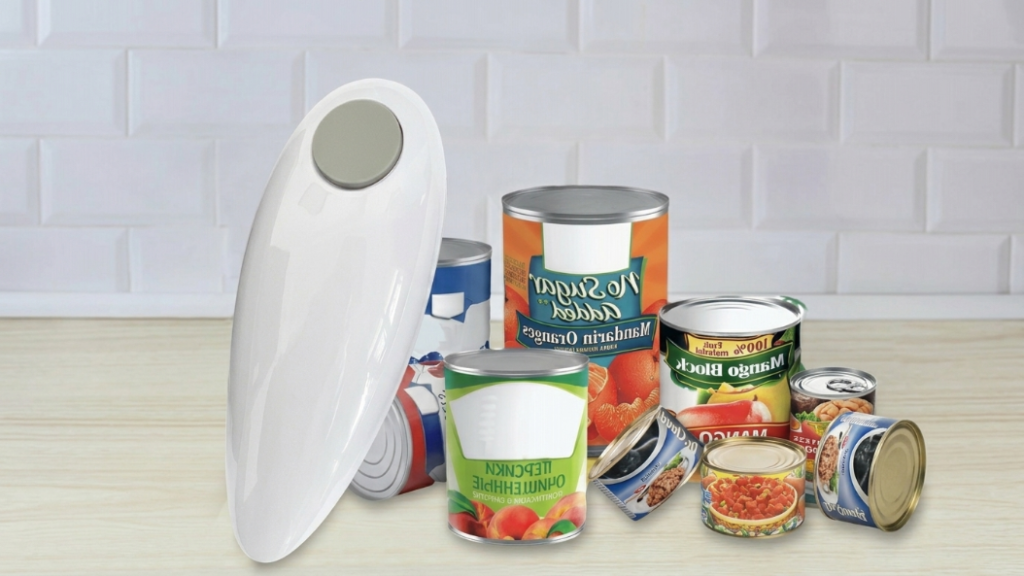
The problem it solves: Manual can openers require a tight grip combined with a rotating wrist motion — precisely the kind of compound movement that is most painful for people with carpal tunnel syndrome, arthritis, or reduced grip strength. Beyond discomfort, there is also a real safety concern: a slipping can or a fatigued grip can result in cuts.
How it helps: An electric can opener removes the gripping and twisting entirely. You place it on the can, press a button, and the device does the rest — cleanly, safely, and in seconds. Many models are designed to cut the side of the lid rather than the top, leaving no sharp edges, which further reduces the risk of injury.
This is an especially meaningful upgrade for those who live alone and may not have someone nearby to help with a particularly stubborn can. It restores independence quietly and completely.
Best for: All standard cans — vegetables, beans, soups, fruits, pet food, and more.
3. Easy-Press Garlic Press — Fresh Flavor Without the Force
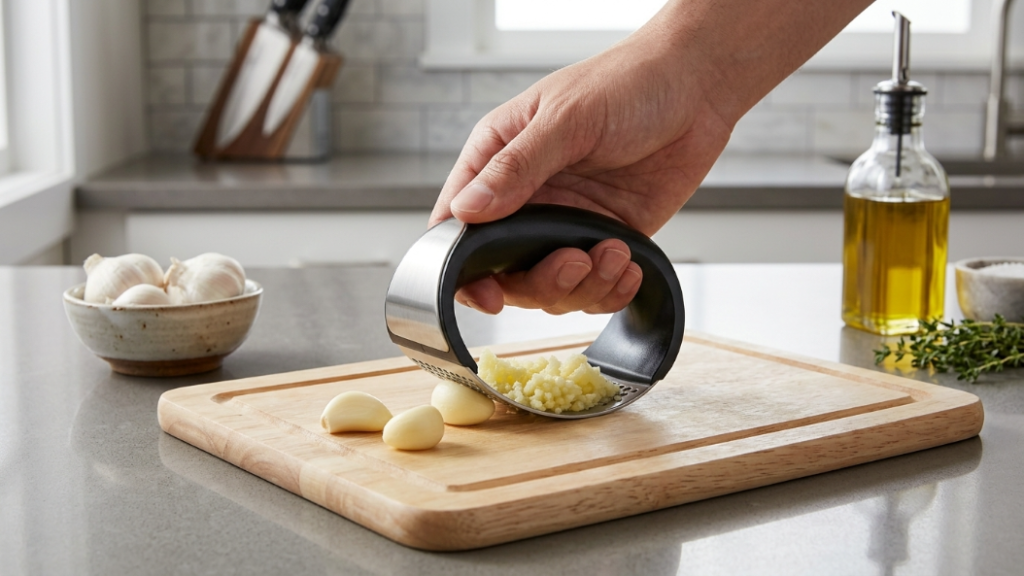
The problem it solves: Fresh garlic is one of the most beloved and health-promoting ingredients in the kitchen. But traditional garlic presses require significant force — the kind of sustained pressing that can be genuinely painful for hands affected by arthritis or weakened grip strength. Many people resort to pre-minced garlic in jars, sacrificing flavor and nutrition to avoid the pain.
How it helps: An ergonomically designed easy-press garlic press uses a lever mechanism that amplifies your hand’s natural pressing motion, requiring a fraction of the force of conventional models. The handles are often wider and cushioned, distributing pressure more evenly across the palm rather than concentrating it in the fingers.
The result? Fresh garlic in your meals every time — without the wrist strain, without the compromise.
Best for: Garlic, ginger, and other small aromatics that benefit from being freshly pressed.
Closing: You Deserve to Love Your Kitchen Again
Cooking is one of life’s most nourishing activities — for the body, yes, but also for the soul. It connects us to memory, to family, to the deeply human act of caring for ourselves and the people we love. Wrist pain should never be what takes that away from you.
The strategies in this guide — gentle warm-ups, thoughtful kitchen organization, and the support of smart ergonomic tools — are not workarounds. They are the tools of a wise, experienced cook who knows how to adapt, protect, and keep going.
You have spent a lifetime building skills in the kitchen. You deserve to keep using them — comfortably, safely, and with joy. Visit Kitoslife.com to explore our full collection of ergonomic kitchen tools designed for adults who refuse to let joint pain write the next chapter. Because your best cooking days? They’re not behind you.
Hashtags: #KitosLife #SeniorWellness #JointPainRelief #KitchenTipsForSeniors #AgingWell #ErgoKitchen #WristHealth #HealthyAging #CookingForSeniors #ActiveSeniors
Meta Description: Wrist pain making cooking difficult? Learn why joint aches happen as we age, get expert tips on stretches and kitchen organization, and discover 3 ergonomic tools that make cooking safe and joyful again. A guide by KitosLife.