Category: Uncategorized

  • The Chair Squat: The One Exercise After 60 That Rebuilds Strength, Balance, and Independence (Backed by Science)

    Meta description: Discover why the chair squat — not walking — may be the single most powerful exercise for seniors over 60. Explore the peer-reviewed research on sarcopenia, fall prevention, brain health, and heart health behind this simple daily movement.

    Somewhere around your 60th birthday, your muscles quietly started a countdown you were never warned about. Without any intervention, adults typically lose 3–8% of their skeletal muscle mass per decade after age 30, and that rate accelerates sharply after 60. This isn’t just about looking less toned — muscle is the organ that gets you out of a chair, catches you when you trip, and keeps your metabolism, brain, and heart functioning well into your 80s and 90s.

    The encouraging news is that this decline is not inevitable, and reversing it doesn’t require a gym membership or a punishing workout plan. One simple, chair-based movement — the humble chair squat (also called the sit-to-stand exercise) — has become one of the most rigorously studied functional movements in geriatric medicine. Let’s walk through exactly why it works, what the research actually shows, and how to build it into your routine safely.

    1. Why the Chair Squat, Not Walking Alone, Targets the Root Problem: Sarcopenia

    The Active Mechanism

    Walking is wonderful for cardiovascular health, but it is a relatively low-load activity that does little to challenge or rebuild fast-twitch muscle fibers — the very fibers most responsible for the power needed to stand up quickly, catch your balance, or climb stairs. The age-related loss of muscle mass and strength, known clinically as Sarcopenia, results from an imbalance between muscle protein breakdown and muscle protein synthesis (MPS), a phenomenon researchers call anabolic resistance: aging muscle simply responds less efficiently to the normal signals (like everyday movement) that would otherwise trigger repair and growth.

    The chair squat directly counters this. As a resistance-based, multi-joint movement recruiting the quadriceps, glutes, hamstrings, and core, it applies a mechanical loading stimulus strong enough to activate the mTOR signaling pathway, the cellular machinery responsible for building new muscle protein. Unlike walking, it forces the body to move its own weight against gravity in a way that specifically preserves the power — not just endurance — that daily independence depends on.

    Scientific/Journal Context

    A scoping review of resistance training programs in healthy older adults, catalogued via NCBI’s PMC archive, concluded that resistance-style movements meaningfully enhance muscle strength and help counteract sarcopenia risk, even though improvements in muscle morphology and mobility can be more gradual. Research on anabolic resistance published in the same database has identified the underlying biochemical bottleneck: aging muscle requires a stronger mechanical or nutritional stimulus to trigger the same protein-building response a younger body would achieve automatically — which is exactly what a loaded movement like the chair squat provides. Systematic reviews combining resistance training with protein intake (particularly leucine-rich sources) have shown measurable gains in lean muscle mass, strength, and physical performance among older adults with diagnosed sarcopenia.

    Practical Lifestyle Fixes

    • Start seated, not standing: Sit on a sturdy chair, feet flat, knees at roughly hip-width. Lean slightly forward, then push through your heels to stand fully upright, and lower back down with control.
    • Use your arms for support only as needed — pushing off the armrests is fine when starting out; the goal over time is to reduce reliance on your arms as your legs regain strength.
    • Pair with protein: Aim for a protein-containing meal or snack (eggs, fish, Greek yogurt, legumes) within a couple of hours of your exercise session to support the muscle-repair window.
    • Frequency: Most geriatric exercise research supports 2–3 sessions per week of resistance-style movement, with 8–15 repetitions per set, as a sustainable starting point.

    2. The 30-Second Sit-to-Stand Test: A Surprising Predictor of How Long You’ll Live Independently

    The Active Mechanism

    The sit-to-stand movement isn’t just a training exercise — it also happens to be one of the most mechanically demanding actions in ordinary daily life, requiring more instantaneous leg power (the ability to generate force quickly, not just strength over time) than almost any other routine task. Because leg power tends to decline faster than raw strength with age, your ability to repeatedly rise from a chair serves as a real-time window into your overall physiological resilience — including your cardiovascular fitness, neuromuscular coordination, and fall risk.

    Scientific/Journal Context

    Clinicians widely use the 30-second chair-stand test as a validated, low-cost tool to detect early declines in functional independence, and it is considered a cornerstone assessment for frailty screening in older populations. A large cohort analysis of nearly 1,900 adults aged 65 and older, part of the Toledo Study for Healthy Aging, found that low relative sit-to-stand power was associated with a greater history of falls and fractures, higher rates of hospitalization, and increased all-cause mortality risk. Separate research published via Oxford Academic’s Physical Therapy journal found that sit-to-stand performance reliably predicts the future onset of disability in community-dwelling older adults, reinforcing why physical therapists treat this single movement as both a diagnostic tool and a training prescription.

    Practical Lifestyle Fixes

    • Test yourself safely: With a sturdy chair against a wall (for safety), time how many full stands you can complete in 30 seconds without using your hands, if you’re already comfortable with the movement.
    • Track your progress monthly rather than daily — strength gains from consistent training typically become measurable over 4–8 weeks.
    • If you can’t complete a single unassisted rep yet, that’s valuable information, not a failure — it simply tells you and your doctor exactly where to start, and consistent practice reliably improves this over time.
    • Share your results with your physician, especially if standing without hand support feels significantly difficult; this is a recognized clinical signal worth discussing.

    3. Fall Prevention: How Leg Strength Becomes Your Body’s Safety Net

    The Active Mechanism

    Falls are rarely just a “trip” — they’re frequently the result of a delayed or insufficiently powerful muscular response when your body senses a loss of balance. Strong quadriceps and glutes allow for the rapid, reflexive stepping and postural correction needed to prevent a stumble from becoming a fall. The chair squat directly strengthens exactly this “rescue” musculature, while also improving proprioception — your nervous system’s sense of joint position — through repeated, controlled loading.

    Scientific/Journal Context

    An abridged Cochrane systematic review found that balance and functional exercise reduces the rate of falls in community-dwelling older adults by roughly 24%, while programs combining balance training with resistance exercise reduced fall rates by approximately 34%, based on moderate-certainty evidence. The American Geriatrics Society and British Geriatrics Society jointly recommend resistance and balance exercise as core components of any fall-prevention strategy, a stance echoed across multiple systematic reviews in NCBI’s PMC database. Because falls remain a leading cause of injury-related death in adults over 60 worldwide according to World Health Organization data, this single category of exercise represents one of the most evidence-backed, low-cost interventions available in preventive geriatric medicine.

    Practical Lifestyle Fixes

    • Combine chair squats with simple balance work, such as standing on one foot near a countertop for support, to compound the fall-prevention benefit.
    • Prioritize consistency over intensity: research suggests exercise programs sustained for many months, rather than short bursts, produce the most durable reductions in fall risk.
    • Address home hazards alongside exercise (loose rugs, poor lighting, cluttered walkways) since strength training works best as one part of a broader fall-prevention strategy.
    • Consider a supervised class initially if you have a history of falls, significant joint pain, or balance concerns, so a physical therapist can tailor the movement safely to your needs.

    4. The Muscle-Brain Connection: How Leg Strength Talks to Your Mind

    The Active Mechanism

    One of the most fascinating discoveries in exercise physiology over the past decade involves myokines — signaling molecules released by contracting muscle during resistance exercise. Among the most studied is Brain-Derived Neurotrophic Factor (BDNF), a protein that supports neuron survival, encourages the growth of new neural connections, and appears to enhance neuroplasticity within the hippocampus, the brain’s primary memory-processing center. In simple terms: when your leg muscles contract against resistance, they may be sending chemical messages that help protect and strengthen your brain.

    Scientific/Journal Context

    A systematic review and meta-analysis of resistance exercise’s cognitive effects in older adults found significant improvements in cognitive function across both cognitively healthy participants and those with existing cognitive impairment, with particularly notable benefits for working memory. Researchers describe this pathway as the muscle-brain axis, and while the precise mechanisms are still being refined, current evidence points to myokines like BDNF and IGF-1 as key mediators of the connection between resistance training and improved memory, attention, and executive function. Separate meta-analytic research has also linked resistance training to elevated BDNF levels and reduced depressive symptoms in adults over 60, suggesting benefits extending beyond memory into overall mood and mental wellbeing.

    Practical Lifestyle Fixes

    • Add a mental challenge to your reps — some research suggests pairing resistance movements with light cognitive tasks (like counting backward or naming categories) may amplify the cognitive benefit, though this is optional and should never compromise safe form.
    • Stay consistent for at least 12–16 weeks before expecting to notice cognitive changes, since most supporting research studied programs of this duration or longer.
    • Combine with aerobic activity such as walking, since research suggests resistance and aerobic exercise may work through complementary pathways to support brain health.
    • Discuss with your doctor if you have any concerns about memory changes; exercise is a powerful complementary strategy, not a replacement for medical evaluation.

    5. Heart and Metabolic Health: The Chair Squat’s Quiet Cardiovascular Benefit

    The Active Mechanism

    Resistance exercise like the chair squat improves cardiovascular and metabolic health through mechanisms distinct from — and complementary to — traditional cardio. Building lean muscle mass increases your body’s capacity to take up and store blood glucose, directly improving insulin sensitivity. Regular resistance training has also been shown to improve autonomic nervous system balance and reduce peripheral vascular resistance, both of which contribute to healthier blood pressure regulation over time.

    Scientific/Journal Context

    A meta-analysis focused specifically on the aging population found that resistance training produced meaningful reductions in both systolic and diastolic blood pressure, with researchers noting the effect likely stems from improved muscle mass, enhanced insulin sensitivity, and reduced peripheral vascular resistance. Research on resistance training in older adults with type 2 diabetes, compiled through NCBI’s databases, found significant improvements in hemoglobin A1c, fasting glucose, triglycerides, and total cholesterol following structured resistance programs. Additional systematic review evidence found that circuit-based resistance training improved blood pressure, arterial stiffness, and body composition even in community-dwelling adults aged 70 and older, indicating these cardiometabolic benefits remain accessible well into advanced age.

    Practical Lifestyle Fixes

    • Check with your physician before starting if you have uncontrolled hypertension, recent cardiac events, or significant joint issues, so the movement can be appropriately modified.
    • Monitor your blood pressure periodically as you build a consistent routine, since research suggests measurable improvements can appear within just a few weeks of consistent training.
    • Breathe consistently during each rep — avoid holding your breath (a pattern called the Valsalva maneuver), which can cause unwanted blood pressure spikes, especially important for those with cardiovascular risk factors.
    • Layer in dietary support: pairing your training with a diet emphasizing fiber, lean protein, and reduced processed sugar amplifies the metabolic benefits research has identified.

    The Bottom Line: Small Movement, Meaningful Independence

    Your body’s capacity for renewal doesn’t switch off at 60 — it simply requires the right stimulus to stay engaged. The research is remarkably consistent: a movement as simple and accessible as the chair squat can help rebuild the muscle mass sarcopenia steadily erodes, sharpen the leg power that keeps you upright and independent, support the brain chemistry linked to memory and mood, and gently nudge your cardiovascular and metabolic health in the right direction.

    You don’t need to become an athlete to benefit from this. You need a sturdy chair, a few consistent minutes several times a week, and the patience to let your body respond — because it will. Strength, at any age, is something you can still choose to build.

    [In closing…]
    Did you know? Everyone naturally prefers things that are comfortable and simple. Yet, the simple act of rising from a chair is far more than just an exercise; it represents your determination to face the world on your own terms, without relying on others. Try standing up from your chair just ten times today. Those ten movements will accumulate to become the most reliable source of strength, safeguarding your well-being ten years down the road.

    Medical Disclaimer: This article is intended for general educational and informational purposes only and does not constitute medical advice. It is not a substitute for professional medical diagnosis, treatment, or consultation. Individuals with joint pain, cardiovascular conditions, recent surgery, or balance disorders should consult their physician or a physical therapist before beginning any new exercise program. Always seek the guidance of your physician or other qualified healthcare provider with any questions you may have regarding a medical condition or exercise regimen.
  • Over 60? 4 Nuts You MUST Eat (and 4 You Should NEVER Touch) — A Doctor-Backed Guide to Brain, Heart, and Gut Health

    Meta description: Discover which nuts scientifically support brain health, heart health, and longevity after 60 — and which ones carry hidden risks like sodium overload, toxic mold, and cyanide compounds that aging bodies can’t safely process.

    Somewhere around age 60, your body quietly rewrites its own rulebook. Stomach acid production declines. Kidney filtration slows. The liver’s ability to clear toxins drops. Blood vessels stiffen, and the brain becomes more vulnerable to Oxidative Stress and inflammation. None of this is cause for alarm — it’s simply biology. But it does mean that foods you tolerated easily at 35 can behave very differently in your body at 65 or 75.

    Nuts sit right at the center of this shift. They are nutrient-dense powerhouses, packed with healthy fats, plant protein, fiber, and micronutrients that directly target the biological processes of aging — Cognitive Decline, Cardiovascular Health, chronic low-grade inflammation, and gut health. Large studies, including the landmark PREDIMED trial and multiple analyses from the Nurses’ Health Study, consistently link regular nut consumption to better metabolic and cognitive outcomes in older adults.

    But not all nuts — and not all forms of nuts — are created equal once you’re past 60. Some varieties and preparations can quietly strain an aging heart, kidneys, or digestive tract. This guide walks through both sides of that equation: the nuts worth reaching for daily, and the ones that deserve real caution.

    Medical note: This article is for educational purposes and does not replace personalized advice from your physician or registered dietitian, especially if you take blood thinners, have kidney disease, or have a diagnosed nut allergy.


    1. Walnuts — The Brain-Protective Nut

    Key Nutrients: Walnuts are the richest common nut source of Alpha-Linolenic Acid (ALA), a plant-based omega-3 fatty acid, along with polyphenols, vitamin E, and melatonin precursors.

    • 2.5 grams of ALA per ounce (the highest of any nut)
    • Ellagitannins, converted by gut bacteria into urolithins with anti-inflammatory activity
    • 4 grams of plant protein and 2 grams of fiber per ounce

    The Health Impact on Seniors: ALA is a structural building block the brain uses to help maintain neuronal membrane flexibility, which matters as natural cognitive changes occur with age. Walnuts’ polyphenols also help neutralize Oxidative Stress, one of the core drivers behind age-related decline in memory and processing speed. On the cardiovascular side, regular walnut consumption has been associated with improved endothelial function — the ability of blood vessels to relax and maintain healthy circulation — which matters enormously as arteries naturally stiffen with age.

    Scientific Context: The Walnuts and Healthy Aging (WAHA) study, a two-year randomized clinical trial in cognitively healthy older adults, was specifically designed around the hypothesis that daily walnut consumption supports brain and retinal health, building on cardioprotective and vascular findings already established in prior research. Earlier work from the PREDIMED trial found that older adults following a Mediterranean diet enriched with nuts — including walnuts — showed improved cognitive performance compared to a control diet after several years of follow-up. Separately, large NHANES-based analyses of U.S. adults aged 60 and older have found that regular walnut consumers tend to score better on measures of memory and global cognitive status.

    Senior tip: Aim for a small daily handful (about 1 ounce, or 7 whole walnuts) — more than that adds unnecessary calories without added benefit.

    2. Almonds — The Gut and Cholesterol Ally

    Key Nutrients: Almonds are the top nut source of Vitamin E (a fat-soluble antioxidant), along with magnesium, calcium, and a unique fiber-rich skin that feeds beneficial gut bacteria.

    • 7.3 mg of vitamin E per ounce — about half the daily recommended intake
    • 76 mg of magnesium per ounce, supporting nerve and muscle function
    • Prebiotic fiber that supports a healthy gut microbiome

    The Health Impact on Seniors: Vitamin E helps protect cell membranes throughout the body from oxidative damage, a process implicated in both skin aging and neurodegeneration. Just as importantly for older adults, almonds’ fiber and unsaturated fat content have repeatedly been shown to help lower **LDL cholesterol** (“bad” cholesterol) without lowering protective HDL cholesterol. Because digestive efficiency and gut microbial diversity both tend to decline with age, almonds’ prebiotic effect on the gut lining is a quiet but meaningful benefit — supporting nutrient absorption at a stage of life when malabsorption becomes more common.

    Scientific Context: Harvard Health Publishing and multiple peer-reviewed meta-analyses have linked daily almond consumption to modest but consistent reductions in LDL cholesterol, supporting American Heart Association dietary recommendations that emphasize nuts as a replacement for saturated-fat snacks. Research on almond skins specifically has demonstrated prebiotic activity, encouraging the growth of beneficial Bifidobacteria and Lactobacilli populations important for digestive resilience in older adults.

    3. Pistachios — The Antioxidant and Blood Pressure Nut

    Key Nutrients: Pistachios stand out for lutein and zeaxanthin (carotenoid antioxidants usually associated with leafy greens), potassium, and a favorable protein-to-calorie ratio.

    • Highest potassium content among common tree nuts
    • Lutein and zeaxanthin, carotenoids concentrated in the retina
    • Complete plant protein profile with all nine essential amino acids in modest amounts

    The Health Impact on Seniors: Potassium plays a direct role in counterbalancing sodium’s effect on blood pressure, an increasingly important factor as vascular stiffness naturally rises with age. Pistachios’ lutein and zeaxanthin accumulate in the retina, where they’re believed to filter high-energy light and reduce oxidative damage linked to age-related macular degeneration, one of the leading causes of vision loss in adults over 60. Their shell-on serving style is also a practical advantage: the extra time needed to shell each nut naturally slows consumption and supports portion control.

    Scientific Context: Clinical trials published in nutrition journals have associated pistachio consumption with modest improvements in blood pressure and arterial function in adults with metabolic risk factors. Because pistachios are also a good source of vitamin B6, which supports neurotransmitter synthesis, some researchers have proposed a secondary role in mood and cognitive support, though this evidence is still less robust than the cardiovascular findings.

    4. Macadamia Nuts — The Anti-Inflammatory Fat Source

    Key Nutrients: Macadamias have the highest monounsaturated fat content of any tree nut, along with flavones and tocotrienols (a lesser-known form of vitamin E).

    • Over 80% monounsaturated fat, similar in profile to olive oil
    • Palmitoleic acid, a fatty acid also produced naturally in human fat tissue
    • Tocotrienols with distinct antioxidant activity from standard vitamin E

    The Health Impact on Seniors: The predominantly monounsaturated fat profile of macadamias has been associated with favorable changes in cholesterol ratios, supporting Cardiovascular Health without the higher polyunsaturated fat load found in some other nuts. Their anti-inflammatory fatty acid profile may also offer modest support for joint comfort, since chronic low-grade inflammation is a known contributor to the stiffness many people notice in their 60s and beyond. Macadamias are also naturally lower in phytic acid than some other nuts, which can make their minerals somewhat easier for an aging digestive system to absorb.

    Scientific Context: Studies comparing macadamia-enriched diets to typical Western diets have found improvements in LDL cholesterol and lipid ratios, comparable in some analyses to the effects seen with olive-oil-based Mediterranean diets. Because macadamias are calorie-dense, most dietary guidance recommends limiting servings to a small handful (about 10–12 nuts) rather than treating them as a free food.


    1. Bitter (Raw, Unprocessed) Almonds — The Cyanide Risk

    Key Toxins: Wild or “bitter” almond varieties contain amygdalin, a compound that releases hydrogen cyanide when metabolized in the digestive tract.

    • Amygdalin breaks down into hydrogen cyanide during digestion
    • As few as 7–10 raw bitter almonds can cause toxicity symptoms in an adult
    • Commercially sold “sweet” almonds are a different, safe cultivar — but imported or unregulated bitter almond products still circulate in some markets

    The Biological Impact on Seniors: Cyanide interferes with the body’s ability to use oxygen at the cellular level. In younger, healthier adults, the liver can sometimes detoxify small amounts, but aging livers and kidneys have a reduced capacity to clear toxins efficiently. This means seniors face a lower safety margin and a higher risk of symptoms like dizziness, confusion, and breathing difficulty from the same exposure level that a younger person might tolerate.

    Scientific Context: Regulatory agencies including the FDA restrict the sale of raw bitter almonds in the United States specifically because of documented cyanide poisoning cases. Toxicology literature has long established amygdalin-derived cyanide as the mechanism of harm, and case reports continue to appear where bitter almonds or “apricot kernels” marketed as health foods have caused acute poisoning, underscoring why sourcing matters as much as the nut itself.

    2. Heavily Salted or Roasted Peanuts — The Blood Pressure Spike

    Key Toxins/Concerns: The concern here isn’t the peanut itself but the sodium load added during commercial roasting and salting.

    • A single ounce of heavily salted peanuts can contain over 200 mg of sodium — and some flavored varieties exceed 400 mg
    • Roasting at high heat can also degrade healthy fats and generate acrylamide, a compound formed when starchy or protein-rich foods are cooked at high temperatures

    The Biological Impact on Seniors: Kidney function naturally declines with age, reducing the body’s ability to excrete excess sodium efficiently. This makes older adults more susceptible to sodium-driven blood pressure spikes, which strain already-stiffening arteries and raise the risk of stroke and heart disease. Because salted nuts are easy to overeat in large quantities while watching television or socializing, portion creep is a real and underappreciated risk factor in this age group.

    Scientific Context: The American Heart Association and Mayo Clinic both flag high-sodium snack foods, including salted nuts, as a modifiable risk factor for hypertension in older adults, recommending unsalted or dry-roasted alternatives instead. Research on dietary sodium and vascular aging consistently shows that even modest reductions in sodium intake can meaningfully lower blood pressure in adults over 60, a population already more sensitive to sodium’s pressor effects than younger adults.

    3. Rancid or Improperly Stored Nuts (Especially Walnuts and Pecans) — The Oxidative Stress Trap

    Key Toxins: Nuts high in polyunsaturated fat, particularly walnuts and pecans, are prone to oxidation once exposed to heat, light, or long storage — producing lipid peroxides and free radicals.

    • Rancidity often isn’t obvious by smell alone once oxidation is advanced
    • Oxidized fats generate reactive compounds linked to cellular damage
    • Nuts stored at room temperature for months are at highest risk

    The Biological Impact on Seniors: Ironically, the very nuts most praised for fighting Oxidative Stress can become a source of it once their fats degrade. Consuming rancid fats introduces free radicals directly into the body at a life stage when antioxidant defenses are already working harder to keep up with age-related cellular damage. This can also cause digestive discomfort, including nausea and bloating, in a digestive system that’s already more sensitive to irritation.

    Scientific Context: Food science research has consistently shown that walnuts and pecans, due to their high polyunsaturated fat content, oxidize faster than more stable nuts like macadamias or almonds. Nutrition authorities recommend refrigerating or freezing shelled walnuts and pecans to slow this process, since oxidative degradation accelerates significantly at room temperature, particularly in warm or humid climates.

    4. Mold-Contaminated Peanuts and Tree Nuts — The Aflatoxin Danger

    Key Toxins: Improperly stored peanuts, and to a lesser extent almonds, walnuts, pistachios, and Brazil nuts, can harbor Aflatoxins — toxic metabolites produced by the molds Aspergillus flavus and Aspergillus parasiticus.

    • Aflatoxin B1 is classified by the International Agency for Research on Cancer as a Group 1 human carcinogen
    • Contamination risk rises with heat, humidity, and prolonged or improper storage
    • The liver is the primary organ affected by long-term exposure

    The Biological Impact on Seniors: Aflatoxins are metabolized in the liver, and chronic exposure has been linked to liver damage and elevated hepatocellular carcinoma risk. Because liver function and detoxification capacity naturally decline with age, seniors have less physiological reserve to process even the low-level aflatoxin exposure that can occur through everyday consumption of poorly stored bulk nuts. This risk is compounded for anyone with pre-existing liver conditions, where research shows aflatoxin exposure can multiply cancer risk substantially.

    Scientific Context: The National Cancer Institute identifies aflatoxins as a family of toxins associated with an increased risk of liver cancer, produced by fungi found on crops including peanuts and tree nuts. Research on populations with chronic hepatitis B infection has demonstrated a synergistic, multiplicative increase in liver cancer risk when combined with high aflatoxin exposure, illustrating how pre-existing organ vulnerability changes the risk calculation. The FDA and USDA maintain regulatory limits on aflatoxin content in commercial peanuts specifically to manage this long-recognized public health risk, but bulk-bin or improperly imported products carry higher uncertainty.

    Senior tip: Buy nuts from high-turnover retailers, check for any grayish discoloration or musty smell, and avoid bulk bins that have been sitting for unknown periods, especially in warm, humid storage conditions.


    • Choose raw or dry-roasted, unsalted walnuts, almonds, pistachios, or macadamias as your daily go-to.
    • Stick to a single handful (about 1 ounce) per day — enough for benefit, not so much that calories or fat intake becomes a concern.
    • Store polyunsaturated-rich nuts like walnuts and pecans in the refrigerator or freezer to prevent oxidation.
    • Read labels and avoid heavily salted, honey-roasted, or candy-coated varieties that hide excess sodium and sugar.
    • Buy from reputable, high-turnover sources to minimize aflatoxin and rancidity risk.

    Nuts remain one of the simplest, most evidence-backed additions you can make to a healthy-aging diet. A daily handful of walnuts, almonds, pistachios, or macadamias delivers a concentrated dose of brain-protective fats, cholesterol-lowering compounds, and anti-inflammatory antioxidants — all wrapped in a convenient, satisfying snack. But awareness matters just as much as inclusion: steering clear of rancid, moldy, over-salted, or improperly sourced nuts protects an aging heart, liver, and digestive system from unnecessary strain.


    [A warm closing remark to wrap up the piece]

    “Eating nuts is good for your health, but it shouldn’t feel like a chore. Taking a moment each day to enjoy a small handful of nuts is a commitment to treating your body with care—and one of the easiest ways to show it love. Why not dedicate a spot in your fridge to storing nuts fresh, starting today? A reliable form of ‘insurance’ for your future well-being begins right there on your dining table.”

    Have a great day today, too.

    Medical Disclaimer: This article is provided for general educational and informational purposes only and does not constitute medical advice. It is not intended to diagnose, treat, cure, or prevent any disease, and should not replace consultation with a qualified healthcare provider. Individual nutritional needs vary based on medical history, medications (including blood thinners), allergies, and existing health conditions. Always consult your physician, cardiologist, or a registered dietitian before making significant changes to your diet, particularly if you are over 60 or managing a chronic health condition. Senior Health Cafe and its authors assume no liability for actions taken based on the content of this article.

  • 5 Fruits That May Help Shrink an Enlarged Prostate: What Urology Research Actually Shows

    Meta description suggestion: An enlarged prostate (BPH) can wreck your sleep and your bathroom trips. We reviewed the science behind 5 fruits urologists often recommend — checking PubMed and NCBI data on lycopene, beta-sitosterol, and more — to see what’s proven and what’s still promising.


    If You’re Up Three Times a Night, You’re Not Alone

    You know the routine. You finally fall asleep, and an hour or two later, your bladder wakes you up again. You shuffle to the bathroom, stand there longer than you’d like, and the stream that used to be strong now starts and stops. This isn’t just “getting older” — it’s one of the most common conditions in aging men, called Benign Prostatic Hyperplasia (BPH), a non-cancerous enlargement of the prostate gland.

    The numbers are striking: research shows BPH affects roughly 50% of men over age 50, and that number climbs to 90% of men by age 80. It’s not rare — it’s nearly universal if you live long enough. The good news is that BPH is one of the more manageable conditions of aging, and a growing body of peer-reviewed research suggests that specific compounds found in everyday fruits can meaningfully support prostate health, ease urinary symptoms, and work alongside — not replace — whatever your urologist has recommended.

    We pulled the actual clinical trials and systematic reviews from PubMed and NCBI for five fruits commonly recommended by urologists, so you know exactly what’s backed by real evidence and what’s still emerging science.

    A quick, honest note before we start: No fruit replaces medical evaluation or treatment for BPH. Some of the evidence below is strong (human clinical trials); some is early (lab and animal studies). We’ve flagged which is which, because your health deserves accuracy, not hype.


    The Active Compound

    Tomatoes are the richest common dietary source of Lycopene, a bright-red carotenoid pigment and one of the most potent antioxidants found in the plant kingdom.

    The Biological Mechanism

    Lycopene works primarily by neutralizing oxidative stress — the cellular damage caused by free radicals that accumulates in prostate tissue over decades. Because the prostate is metabolically active and constantly exposed to hormonal signaling, it’s especially vulnerable to this kind of oxidative wear. Lycopene’s antioxidant action appears to help calm the chronic low-grade inflammation and cellular stress that drive prostate tissue overgrowth. Some research also points to lycopene’s role in modulating insulin-like growth factor-1 (IGF-1), a hormone linked to abnormal cell proliferation in the prostate.

    Scientific/Journal Validation

    • A randomized controlled trial published in a peer-reviewed nutrition journal found that men with BPH taking 15 mg/day of lycopene for 6 months showed no further prostate enlargement, while the placebo group’s prostates continued to grow, and the lycopene group also saw a measurable drop in PSA (prostate-specific antigen) levels.
    • A more recent double-blind clinical trial combining lycopene with a supporting tomato compound (FruHis) found improvements in IGF-1 levels and symptom scores among BPH patients over 8 weeks.
    • Important caveat: a broader Cochrane-style systematic review of the existing randomized trials concluded that, while promising, the overall body of evidence is still too limited in size and quality to definitively confirm lycopene as a standalone treatment for BPH. It’s a supportive tool, not a proven cure.

    Practical Dietary Advice

    • Lycopene absorbs better when tomatoes are cooked, not raw — cooking breaks down plant cell walls and releases more lycopene. Tomato sauce, soup, and paste are more bioavailable than a fresh salad.
    • Pair cooked tomatoes with a source of healthy fat (like olive oil) — lycopene is fat-soluble and absorbs far better this way.
    • Aim for tomato-based dishes several times a week rather than relying on occasional raw tomato slices.

    The Active Compound

    Pomegranates are exceptionally high in punicalagins and ellagitannins, polyphenol compounds that the body converts into smaller metabolites called urolithins during digestion.

    The Biological Mechanism

    Pomegranate polyphenols appear to work through an anti-inflammatory pathway, specifically by inhibiting a cell-signaling protein called NF-κB, which drives inflammation and abnormal cell proliferation in prostate tissue. Laboratory studies have also shown pomegranate compounds slow the growth of prostate cell lines directly. Notably, researchers found this effect does not appear to work by lowering testosterone or other hormones — it seems to act more through antioxidant and anti-proliferative pathways than hormonal ones.

    Scientific/Journal Validation

    • An early Phase II clinical trial found that daily pomegranate juice significantly lengthened PSA doubling time (a marker of how quickly prostate cell activity is progressing) in men being monitored after prostate treatment.
    • A larger, well-designed UK randomized trial combining pomegranate with green tea, broccoli, and turmeric found the treatment group’s PSA rose only 14.7% over six months, compared to a 78.5% rise in the placebo group.
    • Honest caveat: Not all trials agree. Two subsequent placebo-controlled randomized trials using pomegranate extract alone found no significant benefit on PSA progression, and researchers have suggested polyphenol concentration and product quality may explain the inconsistent results. Pomegranate is promising, but the evidence is genuinely mixed — this is a case where more research is still needed.

    Practical Dietary Advice

    • Choose 100% pure pomegranate juice with no added sugar, or eat the fresh arils (seeds) directly for maximum polyphenol content.
    • A daily 4–8 oz serving is a reasonable, low-risk addition — but treat it as a supportive habit, not a guaranteed fix.
    • Pomegranate seeds also add fiber, which supports overall metabolic and urinary health.

    The Active Compound

    Avocado is one of the richest food sources of Beta-Sitosterol, a plant sterol structurally similar to cholesterol that’s one of the most researched natural compounds for urinary symptoms related to BPH.

    The Biological Mechanism

    Beta-sitosterol is believed to work by reducing inflammation in prostate tissue and improving the function of the smooth muscle and urethral lining affected by BPH, which helps ease the obstruction that causes weak stream and incomplete emptying. Unlike some other compounds on this list, its main documented effect is on urinary flow and symptom relief — not necessarily shrinking the prostate itself.

    Scientific/Journal Validation

    • A well-known Cochrane systematic review of randomized, placebo-controlled trials found beta-sitosterol preparations meaningfully improved urinary symptom scores and peak urine flow measures in men with BPH, and were well tolerated with a low withdrawal/side-effect rate.
    • Important honesty point directly from that same Cochrane review: beta-sitosterol did not reduce measured prostate size in the trials studied. Its documented benefit is symptom relief and improved flow — a real and clinically meaningful outcome, but a different one than “shrinking” the gland.
    • Long-term safety and effects on preventing BPH complications (like urinary retention) are still not fully established, per the review’s authors.

    Practical Dietary Advice

    • Add half an avocado to a daily meal — sliced on toast, in a salad, or blended into a smoothie.
    • Avocado’s healthy monounsaturated fat content also helps the body absorb other fat-soluble nutrients on this list, like lycopene.
    • Because avocado is calorie-dense, portion it as an addition to a meal rather than doubling your usual food intake.

    The Active Compound

    Citrus fruits deliver a combination of Vitamin C and citrus-specific flavonoids, most notably Hesperidin, concentrated in the pulp and inner peel.

    The Biological Mechanism

    Hesperidin has demonstrated anti-inflammatory effects in laboratory and animal research by reducing key inflammatory markers — including IL-6, IL-1β, and TNF-α — that are elevated in BPH tissue and are believed to be partly driven by Dihydrotestosterone (DHT), the potent hormone most responsible for prostate tissue overgrowth. Animal studies specifically found hesperidin eased BPH progression through a cellular pathway called TGF-β1/Smad signaling, which regulates tissue growth and scarring. Vitamin C independently supports collagen integrity in surrounding tissue and contributes general antioxidant protection.

    Scientific/Journal Validation

    • Peer-reviewed animal research has shown hesperidin measurably reduces BPH-related inflammatory markers and tissue changes in rodent models.
    • Cell-culture studies on human prostate cancer cell lines have found citrus flavonoids like hesperidin and hesperetin can suppress abnormal cell proliferation through oxidative-stress and cell-cycle mechanisms.
    • Honest caveat: Large-scale human clinical trials specifically testing citrus fruit or hesperidin supplementation for BPH symptoms are still lacking. The mechanism is well-documented at the cellular and animal level; human confirmation is the next step researchers are calling for.

    Practical Dietary Advice

    • Eat the fruit itself rather than juice alone — much of the hesperidin is concentrated in the white pith and inner peel, which gets left behind when juicing.
    • A daily orange, or grapefruit segments (checking first for any medication interactions, since grapefruit affects certain drug metabolism), is a simple, low-cost habit.
    • Adding lemon zest to cooking is a practical way to include more of the flavonoid-rich peel.

    The Active Compound

    Dark berries owe their deep color to Anthocyanins, a class of flavonoid pigments recognized as some of the most potent dietary antioxidants studied.

    The Biological Mechanism

    Anthocyanins work primarily by reducing oxidative stress and dampening pro-inflammatory signaling at the cellular level, similar in principle to lycopene but through distinct chemical pathways. Chronic oxidative stress and low-grade inflammation are two of the most consistently identified drivers of prostate tissue overgrowth in BPH research, which makes this class of compounds broadly relevant to prostate health, alongside its well-documented benefits for cardiovascular and cognitive health.

    Scientific/Journal Validation

    • Broader nutritional science literature consistently links regular anthocyanin-rich berry consumption to reduced systemic inflammatory markers in older adults.
    • Honest caveat: Compared to lycopene and beta-sitosterol, there is far less BPH-specific human clinical trial data directly testing berries or isolated anthocyanins against urinary symptoms or prostate volume. Their inclusion here rests more on their well-established general anti-inflammatory and antioxidant profile — both mechanistically relevant to BPH — than on dedicated prostate trials. This is a “supportive by mechanism” fruit rather than a “proven by BPH-specific trial” fruit, and we want you to know that distinction.

    Practical Dietary Advice

    • A daily half-cup to one cup of fresh or frozen blueberries or blackberries is an easy, low-sugar way to add antioxidant support to breakfast.
    • Frozen berries retain nearly the same anthocyanin content as fresh and are often more affordable and available year-round.
    • Adding berries to oatmeal, yogurt, or a smoothie also supports steady blood sugar, which matters since poorly controlled blood sugar is separately linked to worse BPH symptoms.

    Putting It Together: A Realistic Weekly Approach

    • Daily: A serving of cooked tomato (sauce or soup) and a citrus fruit.
    • Most days: Half an avocado and a handful of berries.
    • A few times a week: A small glass of pure pomegranate juice or a handful of fresh arils.
    • Always: Pair with a fat source (olive oil, avocado, nuts) to help absorb the fat-soluble compounds like lycopene.

    The Encouraging Truth: BPH Is Manageable

    An enlarged prostate is common, frustrating, and completely normal to feel discouraged about — but it is also one of the more manageable conditions that comes with aging. The research reviewed here shows that consistent, evidence-informed dietary habits can genuinely support urinary comfort, reduce inflammatory burden, and work as a meaningful complement to whatever treatment plan you and your urologist have in place. You don’t need a dramatic overhaul — just a few intentional swaps at the grocery store and a little consistency. Small, daily choices, repeated over months, are exactly how real prostate health improvement happens.

    [Recommended as a concluding sentence]


    “A diet for prostate health is not a ‘cure-all medication,’ but rather a source of ‘healthy fruits’ that empower your body to care for itself. View that plate of tomatoes and half an avocado on your table today as an investment in your comfort at night—something that goes far beyond merely filling your stomach. And look forward to how this small change, starting today, will transform your quality of life in the months to come.”


    Have a great day today, too.

    This article is for informational and educational purposes only and does not constitute medical advice. BPH symptoms can sometimes overlap with more serious prostate conditions, so any new or worsening urinary symptoms should be evaluated by a urologist. Always talk to your doctor before starting new supplements, especially if you take blood thinners, blood pressure medication, or statins, as some citrus fruits (notably grapefruit) can interact with certain medications.

    Sources referenced: PubMed and NCBI-indexed clinical trials and systematic reviews on lycopene and BPH (including randomized controlled trials on lycopene supplementation and prostate volume/PSA); Cochrane systematic reviews on beta-sitosterol for BPH; peer-reviewed Phase II clinical trials on pomegranate polyphenols and PSA doubling time; peer-reviewed animal and cell-culture research on hesperidin and BPH-related inflammatory markers; nutritional science literature on anthocyanins and systemic inflammation.

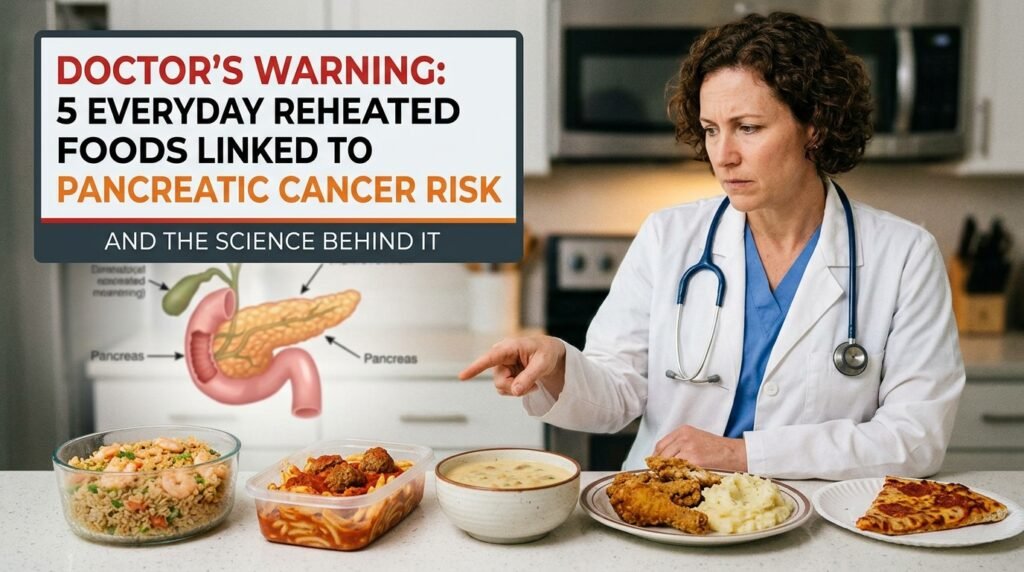
  • Doctor’s Warning: 5 Everyday Reheated Foods Linked to Pancreatic Cancer Risk (And the Science Behind It)

    Meta description suggestion: A doctor’s warning about reheated foods is going viral. We cross-checked the claims against IARC, WHO, and peer-reviewed research to separate real risk from kitchen myth — plus the simple fixes that protect your pancreas.


    Here is a number that should stop every home cook in their tracks: the five-year survival rate for pancreatic cancer sits at just 12–13%, even in 2025 data from the American Cancer Society. For patients diagnosed with the most common form of the disease, pancreatic adenocarcinoma, that number drops to roughly 8%. Unlike breast or colon cancer, pancreatic cancer rarely announces itself early. By the time symptoms appear, the disease has often already spread.

    This is precisely why prevention matters so much more for the pancreas than for almost any other organ. A recent video by Dr. Michael Kent, “Doctor Warns: These 5 Reheated Foods Increase the Risk of Pancreatic Cancer,” has resonated with millions of home cooks — especially older adults who grew up with a “waste not, want not” mindset around leftovers.

    But a video is not a medical journal. So we did what any responsible health publication should do: we went back to the primary science — the International Agency for Research on Cancer (IARC), the World Health Organization (WHO), and peer-reviewed studies indexed on PubMed — to verify, expand, and correct the claims where necessary. What follows is not fear-mongering. It is an evidence-based breakdown of five reheating habits that quietly stress your pancreas, your DNA, and your gut — and exactly how to fix each one tonight.

    Quick disclaimer: No single food or leftover meal “causes” pancreatic cancer on its own. Cancer develops from cumulative, repeated exposure over years, combined with genetics, smoking, obesity, and chronic inflammation. Think of this article as risk-reduction, not panic.


    The Chemical Transformation

    Vegetable oils like sunflower, corn, and soybean oil are prized for cooking because they’re light and neutral-tasting — but that’s also their weakness. These oils are high in polyunsaturated fatty acids (PUFAs), which are chemically unstable. Every time you reheat oil — especially oil that’s already been used for frying once — you expose it to a second (or third) round of high heat and oxygen. This triggers a process called lipid peroxidation.

    The Pancreas Connection

    Lipid peroxidation generates a family of toxic byproducts known as aldehydes, including 4-hydroxynonenal (4-HNE) and malondialdehyde (MDA). These aren’t trace contaminants — repeatedly heated oils can accumulate them at levels high enough to matter biologically. Once ingested, these reactive aldehydes bind to proteins and DNA, forming what scientists call DNA adducts. Over time, this DNA corruption can impair the body’s ability to repair damaged cells correctly, while simultaneously generating free radicals that fuel chronic oxidative stress. The pancreas, which is rich in fat-digesting enzymes and constantly exposed to dietary lipids, is considered particularly vulnerable to this kind of oxidative and inflammatory burden — a pattern researchers have connected to chronic pancreatitis, a well-established risk factor for pancreatic cancer.

    Scientific Context

    • Multiple food-chemistry studies on repeatedly heated vegetable oils confirm a sharp rise in aldehyde concentration with each reheating cycle, particularly in oils reused for deep frying.
    • 4-HNE is one of the most extensively studied lipid peroxidation products in cancer biology, with research linking chronic exposure to genotoxic (DNA-damaging) effects in multiple organ systems.
    • The WHO and major nutrition bodies have long flagged repeated deep-frying and oil reuse as a food-safety and chronic-disease concern, independent of this specific video.

    The Safe Practical Fix

    • Never reuse frying oil more than once — and never reuse oil that has visibly darkened, smells rancid, or has started foaming.
    • When reheating fried foods, use an air fryer or oven instead of a fresh pan of oil — this crisps the exterior without adding another oxidation cycle.
    • Choose more heat-stable fats for cooking (like avocado oil or olive oil) rather than delicate PUFA-rich oils, especially for high-heat methods.
    • Store used cooking oil in a sealed, opaque container away from light and heat if you must reuse it once — light and heat both accelerate oxidation.

    The Chemical Transformation

    Leafy greens are naturally high in nitrates — a compound that’s actually beneficial in fresh vegetables, supporting healthy blood pressure and circulation. The problem starts after cooking. Once spinach, kale, or chard sits at room temperature (even briefly) or is left in the fridge, naturally occurring bacteria begin converting those nitrates into nitrites.

    The Pancreas Connection

    When nitrite-rich cooked greens are reheated — especially in a microwave, which heats unevenly — the nitrites can react with amino acids (protein building blocks) present in the food. This reaction forms nitrosamines, a class of compounds that are among the most well-documented dietary carcinogens in food science. Nitrosamines are considered genotoxic, meaning they directly damage DNA, and animal studies have repeatedly linked them to pancreatic tumor formation specifically, not just generalized cancer risk.

    Scientific/Journal Context

    • The International Agency for Research on Cancer (IARC) classifies several nitrosamine compounds (including NDMA and NDEA) as Group 2A — “probably carcinogenic to humans” — based on consistent, strong evidence from animal studies and mechanistic data showing they damage DNA.
    • The same nitrite-to-nitrosamine chemistry is the reason the IARC classified processed meats (which are cured with nitrites) as Group 1 carcinogens — this is a well-established biochemical pathway, not a fringe theory.
    • Nitrosamines are recognized as inducing tumors in the digestive tract and pancreas specifically in laboratory models, which is why food safety agencies monitor nitrite/nitrosamine levels closely.

    The Safe Practical Fix

    • Cook only what you’ll eat. Leafy greens are the one food category nutritionists most consistently advise against reheating a second time.
    • If you do have leftover greens, refrigerate them within one hour of cooking to slow bacterial nitrate-to-nitrite conversion.
    • Eat refrigerated cooked greens cold or lightly warmed only once, within 24 hours — avoid multiple reheating cycles.
    • Consider steaming a fresh small portion instead of microwaving leftovers when possible — spinach and kale cook in under 3 minutes.

    The Biological Transformation

    This is the most well-documented food-safety risk on this list, and it doesn’t come from cooking at all — it comes from what happens before you ever put rice in the pot. Raw rice can carry spores of Bacillus cereus, a bacterium that survives normal cooking temperatures because its spores are heat-resistant. If cooked rice is left at room temperature, those spores germinate and multiply, producing a heat-stable toxin called cereulide.

    The Pancreas Connection

    Here’s the critical detail most home cooks don’t know: reheating does not destroy this toxin. Cereulide survives microwave and stovetop reheating because it’s stable at normal cooking temperatures. While a single episode typically causes acute vomiting or diarrhea rather than cancer directly, repeated low-level exposure to bacterial toxins contributes to chronic, low-grade gut inflammation. Emerging research on the “gut-pancreas axis” — the communication pathway between intestinal bacteria, gut inflammation, and pancreatic health — suggests that chronic intestinal inflammation and a disrupted gut microbiome may promote systemic inflammatory signaling that reaches the pancreas over time.

    Scientific/Journal Context

    • Bacillus cereus food poisoning from reheated rice is well documented in food-safety literature and is commonly referred to informally as “fried rice syndrome.”
    • Gut microbiome research published in journals covering gastroenterology and oncology increasingly points to a bidirectional relationship between intestinal dysbiosis and pancreatic inflammation, though this field of research is still developing and causation in humans is not yet firmly established.
    • Chronic inflammation, regardless of its source, is a recognized contributor to cellular changes that can eventually raise cancer risk over years or decades — this is basic, well-accepted oncology, even where the rice-specific pancreatic link is still emerging science.

    The Safe Practical Fix

    • Cool cooked rice within one hour of cooking — don’t let it sit on the counter through a meal.
    • Store rice in the refrigerator in a shallow, sealed container to cool it quickly and evenly.
    • Only reheat rice once, and make sure it’s steaming hot all the way through, not just warm.
    • When in doubt, throw it out — rice that’s been at room temperature for more than two hours is not worth the risk.

    The Biological Transformation

    Chicken is one of the most common sources of foodborne illness, and reheating done incorrectly makes it worse rather than safer. Microwaves are notorious for creating “cold spots” — areas within the food that never reach a bacteria-killing temperature because microwaves heat unevenly. These cold spots, combined with the moisture naturally present in poultry, create a warm, humid micro-environment that’s essentially an incubator for bacteria like Salmonella and Campylobacter.

    The Pancreas Connection

    When these pathogens survive reheating and are ingested, the immune system launches a full inflammatory response to fight the infection. This isn’t localized — it’s systemic. Repeated bouts of foodborne bacterial infection place a cumulative inflammatory burden on the body, and the pancreas, as both a digestive and endocrine organ sitting downstream of gut inflammation, is not exempt from this toll. Chronic or repeated inflammatory insults are a recognized contributor to the tissue damage that, over years, can create conditions favorable to cellular mutation.

    Scientific/Journal Context

    • The CDC and food safety agencies consistently identify poultry as a leading source of Salmonella and Campylobacter infections, and improper reheating is a documented contributing factor.
    • Peer-reviewed food science research confirms microwave reheating produces significantly less uniform internal temperatures than oven or stovetop methods, directly explaining the “cold spot” survival of bacteria.
    • Chronic inflammation is one of the “hallmarks of cancer” recognized in modern oncology research — it doesn’t need to be pancreas-specific to eventually affect pancreatic tissue through systemic inflammatory pathways.

    The Safe Practical Fix

    • Reheat chicken to an internal temperature of 165°F (74°C), checked with a food thermometer — not by appearance.
    • If using a microwave, stir or rotate the chicken halfway through and cover it to trap steam, which helps even out the heat.
    • Better yet, reheat in an oven or on the stovetop, which heats more evenly than a microwave.
    • Only reheat chicken once, and refrigerate leftovers within two hours of the original cooking.

    The Chemical Transformation

    Potatoes present a two-part problem when reheated, and both parts matter. First: acrylamide. This compound forms naturally through the Maillard reaction whenever starchy foods like potatoes are cooked above roughly 120°C (248°F) — think roasting, frying, or baking. Reheating potatoes, especially by re-frying or re-crisping them in an oven or air fryer, exposes them to another round of high heat, which can further increase acrylamide formation on top of what was already generated during the first cooking.

    The Pancreas Connection

    The IARC classifies acrylamide as a Group 2A probable human carcinogen, based on strong evidence from animal studies showing it damages DNA. In the body, acrylamide is converted into a metabolite called glycidamide, which forms DNA adducts and is considered the primary driver of its genotoxic effects. Separately, there’s a metabolic issue: freshly cooked and cooled potatoes contain beneficial resistant starch, a type of starch that resists digestion in the small intestine and behaves more like fiber — it’s linked to better blood sugar control. But reheating breaks down this resistant starch structure, converting it back into rapidly digestible starch. The result is a sharper glucose spike than the original meal produced. Repeated glucose spikes force the pancreas’s insulin-producing beta cells to work overtime, and chronic beta-cell overwork is a recognized contributor to metabolic stress and, over the long term, pancreatic beta-cell exhaustion.

    Scientific/Journal Context

    • IARC’s acrylamide classification (Group 2A) has been affirmed and referenced by EFSA (European Food Safety Authority), which has stated there is no fully “safe” exposure threshold, reinforcing the case for minimizing dietary acrylamide where practical.
    • Acrylamide’s DNA-damaging mechanism, via its metabolite glycidamide, is well-characterized in toxicology literature and forms the biological basis for its carcinogen classification.
    • Research on resistant starch consistently shows that cooling cooked starchy foods increases resistant starch content, while reheating reverses much of that benefit — a finding relevant to long-term metabolic and pancreatic health, given the well-established link between chronic hyperglycemia and pancreatic strain.

    The Safe Practical Fix

    • Avoid re-frying or re-crisping leftover potatoes at high heat; gently reheat in a covered pan on lower heat instead.
    • Eat cooled potatoes cold in salads when possible — this preserves the resistant starch benefit entirely and adds zero extra acrylamide.
    • When cooking potatoes fresh, aim for a golden color, not deep brown — darker, more well-done spots contain more acrylamide.
    • Pair reheated potatoes with protein or fiber (like beans or greens) to help blunt the glucose spike from lost resistant starch.

    • Cool fast: Get leftovers into the fridge within 1–2 hours of cooking.
    • Reheat once, and reheat thoroughly: Aim for steaming hot all the way through, every time.
    • Skip the second reheat on leafy greens and rice in particular — these two carry the strongest documented risk.
    • Use a thermometer for meat and poultry rather than guessing by appearance.
    • Choose oven, stovetop, or air fryer over microwave when even heating matters most.

    The Reassuring Truth: Your Body Can Recover

    None of this is meant to make you afraid of your own kitchen. The human body — and the pancreas specifically — has a remarkable capacity for repair. Chronic inflammation is not a life sentence; it’s a response to ongoing exposure, and it can be dialed back. Every small habit shift outlined above — cooling food faster, reheating more evenly, giving leafy greens and rice a little extra respect — removes one more chronic irritant from your system.

    Along with other key factors for pancreatic health—such as maintaining a healthy weight, limiting alcohol consumption, quitting smoking, and exercising regularly—these dietary changes offer real, practical benefits for protecting your pancreas, rather than remaining merely theoretical. You do not need to overhaul your diet overnight; simply start by being a bit more mindful about how you reheat your food, beginning with your next meal.


    [A warm closing remark to wrap up the piece]


    There is no need to pressure yourself by striving for perfection at the dinner table. The five principles we discussed today are not about “managing” your eating habits, but rather about giving your precious body the time it needs to heal itself. As you organize your refrigerator this evening, take pride in the fact that you have taken a small, meaningful step toward better health. Your pancreas and your body will surely remember—and reward—these thoughtful efforts of yours.

    This article is for informational and educational purposes only and does not constitute medical advice. If you have concerns about pancreatic health, digestive symptoms, or cancer risk, please consult a physician or gastroenterologist for personalized guidance.

    Sources referenced: International Agency for Research on Cancer (IARC) Monographs on nitrosamines and acrylamide; World Health Organization food safety guidance; American Cancer Society Cancer Facts & Figures 2025; SEER Cancer Stat Facts (National Cancer Institute); European Food Safety Authority (EFSA) risk assessments on N-nitrosamines and acrylamide; peer-reviewed food science and gastroenterology literature on Bacillus cereus, lipid peroxidation aldehydes, and resistant starch.

  • Does Your Bank Account Freeze When You Die? The Free Form Every Senior Needs to Know About (Fact-Checked)

    Here’s an uncomfortable truth most people never hear until it’s too late: a will has no authority at a bank counter. Not a notarized one. Not one drafted by an expensive estate attorney. Not one locked safely in a fireproof box.

    That’s not a scare tactic — it’s how the law actually works in every U.S. state, and it’s backed by decades of legal precedent. If you have a bank account without a beneficiary designation on file, your family could be locked out of your money for months, even while funeral bills, mortgage payments, and everyday expenses keep piling up.

    The good news is that fixing this takes about ten minutes and costs nothing. This guide walks through exactly what the law says, where a popular video on this topic gets it right, where it oversimplifies things, and precisely what to do today to protect your family.


    Wills vs. Bank Contracts: Two Completely Different Systems

    It sounds strange, but it’s true: the money in your checking or savings account is governed by a contract with your bank — not by your will. Your will controls your “probate property” — things like personal belongings, real estate held solely in your name, and accounts with no other transfer arrangement. But accounts with a designated beneficiary transfer by contract, immediately, and completely outside of probate.

    This distinction traces back further than most people realize. In 1904, a New York court case known as In re Totten established that a person could hold a bank account “in trust for” another person, allowing it to pass directly to that person upon death without going through a formal trust or probate court. This concept — now often called a “Totten trust” — became the legal ancestor of today’s Payable-on-Death (POD) designations.

    That principle was later folded into the Uniform Probate Code (UPC), a model law finalized in 1969 by the National Conference of Commissioners on Uniform State Laws (now called the Uniform Law Commission). While not every state adopted the UPC wholesale, all 50 states now have some version of law recognizing POD/TOD (Transfer-on-Death) designations as valid, probate-avoiding transfers. This part of the video’s claim checks out and is well-documented in estate law literature.

    What Happens Without a Beneficiary Designation

    If no valid beneficiary is named on an account, here’s the sequence that plays out:

    1. The account becomes part of your probate estate
    2. If the estate’s total value exceeds your state’s “small estate” threshold, formal probate is triggered
    3. Most states impose a mandatory waiting period so unknown creditors can come forward — commonly a few months up to a year, depending on the state
    4. Only after that window closes (and any required court steps are completed) can funds be released to heirs

    A Fact-Check Worth Knowing: The video states most states set probate thresholds “between $50,000 and $100,000.” In reality, the range across states is far wider than that — Georgia’s simplified threshold sits around $10,000, while California recently raised its small-estate limit to $184,500 (with a jump to $750,000 scheduled), and Illinois raised its own limit to $150,000 in August 2025. So while many states do fall in that $50K–$100K range, framing it as a near-universal rule oversimplifies a genuinely state-by-state patchwork. The real lesson stands regardless: for most retirees with meaningful savings, an undesignated account is very likely to exceed whatever threshold applies in their state.


    1. No Beneficiary Designation at All

    This is the most common scenario. Many people opened their accounts decades ago, when no one asked them to name a beneficiary. They assumed their will would “handle it.” It won’t — the will simply has no jurisdiction over a contractual bank account.

    2. An Outdated Beneficiary Designation

    This one is arguably more dangerous because it creates false confidence. If you named an ex-spouse, a since-deceased parent, or an estranged relative decades ago and never updated it, that outdated name is legally who receives the funds — regardless of what your current will says.

    This isn’t unique to bank accounts. The same principle has been tested — and upheld — at the U.S. Supreme Court level for retirement accounts. In Kennedy v. Plan Administrator for DuPont Savings and Investment Plan (2009), the Court unanimously ruled that a retirement plan administrator was correct to pay benefits to an ex-wife who was still the named beneficiary on file, even though she had waived her rights to those benefits in the couple’s divorce decree. The Court’s reasoning: plan documents and beneficiary designations control, not outside agreements the institution never received. This is a real, binding legal precedent — the video’s core warning about outdated designations is accurate and has teeth.

    3. The Joint Ownership Assumption

    Many people, especially spouses, assume that marriage alone means accounts automatically pass to the survivor. In many cases that’s only true if the account is specifically titled with “rights of survivorship.” Marriage certificates alone don’t create that legal status — the account’s actual titling does.

    The hidden risk in “fixing” this by adding an adult child: This is one of the most consistently confirmed warnings across elder law resources. When you add someone as a joint owner (not just a beneficiary), the law in most states treats the money as partly theirs immediately — while you’re both still alive. That exposes your savings to:

    • Your child’s creditors or lawsuits — multiple elder law firms confirm that if a joint owner is sued, their portion (and sometimes practically the whole account) can be reached by a judgment creditor
    • Divorce proceedings — funds in a joint account can become entangled in a spouse’s divorce settlement
    • Tax debts — the IRS can, in some circumstances, levy a jointly held account to satisfy the co-owner’s debt

    A Payable-on-Death designation avoids all of this, because it grants the named beneficiary zero ownership or access while you’re alive. Your money stays entirely yours — and entirely shielded from their financial troubles — until the moment you pass, at which point it transfers by contract.


    To be fully transparent with readers, here’s an honest scorecard on the video’s central claims:

    ClaimVerdictNotes
    A will has no authority over bank accounts with a beneficiary designationAccurateWell-established in estate law; confirmed by CFPB, banks, and legal resources
    The Totten trust concept traces to 1904 and underlies POD accountsAccurateIn re Totten (1904) is the recognized legal ancestor of POD accounts
    Uniform Probate Code (1969) established the modern frameworkAccurate, with nuanceNot every state adopted the UPC verbatim, but all states now recognize POD/TOD transfers in some form
    Probate thresholds are “$50,000–$100,000 in most states”⚠️ OversimplifiedActual state thresholds range from roughly $10,000 to over $180,000; the general point (most retirement savings exceed the threshold) still holds
    Joint ownership exposes your money to a co-owner’s creditors, divorce, and tax debtAccurateConfirmed by multiple independent elder law and estate planning sources
    An outdated beneficiary form overrides your current willAccurate, and courts have enforced thisDirectly supported by Kennedy v. Plan Administrator for DuPont (2009, U.S. Supreme Court) for retirement accounts, and by consistent state-level rulings for bank POD accounts
    Safe deposit boxes are sealed by federal regulation after death⚠️ Partially inaccurateSealing practices are typically governed by state law and individual bank policy, not a specific federal regulation. The practical effect the video describes — restricted access without proper documentation — is accurate in most states, but the legal basis cited is imprecise
    Adding a joint renter to a safe deposit box preserves accessGenerally true, but state-dependentConfirmed in several states (e.g., Georgia); however, a minority of states still require formal court proceedings even for joint renters, so this isn’t a guaranteed universal fix

    Bottom line: The video’s central message — that beneficiary designations control what happens to your money, often overriding a will — is not only accurate but reinforced by real Supreme Court precedent. The weaker points are the specific numbers and the characterization of safe deposit box rules as a single federal mandate, when in practice it’s a patchwork of state law and bank policy.


    This is where many families create accidental gaps, even after doing the right thing:

    • Checking, savings, and money market accounts: Covered by a standard POD designation, free through your bank.
    • Certificates of Deposit (CDs): Each CD is its own separate contract and needs its own POD designation — even if it’s at the same bank as your checking account.
    • Brokerage accounts (stocks, bonds, mutual funds): These require a Transfer-on-Death (TOD) designation, filed with your brokerage firm — a different form entirely from your bank’s POD.
    • Retirement accounts (IRAs, 401(k)s, 403(b)s): These already function on a beneficiary-transfer principle under federal law, but the designation is often decades out of date. As the Kennedy v. DuPont case shows, an outdated name can and will control — regardless of what a divorce decree or will says.
    • Safe deposit boxes: Not covered by a POD form at all. In most states, boxes are sealed or restricted upon notification of death, and a spare key does not guarantee access. Adding a trusted person as a joint renter on the box contract (a separate step from a POD designation) is the most reliable fix, though rules vary somewhat by state.

    You can complete most of this in a single afternoon.

    Step 1: Check every account, individually. Log into your online banking or pull your statements. Look for a “beneficiary” field on each checking, savings, and CD account. If it’s blank — or you’re not sure — that’s your starting point.

    Step 2: Request the Payable-on-Death (POD) form at your bank. This is typically available in person or online, and there’s usually no cost. If a teller isn’t familiar with it, ask specifically for a “POD beneficiary designation” or ask for the branch manager.

    Step 3: Name a primary beneficiary with full legal detail. Use their complete legal name, date of birth, and Social Security number — not nicknames or vague descriptions like “my children.” This detail is what allows the bank to verify identity quickly when the time comes.

    Step 4: Name a contingent (backup) beneficiary. If your primary beneficiary predeceases you and there’s no backup named, the account can still end up in probate.

    Step 5: Get written confirmation, and keep it with your important documents. Ask the bank to confirm in writing that the designation has been recorded.

    Step 6: Repeat this for every account separately — checking, savings, and each individual CD.

    Step 7: Contact your brokerage firm and ask about a Transfer-on-Death (TOD) designation for any non-retirement investment accounts.

    Step 8: Review your retirement account beneficiaries through your plan administrator. If an ex-spouse, deceased relative, or estranged family member is still listed, update it immediately — remember, courts have upheld outdated designations even over a valid divorce decree.

    Step 9: Address your safe deposit box separately, if you have one — consider a joint renter arrangement, and never store your only copy of your will or estate documents inside it.

    Step 10: Revisit all of this every 2–3 years, or after any major life event: a death, marriage, divorce, or new grandchild.

    A note of caution: Because a POD or TOD designation can override your will, make sure your beneficiary designations and your will’s intentions are actually aligned. If you want your estate split differently than your account designations currently reflect, a conversation with an estate planning attorney is worth the modest cost — especially for larger or more complex estates.


    A warm and encouraging closing thought.

    No one likes to think about what will happen to their assets after they pass away. That is why so many people put off completing this simple paperwork for years—and it is certainly not out of negligence. Many also assume that a will alone is sufficient.
    However, you can protect your family from such distress without a complex estate plan. With just ten minutes of your time and some simple paperwork at the bank—at absolutely no cost—you can spare your loved ones the pain of standing at a bank counter during one of life’s most difficult moments, only to be told they cannot access the funds you set aside for them.


    Please invest just ten minutes this week. Your future self—and your family—will surely thank you.


    I hope this has been very helpful to you.

    This article is intended for general educational purposes and does not constitute personalized legal, tax, or financial advice. Rules governing probate, small estate thresholds, and beneficiary designations vary by state. Please consult a licensed estate planning attorney or your financial institution to address your specific situation.

  • Born Before 1955? Here’s Why Your Social Security Check Could Be Wrong — And How to Fix It

    If you were born before 1955, you’ve likely been collecting Social Security for years — maybe even decades. You probably assume that once the Social Security Administration (SSA) calculates your monthly benefit, that number is locked in, correct, and permanent.

    Unfortunately, that assumption isn’t always safe.

    The Social Security Administration issues more than $1 trillion in retirement, survivor, and disability benefits to over 70 million Americans every year. At that scale, even a tiny error rate translates into billions of dollars in mistakes. According to the SSA’s own Office of the Inspector General (OIG), the agency made approximately $13.6 billion in improper payments in Fiscal Year 2022 alone — $11.1 billion in overpayments and $2.5 billion in underpayments.

    For older beneficiaries — particularly those born before 1955, who are now in their 70s or 80s and have often gone through multiple benefit recalculations, spousal transitions, or work-history changes — the odds of an uncaught computational error are meaningfully higher than most people realize.

    This isn’t a conspiracy theory or scare tactic. It’s a well-documented, audited pattern of administrative errors that federal watchdogs have flagged for years. This article breaks down exactly why these errors happen, who’s most at risk, and — most importantly — the concrete steps you can take today to check whether you’re one of the affected beneficiaries.


    Americans born before 1955 sit at a unique intersection of Social Security’s history:

    • Their Full Retirement Age (FRA) is 66 (versus 66–67 or 67 for younger generations), so many claimed benefits, delayed benefits, or worked past FRA under an older set of rules.
    • Many spent years being subject to the Retirement Earnings Test (RET) before reaching FRA, which requires SSA to perform a manual or automated benefit recalculation later.
    • A large share are widows, widowers, or dual-benefit recipients, whose cases require more complex, often manually processed calculations — precisely the type of case the SSA’s own auditors say is most error-prone.
    • Many were public-sector retirees (teachers, police officers, firefighters, postal workers) affected for decades by the Windfall Elimination Provision (WEP) and Government Pension Offset (GPO) — rules that were repealed in January 2025, triggering a massive wave of retroactive recalculations.

    Let’s walk through each of these in detail, with the data to back it up.


    What It Is

    If you claimed Social Security before your full retirement age and kept working, the SSA temporarily withholds part of your benefit once your earnings exceed an annual limit ($24,480 in 2026). This is the Retirement Earnings Test.

    Here’s the critical part: that withheld money isn’t gone forever. Once you reach full retirement age, the SSA is legally required to recalculate your benefit upward to essentially pay back the withheld amounts over your remaining lifetime, as confirmed by the Congressional Research Service’s official report on Social Security’s retirement age rules.

    Where It Goes Wrong

    This recalculation is supposed to happen automatically. In practice, it depends on SSA systems correctly tracking every month benefits were withheld — across years, sometimes decades, of records. If earnings were reported late, misclassified, or processed manually, the recalculation can be missed, incomplete, or delayed.

    Bottom line: if you worked and collected benefits simultaneously before reaching FRA, you should specifically verify that your post-FRA benefit reflects a bump-up for every month benefits were withheld.


    This is one of the most serious and best-documented error categories — and it disproportionately affects older Americans.

    A recent SSA Office of Inspector General audit uncovered a systemic calculation flaw related to a process called WINDEX, which adjusts a deceased worker’s earnings record to determine a surviving spouse’s benefit amount. When this adjustment was applied incorrectly or skipped altogether, surviving spouses received smaller monthly payments than they were legally entitled to.

    The scale of the problem, according to the audit:

    • Underpayments primarily affected widows and widowers whose spouses died before age 62, and cases that required manual processing (where errors are statistically more common).
    • Auditors estimated that 5,367 widows and widowers could have received roughly $114 million more in benefits combined had they been properly informed about optimal claiming strategies (e.g., collecting survivor benefits first while delaying their own retirement benefit).
    • The average underpayment cost affected individuals more than $21,000 over their lifetime because early, uninformed claiming decisions locked them into permanently reduced payments.

    The SSA has acknowledged the findings and stated it is issuing internal corrective guidance to field offices, but has not proactively identified and repaid every affected beneficiary. Financial literacy experts quoted in coverage of the audit noted that this reflects a longer-running pattern: “the agency has struggled with accuracy, communication, and consistency for years.”

    If you are a widow or widower currently receiving survivor benefits, this is the single most important category to double-check.


    Your benefit is calculated using your 35 highest-earning years of indexed wages. If even one year of earnings is missing or underreported in SSA’s system — because an employer failed to report it correctly — your monthly benefit can be permanently reduced.

    According to reporting from U.S. News & World Report, citing SSA guidance: if an employer fails to correctly report even one year of earnings, your future monthly payment could be reduced by roughly $100 per month — which compounds to tens of thousands of dollars over a typical retirement.

    Given that Social Security is, for most Americans, their single largest retirement asset next to home equity, this is not a small detail to overlook.


    For decades, WEP and GPO reduced or eliminated Social Security benefits for people who also received a pension from work not covered by Social Security taxes — commonly teachers, firefighters, police officers, and other public-sector employees.

    In January 2025, the Social Security Fairness Act repealed both WEP and GPO, and the SSA began issuing retroactive lump-sum payments and increased monthly benefits to roughly 3.2 million affected beneficiaries — a great many of whom are exactly the older, public-sector retirees born before 1955 who spent their careers under the old rules.

    If you or your spouse worked in public-sector employment and previously had your Social Security benefit reduced or eliminated because of a government pension, you should confirm that:

    • Your monthly benefit has been correctly recalculated without the WEP/GPO reduction.
    • You received the retroactive payment covering benefits owed back to January 2024 (when the law’s effective date applies).

    It’s worth stepping back to validate these claims against independent, non-partisan research rather than relying on any single source — including this article.

    • The Center for Retirement Research (CRR) at Boston College, a policy research center funded by the SSA itself, has published extensive work questioning whether Social Security’s actuarial adjustments and claiming outcomes function as intended for real-world beneficiaries, including research titled “Are Social Security’s Actuarial Adjustments Still Correct?” and “Are Early Claimers Making a Mistake?” — both of which underscore how claiming-age decisions and administrative recalculations materially affect lifetime benefit accuracy.
    • The SSA’s own Office of the Inspector General — an independent federal watchdog — has published dozens of audits since 2002 identifying “improper payments” as a major management challenge for the agency, spanning earnings test recalculations, survivor benefit computations, and manual processing errors.
    • The Congressional Research Service (CRS), in its official report on the Social Security retirement age (R44670), independently confirms the mechanics of the earnings test recalculation and delayed retirement credit rules that underpin several of the error categories above.

    When a video, article, or advisor makes a claim about Social Security, this is exactly the kind of cross-referencing you should expect — official audits, government-funded academic research, and statutory text, not just opinion.


    You don’t need to panic, and you don’t need a lawyer to start this process. Here is a step-by-step approach:

    Step 1: Create (or Log Into) Your “my Social Security” Account

    Go to ssa.gov/myaccount and pull your complete earnings history and benefit verification letter. This is the single most useful document you have.

    Step 2: Cross-Check Your Earnings Record Against Your Own Tax Records

    • Compare each year listed against old W-2s, 1099s, or tax returns.
    • Look specifically for missing years or years where reported earnings seem lower than you recall.
    • Pay special attention to years you worked for a small employer or were self-employed, where reporting errors are more common.

    Step 3: If You Worked While Collecting Early Benefits, Verify the Earnings Test Recalculation

    • If you claimed before your full retirement age and continued working, confirm your benefit was increased once you hit FRA to reflect the months withheld under the Retirement Earnings Test.

    Step 4: If You Are a Widow or Widower, Request a Manual Review

    • Given the documented WINDEX errors, specifically ask your local SSA office (or call 1-800-772-1213) to confirm your survivor benefit was calculated using your late spouse’s correctly adjusted earnings record.
    • Ask whether you would have been financially better off claiming survivor benefits first and delaying your own retirement benefit (a strategy many widows/widowers were never informed about).

    Step 5: If You Had a Public Pension, Confirm Your WEP/GPO Recalculation

    • Verify your monthly benefit reflects the full repeal of WEP and GPO under the Social Security Fairness Act, and confirm you received any retroactive payment owed.

    Step 6: If You Find a Discrepancy, File Formally

    • Call the SSA or visit a local field office and submit a written request for a benefit recomputation.
    • If the issue isn’t resolved, file a formal reconsideration.
    • As a last resort, contact your U.S. Congressional representative’s constituent services office — many offices have dedicated staff who assist constituents with unresolved SSA cases.

    Step 7: Keep Records of Everything

    • Save copies of every earnings statement, benefit letter, and communication with the SSA. If a correction is owed, documentation dramatically speeds up the process.

    Conclusion: You Earned This Benefit. Make Sure You’re Actually Receiving It.

    Social Security is not a favor — it’s a benefit you paid into over your entire working life, often for 35 years or more. The system that administers it is enormous, complex, and, like any system run by human beings, occasionally makes mistakes. The good news is that these errors are well-documented, correctable, and — most importantly — your right to fix.

    Spending one afternoon reviewing your earnings record and benefit calculation could be the most valuable financial checkup you do this year. You don’t need to assume the worst, and you don’t need to distrust the entire system. You simply need to verify — because when it comes to a benefit this important, “close enough” isn’t good enough, and you deserve every dollar you’ve earned.

    “A ‘record of the conversation’ is far more helpful than perfect paperwork.”


    The most important thing when dealing with Social Security Administration (SSA) staff is to keep a record of your interactions. For every call, be sure to note down the representative’s name (or ID number), the date and time of the call, and a summary of what was discussed. If an issue arises later, having a specific record—such as “I received this information when I spoke to [Name] on March 10th”—serves as crucial evidence for resolving the matter. It may seem like a small detail, but these notes are an effective way to navigate bureaucratic administrative procedures.

    “Your voice may feel small when facing the massive system of the Social Security Administration. However, your ‘records’ and ‘rights’ are more powerful than the system itself. Every step you take today to verify this information will help secure a more stable future for your retirement.”

    Have a great day today, too.

    This article is for general educational purposes and does not constitute individualized financial or legal advice. For guidance specific to your situation, consult directly with the Social Security Administration or a qualified financial advisor.

  • Memory Care vs. In-Home Care for Dementia: An Honest Guide to Cost, Safety, and Peace of Mind

    No one wakes up one morning and decides they want to leave the home they’ve lived in for decades. Not the parent who raised their children within those walls. Not the grandparent whose entire life is stored in the closets, the photo albums, and the worn spot on the favorite armchair. And no adult child wants to be the one who “takes that away” from someone they love.

    If you’re reading this because you’re wrestling with whether your parent or spouse should stay at home or move into a memory care community, please know this first: the discomfort you feel is not a sign you’re doing something wrong. It’s a sign you’re taking this seriously.

    This is one of the most emotionally loaded decisions a family will ever face — and it’s also one of the most consequential financially. More than 7 million Americans age 65 and older are currently living with Alzheimer’s disease, a number expected to keep climbing as the population ages<cite index=”9-1″>More than 7 million Americans have Alzheimer’s. An estimated 7.4 million Americans age 65 and older are living with Alzheimer’s in 2026.</cite>. Nearly 12 million family members and friends are providing unpaid care for a loved one with dementia right now<cite index=”18-1″>Nearly 12 million family members and other unpaid caregivers provided an estimated 19.2 billion hours of care to people with Alzheimer’s or other dementias in 2024.</cite>.

    In other words: if this feels overwhelming, that’s because it genuinely is a big deal. And the good news is that you don’t have to figure it out with guesswork. There’s real data — on cost, on safety, and on what actually helps families avoid crisis — that can guide this decision. This guide walks through it all, step by step, so you can make a choice you feel confident about.


    It’s tempting to think of “staying safe at home” as a fixed, permanent plan. In reality, dementia is a progressive condition, and what’s safe and sustainable today may not be safe or sustainable in a year — or even a few months.

    As the disease advances, common changes include:

    • Increased confusion about time, place, and even familiar people
    • Wandering — attempting to leave the house, sometimes at night, often without any awareness of danger
    • Difficulty with daily tasks like bathing, dressing, or medication management
    • Behavioral and personality changes, including agitation or resistance to care

    Wandering deserves special attention because it’s one of the most common triggers for a move to a higher level of care. Research indicates that between 35% and 60% of people living with dementia will wander at least once during the course of their illness<cite index=”34-1″>It is estimated that between 35% and 60% of people with dementia will wander at least once.</cite>. This isn’t a rare or extreme scenario — it’s something the majority of families affected by dementia should be prepared to plan around, whether that means home modifications, monitoring technology, or a secured community environment.

    The takeaway isn’t that every family needs to move a loved one immediately. It’s that the plan you choose today should be revisited regularly, because the level of care that’s appropriate can change faster than families expect.


    Here’s a myth that trips up more families than almost anything else in this decision: the assumption that keeping a loved one at home is automatically the cheaper option.

    For a few hours of help per week, that’s often true. But once a loved one needs supervision around the clock — which is common in moderate-to-advanced dementia — the math flips dramatically.

    What In-Home Care Actually Costs

    According to the CareScout (formerly Genworth) Cost of Care Survey, one of the most comprehensive long-term care cost studies in the country, the national median hourly rate for non-medical in-home caregiver services is now in the $33–$34 per hour range<cite index=”25-1″>The national hourly median cost ranges from $33 to $34.</cite>. Based on a typical 44-hour-per-week arrangement, that works out to roughly $80,000 a year<cite index=”19-1″>At that rate, the annual cost totals $80,080, assuming 44 hours of care a week.</cite> — and that’s for part-time, not round-the-clock, coverage.

    If your loved one needs 24/7 supervision — which is common once wandering, nighttime confusion, or safety risks are a factor — the math climbs even higher, often exceeding $25,000 per month, or well over $250,000 a year, when multiple caregivers or shifts are required.

    What a Memory Care Community Typically Costs

    By contrast, memory care communities — which provide 24-hour supervision, secured environments, and staff trained specifically in dementia care — carry a national median cost that is significantly lower than round-the-clock in-home care. Industry data places the national median for assisted living at around $6,200 per month (about $74,400 a year)<cite index=”21-1″>The national median monthly cost for assisted living communities increased 5% to $6,200 per month, or $74,400 annually.</cite>, with memory care typically running 20–30% higher than standard assisted living due to the specialized staffing and secured environment it requires<cite index=”24-1″>Memory Care: We covered this in the memory care section – memory care typically costs an extra 20–30%.</cite>.

    The bottom line: For a few hours of help a day, in-home care is often the more affordable choice. But once full-time supervision becomes necessary, a memory care community frequently costs less than the equivalent hours of private in-home care — a reality that catches many families off guard.

    Care TypeTypical Cost
    In-home care (44 hrs/week)~$80,000/year
    In-home care (24/7 coverage)$250,000+/year
    Assisted living (national median)~$74,400/year
    Memory care (national median, est.)~$89,000–$97,000/year

    Figures are national medians and will vary significantly by state and provider. Use a cost-of-care calculator for your specific region before making financial decisions.

    If Neither Option Feels Affordable

    It’s important to say plainly: for many families, even the “lower” option is a real financial stretch. If that’s your situation, you’re not alone, and you have options worth exploring:

    • Respite care — short-term, temporary in-home or community-based care that gives family caregivers a break without committing to a permanent move
    • Medicaid long-term care benefits, which cover custodial care once other resources are largely exhausted (note: Medicare generally does not cover this type of long-term custodial care)
    • Veterans benefits, if your loved one or their spouse served in the military
    • Long-term care insurance, if a policy was purchased in advance
    • Area Agencies on Aging, which can connect families to local, often lower-cost, community resources

    Cost is only half the equation. The other half — and arguably the more urgent one — is safety.

    Common home-based risk factors that tend to force a reassessment include:

    • Multi-level homes with staircases that become fall hazards
    • Kitchens, where a stove left on can become a genuine fire risk
    • Unsecured exits, which matter enormously given how common wandering is
    • Isolation, especially for a spouse who is the sole caregiver and has no backup if they become sick or injured themselves

    Memory care communities are specifically designed to reduce these risks: secured entrances and perimeters, staff trained to redirect wandering behavior safely, and 24-hour coverage that doesn’t disappear because one caregiver called in sick or got stuck in a snowstorm. That built-in redundancy is one of the most underappreciated advantages of community care — in a home setting, if your one caregiver can’t make it, there often isn’t a backup.

    A Word on Caregiver Continuity

    If your family does choose in-home care, consistency matters more than most people realize. Individuals with dementia often rely heavily on familiar faces and routines; a rotating cast of unfamiliar caregivers can actually increase confusion, agitation, and resistance to care — sometimes undermining the very stability that home care was meant to preserve. When evaluating a home care agency, it’s worth asking directly:

    • Will the same caregiver (or a small, consistent team) be assigned consistently?
    • What specific dementia and memory care training do caregivers receive?
    • What is the backup plan if the regular caregiver is unavailable?

    Perhaps the most important — and most overlooked — piece of this entire decision is what happens to the caregiver.

    There is a persistent, almost universal instinct among family caregivers, especially spouses, to believe “no one else could take care of them as well as I can.” It’s a loving instinct. It’s also one that leads many caregivers to delay getting help until they’re in crisis themselves.

    The research on this is sobering:

    • The CDC estimates that about 60% of dementia caregivers experience high levels of emotional distress, and roughly 40% report symptoms of depression<cite index=”31-1″>The CDC estimates that about 60% of dementia caregivers suffer from high rates of emotional distress and approximately 40% report symptoms of depression.</cite>.
    • Nearly 70% of dementia caregivers report high levels of stress, according to the Alzheimer’s Association, placing them at elevated risk for burnout<cite index=”30-1″>According to the Alzheimer’s Association, nearly 70% of dementia caregivers report high levels of stress, putting them at greater risk of burnout.</cite>.
    • Studies show dementia caregivers experience higher rates of stress, depression, and anxiety, and lower overall well-being, compared to caregivers of people without dementia<cite index=”31-1″>Dementia caregivers report higher levels of stress, more depression and anxiety symptoms, and lower levels of subjective well-being than non-caregivers, according to an Alzheimer’s caregivers study by researchers at the University College of London.</cite>.
    • Disrupted sleep is common and compounding: nighttime wandering and agitation often mean caregivers sleep lightly or wake repeatedly, and chronic sleep loss is itself a major driver of burnout<cite index=”30-1″>Wandering, agitation, or mood changes can happen at night to dementia patients, causing many caregivers to sleep lightly or wake frequently to check on their care recipient. Chronic fatigue and disrupted sleep are common; over time, the lack of rest becomes a major risk factor for caregiver burnout.</cite>.

    This isn’t a character flaw or a failure of devotion. It’s a well-documented, physiological response to sustained, high-intensity stress. Caregiver burnout has real consequences — for the caregiver’s own health, and, research shows, it’s linked to earlier placement of loved ones into long-term care and higher rates of hospitalization for caregivers themselves.

    If you are a caregiver reading this and recognizing yourself in these numbers, please hear this clearly: prioritizing your own well-being is not selfish. It is what allows you to keep showing up for the person you love.


    You don’t need to solve this entire decision in one sitting. Here’s a manageable, step-by-step approach:

    1. Get an honest safety assessment this week

    Walk through the home (or ask a home care agency or occupational therapist to do it with you) and identify specific risks: stairs, stove access, exits, tripping hazards. This turns a vague worry into a concrete list you can act on.

    2. Run the real numbers for your situation

    Use an online cost-of-care calculator to estimate both in-home care and memory care costs specific to your state and your loved one’s actual care needs — not national averages. Compare the realistic hourly need (is it 4 hours a day, or 24?) against community pricing.

    3. Build in respite care immediately — even if you’re not ready for a bigger move

    You do not need to decide between “full-time home care” and “moving to a community” today. A few hours of in-home respite care each week, or an occasional short-term community respite stay, can relieve pressure right now while you take time to plan.

    4. Schedule your own medical check-up

    If you are the primary caregiver, book a check-up for yourself — not just your loved one. Ask your doctor directly about your stress levels and sleep. Catching caregiver burnout early is far easier than recovering from a full collapse.

    5. Ask pointed questions before hiring any in-home agency

    Specifically ask about dementia-specific training, caregiver consistency, and backup coverage plans. Don’t assume all home care is created equal.

    6. Tour at least two memory care communities — even if you’re “not ready”

    Touring isn’t a commitment. It gives you a realistic frame of reference for cost, environment, and what “24-hour trained supervision” actually looks like in practice, so that if a safety crisis does happen, you’re not researching from zero.

    7. Loop in the whole family and the doctor

    Decisions made under sudden crisis (a fall, a wandering incident, a caregiver health scare) are far more stressful than decisions made proactively. If safety concerns are already emerging, bring in your loved one’s physician and other family members now, while there’s still time to plan calmly.

    A Warm Closing Note


    No one’s life is free from love, sorrow, and difficult choices. These elements are inevitable when caring for someone suffering from a condition like dementia. Whether you decide to bring in extra help at home, arrange for respite care, or move your loved one to a specialized memory care facility, the very fact that you are carefully researching, asking questions, and weighing your options demonstrates that you are doing the right thing for them.
    You do not need to resolve everything perfectly right away. Take it one step at a time, and make use of relevant information and the expertise of professionals in the field. Above all, remember to take care of yourself—through proper nutrition, exercise, and hobbies. Your health matters; maintaining your own well-being is not just a separate concern but an essential part of the caregiving journey itself.


    Have a great day today, too.


    This article is intended for general informational purposes and does not constitute medical, legal, or financial advice. Please consult a physician, elder law attorney, or financial advisor to discuss decisions specific to your family’s situation.

  • VA Healthcare Wait Times Exposed: What an 81-Year-Old Veteran’s 13-Week Delay Reveals About the System — And How to Protect Yourself

    Richard Mulligan is 81 years old, a former Marine combat medic, and a disabled veteran. When he ended up in the emergency room with debilitating back pain, ER doctors gave him a clear, unambiguous instruction: get a follow-up appointment within 24 hours.

    It never happened.

    Instead, as WSB-TV Channel 2 Consumer Investigator Justin Gray reported, Mulligan waited 13 weeks to see a primary care doctor through the Atlanta VA Health Care System. “Everybody I spoke to, daily in the beginning, said it’s pending,” Mulligan recounted. “I said, ‘It’s not pending. It doesn’t take this long to pend.’” At one point, VA staff told him flatly: “No, we can’t see you. There’s not an opening. We cannot see you until September” — a response he received in June.

    Rather than continue waiting, Mulligan made a decision that a growing number of American veterans and seniors are being forced to make: he paid out of pocket for private care. That decision likely saved his life. The private evaluation led to a diagnosis of prostate cancer — a diagnosis that, by his own account, might have come far too late had he continued to wait on the VA system.

    His church is now helping cover the cost of treatment outside the VA network.

    Mulligan’s case isn’t an isolated horror story. It’s a window into a systemic, well-documented pattern affecting hundreds of thousands of veterans and seniors across the country — one with clear rules on paper that frequently break down in practice. This article breaks down exactly what those rules are, what independent government watchdogs have found, and — most importantly — exactly what you or a veteran in your life should do if you find yourself in Richard Mulligan’s position.


    The Rules on Paper: 20 Days, 28 Days

    Since 2019, the VA MISSION Act has governed when veterans are legally entitled to seek care outside the VA system through the Veterans Community Care Program (VCCP). According to the VA’s own official eligibility guidance, a veteran qualifies for outside “community care” if any of the following apply:

    • Primary care, mental health care, or non-institutional extended care: the VA cannot offer an appointment within 20 days of the request, or the average drive time to the nearest qualifying VA facility exceeds 30 minutes
    • Specialty care (such as cardiology or oncology): the VA cannot offer an appointment within 28 days, or the average drive time exceeds 60 minutes
    • The specific care needed isn’t available at any VA facility
    • The veteran lives in a state or territory without a full-service VA facility (Alaska, Hawaii, New Hampshire, Guam, American Samoa, the Northern Mariana Islands, or the U.S. Virgin Islands)
    • The veteran and their VA provider jointly determine that outside care is in the veteran’s best medical interest
    • VA care doesn’t meet certain quality standards

    In Richard Mulligan’s case, the math is stark. He was told his own local clinic — the Cobb VA Clinic — was booking new patients out to 69 days on average, more than triple the 20-day legal standard for primary care. Yet it still took him 91 days (13 weeks) to actually be seen.

    Why the System Still Fails Veterans Like Mulligan

    The Atlanta VA’s own response to WSB-TV offers a telling explanation: “This Veteran’s community care referral was delayed in part because his access to community care had to be reauthorized last year.” In other words, an administrative reauthorization requirement — not a lack of doctors, not a lack of funding, but a paperwork process — is what stood between an 81-year-old veteran and the follow-up care his ER doctors ordered.

    This is not a new or isolated failure pattern. It echoes findings independent oversight bodies have documented for over a decade:

    • The VA Office of Inspector General (OIG) has repeatedly found that community care programs are “plagued by issues related to personnel, processes, and VHA oversight at multiple levels,” including lack of qualified staff to manage the escalating volume of community care consults, which leads directly to scheduling delays, gaps in coordinating care, and failure to deliver timely exam results to patients.
    • In one particularly relevant OIG healthcare inspection, investigators documented multiple failures in test-results follow-up for a patient diagnosed with prostate cancer at the Hampton VA Medical Center in Virginia — a strikingly similar breakdown to what nearly happened in Mulligan’s case.
    • A landmark 2014 OIG investigation into the Phoenix VA Health Care System found that while the facility officially reported average wait times of just 24 days, the reality was that veterans typically waited nearly four months for a new primary care appointment — a discrepancy caused by systemic manipulation of the scheduling system itself. More than 1,700 patients had requested appointments but were never even placed on the official waiting list.
    • More recently, VA Maryland’s own leadership told OIG investigators they had to hire approximately 100 new staff members solely to manage community care coordination and scheduling — illustrating just how administratively heavy this “simple” 20-day/28-day rule has become to actually execute.

    American Legion service officer Jim Lindenmayer has spent a full year filing Freedom of Information Act requests specifically to determine how many other veterans have had community care referrals delayed or rejected — and how many simply gave up. “We should be able to find how many others were rejected, how many of those never took place, how many veterans just abandoned,” Lindenmayer said. That data, notably, has not been made public.

    The VA has acknowledged the problem and points to a fix in progress. The department says it is rolling out a new External Provider Scheduling System, which allows VA staff to directly access community care providers’ live schedules and book appointments immediately — rather than relying on referral processing queues. Separately, as of May 2025, the VA eliminated a requirement under the Senator Elizabeth Dole 21st Century Veterans Healthcare and Benefits Improvement Act that “best medical interest” community care determinations be reviewed by a second VA physician, a change intended to speed up authorizations. Whether these fixes meaningfully reduce real-world wait times — as opposed to reported ones — remains to be independently verified.


    Richard Mulligan’s decision to pay privately rather than continue waiting reflects a choice an enormous number of American seniors are forced into — and it carries real financial and medical consequences.

    The Physical Cost of Delay

    The medical research on cancer treatment delays offers an important, nuanced picture — one that underscores why timely diagnosis matters even when treatment delay itself is sometimes clinically tolerable:

    • A large-scale U.S. study using the National Cancer Database, covering more than 3.6 million patients with early-stage cancers (including prostate cancer), found that the median time from diagnosis to first treatment increased from 21 to 29 days over the study period — and that longer delays were independently associated with worse survival outcomes for several major cancer types.
    • For higher-risk prostate cancer specifically, research published in peer-reviewed urology journals has found that treatment delay can negatively affect outcomes such as biochemical recurrence, particularly beyond certain thresholds — while research on lower-risk disease suggests delays of months are often safely tolerated. The critical variable is risk stratification, which itself depends on timely diagnostic workup — the exact step that stalled in Mulligan’s case.
    • In plain terms: the danger isn’t necessarily that every delay causes harm — it’s that delay removes the opportunity to find out how urgent a case actually is. A veteran stuck in an unexplained scheduling queue has no way of knowing whether they’re one of the low-risk cases where waiting is safe, or one of the high-risk cases where every week matters.

    The Financial Cost of Delay

    Choosing to “go private” rather than wait, as Mulligan did, is not a free choice for most seniors. According to research from KFF (formerly the Kaiser Family Foundation), one of the most respected independent health policy research organizations in the country:

    • 22% of Medicare-age adults report currently carrying some form of medical or dental debt
    • Among older adults who accumulate medical debt, about 4 in 10 say they cut back on other household spending to cope with it
    • The Center for Retirement Research found that in KFF’s survey data, 62% of retirees carrying medical debt reported delaying or skipping care as a direct result — a dangerous financial-medical feedback loop
    • Half of all Medicare beneficiaries live on $36,000 or less per year, and 1 in 4 have less than $17,000 in total savings — meaning even a moderate unexpected medical bill can be financially destabilizing
    • On average, Medicare beneficiaries already spend $6,330 out of pocket annually on healthcare costs, including premiums and services Medicare doesn’t fully cover

    Richard Mulligan had a resource many seniors don’t: a church community willing to help fund his cancer treatment outside the VA. Millions of veterans and seniors facing similar delays have no such safety net — leaving them to choose between an uncertain wait for “free” VA care and a private bill they may not be able to afford.


    If you or a loved one is facing a long VA wait time — or any healthcare delay as a senior relying on Medicare — the following steps, grounded in official VA policy and patient-advocacy best practices, can help you act before a delay becomes a crisis.

    Know Your Rights Under the MISSION Act

    • Write down the date you requested your appointment. The 20-day (primary/mental health) and 28-day (specialty care) clocks start from your request date — not the date VA staff eventually schedule you.
    • Ask directly and explicitly: “Am I eligible for community care under the MISSION Act wait-time standard?” Don’t wait for VA staff to volunteer this information — as Mulligan’s case shows, the offer isn’t always made proactively.
    • Check your local facility’s published wait times at the VA’s official access-to-care website before your appointment request, so you know in advance whether you’re likely to exceed the standard.
    • If your case involves emergency or urgent symptoms, know that emergency and urgent care visits do not require prior VA authorization — you can seek immediate care and have the VA notified afterward.

    Escalate Immediately If You Hit Delays

    • Contact your VA Patient Advocate. Every VA medical facility has a Patient Advocate Office specifically tasked with resolving access and scheduling complaints — this is a free, built-in resource most veterans don’t know to use early.
    • Loop in a Veterans Service Organization (VSO). Organizations like the American Legion, Disabled American Veterans (DAV), and the VFW — as demonstrated by Jim Lindenmayer’s advocacy in Mulligan’s case — have accredited service officers who can formally intervene, file complaints, and request records on your behalf at no cost.
    • File a complaint with the VA Office of Inspector General (vaoig.gov) if you suspect your wait time is being misreported or your case is being mishandled — OIG has a direct hotline for exactly this purpose.
    • Contact your congressional representative’s office. Nearly every member of Congress has a caseworker specifically dedicated to constituent VA and Social Security issues, and these offices can often accelerate stalled cases through formal inquiries.

    Build a Financial Safety Net Before You Need It

    • Establish a dedicated emergency medical fund separate from general retirement savings — even a modest reserve of a few thousand dollars can bridge the gap of a wait-time crisis without derailing your finances.
    • Investigate secondary or supplemental insurance options, including Medigap policies if you’re Medicare-eligible, which can reduce out-of-pocket exposure if you do need to pay privately.
    • Ask providers about self-pay or cash-pay discounts. Many private practices offer reduced rates for patients paying without going through insurance or VA authorization — always ask before assuming you’ll be billed full price.
    • Explore nonprofit and community-based financial assistance, such as hospital charity care programs, disease-specific foundations (many exist for cancer patients specifically), and, as in Mulligan’s case, faith or community organizations.

    Document Everything

    • Keep a written log of every call, every promised callback, and every staff member’s name and the date you spoke with them — this record becomes critical if you need to escalate or file a formal complaint.
    • Request copies of your referral authorization paperwork and any denial letters in writing, not just verbally.

    Conclusion: Proactive Planning Is the Best Protection

    Richard Mulligan’s case ended, by his own resourcefulness and the generosity of his community, without the worst possible outcome. But his story is a warning, not a reassurance. The rules protecting veterans and seniors — the 20-day and 28-day standards, the community care eligibility criteria, the patient advocate system — exist on paper. As his case and multiple VA Inspector General investigations demonstrate, those protections only work if patients, families, and advocates actively enforce them.

    The lesson for every veteran, pre-retiree, and senior reading this isn’t to distrust the healthcare system entirely — it’s to approach retirement health planning the same way you would financial planning: with a clear understanding of your rights, a documented plan for escalation, and a financial cushion in place before a crisis arrives.

    You’ve earned the care you’re entitled to. Knowing exactly how to claim it — and having a plan if the system stalls — is one of the most important investments you can make in a secure, healthy retirement.

    An additional suggestion: Just as you gather receipts for tax filing, you must carefully collect every “medical opinion” or “urgent referral” issued by your doctor in the event of an emergency. These are not merely scraps of paper; they are powerful “weapons” that allow you to legally bypass the VA’s systemic delays. Ask your doctor to document in detail—within your medical records—the specific health risks posed by any delay in care. A document containing a professional opinion stating that “the wait is detrimental to your health” can dramatically accelerate the processing of your claim.


    Have a great day today, too.

    Sources: WSB-TV Channel 2 Atlanta (Justin Gray, Consumer Investigations); U.S. Department of Veterans Affairs official MISSION Act and Community Care Eligibility guidance; VA Office of Inspector General reports, including the Phoenix VA Health Care System investigation and Hampton VA Medical Center prostate cancer test-results review; Congressional Budget Office, “The Veterans Community Care Program: Background and Early Effects”; KFF (Kaiser Family Foundation) health affordability research; Center for Retirement Research at Boston College; National Cancer Database observational study on time-to-treatment and survival (PMC).

  • “It’s Always an Emergency”: How a $3.5 Million Elder Fraud Ring Was Stopped — And the 7 Warning Signs Every Senior Needs to Know in 2026

    It started with one suspicious Manatee County, Florida, resident and a smartphone camera.

    When a woman arrived at his door claiming she needed to collect cash on behalf of “federal investigators,” something felt wrong. Instead of handing over his money, he quietly photographed her and her vehicle — then called the sheriff’s office.

    That single act of composure unraveled a criminal network that had already stolen more than $3.5 million from over 40 elderly victims across Florida. Investigators eventually connected the case to a global courier operation, arrested multiple suspects, and secured a 27-month federal prison sentence for one of the couriers involved. Detectives with the Manatee County Sheriff’s Office described the tactics bluntly: “It’s always big flashing letters, an emergency — and then they’ll tell you that to fix this, you need to send money.”

    If this story sounds like an isolated, dramatic outlier, the national data says otherwise. It’s actually a near-perfect snapshot of the single fastest-growing threat to older Americans’ financial security today.

    This isn’t a niche problem. It’s a full-blown public health and financial crisis hiding in plain sight — and understanding exactly how it works is one of the most powerful things you can do to protect yourself, your parents, or your grandparents. Let’s break down what happened, what the official government data confirms, and exactly what to do starting today.


    It’s tempting to think of scams as a minor annoyance — an occasional robocall, a spam email. The reality, according to the federal government’s own tracking agencies, is far more serious.

    The FBI’s 2025 Numbers Tell a Sobering Story

    According to the FBI’s Internet Crime Complaint Center (IC3) 2025 Annual Report, released in 2026:

    • Over 201,000 victims age 60 and older reported losses to IC3 in 2025
    • Combined, these victims lost more than $7.7 billion — a 59% increase over 2024
    • The average reported loss per senior victim exceeded $38,500
    • At least 12,400 older victims reported losing more than $100,000 each
    • Investment fraud — much of it tied to cryptocurrency — caused the single largest financial toll, with $3.52 billion in reported losses among seniors alone

    To put that in perspective: adults 60 and older accounted for a disproportionate share of the FBI’s total $20.9 billion in reported cybercrime losses across all age groups in 2025 — despite representing a smaller fraction of internet users overall.

    The FTC Confirms the Same Alarming Trend

    The Federal Trade Commission’s own December 2025 report to Congress, Protecting Older Consumers, reinforces the FBI’s findings from a different angle. The FTC found that total fraud losses among adults 60 and older have quadrupled since 2020 — and that older victims consistently report far higher median dollar losses than younger consumers, a gap that becomes even more extreme among people over 80.

    Perhaps most relevant to the Manatee County case: the FTC’s 2025 data spotlight found that reports from older adults who lost $10,000 or more to government or business impersonation scams quadrupled between 2020 and 2024. Reports of losses over $100,000 to these same scams increased nearly sevenfold in that same period, with combined losses climbing eightfold — from $55 million in 2020 to $445 million in 2024 alone.

    Why does this matter for you? Because these aren’t abstract statistics. They describe exactly the kind of scheme that was just dismantled in Florida — and the tactics are being replicated in every state, every day.


    Understanding a scammer’s playbook is the single best defense against it. Based on official case details from the Manatee County Sheriff’s Office and corroborated by FTC and FBI fraud-pattern data, here is the typical sequence:

    Step 1: The Fake Emergency

    The scam almost never starts with a request for money. It starts with manufactured fear. In the Florida case, victims were contacted by people claiming to be:

    • Federal Trade Commission officials
    • FBI investigators
    • Representatives handling a “missing jury duty” summons
    • Apple or iCloud billing departments alerting to suspicious payments

    The FTC’s own research confirms this is the near-universal opening move nationally: scammers alert victims to a fake, urgent problem — a hacked account, stolen identity, or unpaid legal obligation — designed to short-circuit calm, rational thinking.

    A further point to consider: Scammers strategically exploit the fact that you are a “law-abiding, decent citizen.” If you feel flustered upon hearing that you are “embroiled in a legal issue” or that “someone has stolen your identity,” it is not because you lack intelligence; rather, it is because you are a responsible citizen who has always followed societal rules. Scammers turn that sense of responsibility into fear. That very moment of panic is the surest sign that you are being scammed. Please be careful.

    Step 2: The Isolation Tactic

    Victims are told to keep the situation secret, sometimes even from family members or “corrupt” local police, and are kept on the phone for extended periods. According to the FTC, this serves a specific purpose: it prevents the victim from consulting a trusted friend or relative who might recognize the scam and break the spell.

    Detective Gary Cummings, Manatee County Sheriff’s Office Economic Crimes Unit: “People get wrapped up in that cycle of fear where they think that if they don’t do it right now, something bad is going to happen to them or their future.”

    A further suggestion: When you warn your parents to “watch out for scams,” they may simply say “okay” without actually putting that advice into practice. Instead, try a collaborative approach—framing it as “let’s prepare together” rather than just trying to protect them—by saying something like, “There are so many sophisticated scams in the news lately that I’m really worried; let’s agree on a special rule between us.” Establishing an “emergency codeword” or a phrase known only to your family is one of the best ways to protect your parents.

    Step 3: “Protecting” the Money — By Handing It Over

    This is the cruel irony at the heart of these schemes. Victims aren’t told they’re being robbed — they’re told they’re safeguarding their own money from criminals, hackers, or corrupt officials. The FTC found that scammers instruct victims to move funds into cash, gold, or cryptocurrency to keep it “safe” — the exact opposite of what’s actually happening.

    Step 4: The Physical or Digital Pickup

    This is where the Florida case became unusually visible. Rather than a purely digital wire transfer, the network used human couriers who physically traveled to victims’ homes to collect cash — including from a victim living in an assisted-living community. FTC data confirms this is a growing and specific tactic: in 2024, 33% of older adults who lost $10,000+ to impersonation scams reported paying via cryptocurrency (often at Bitcoin ATMs), while others handed over cash or physical assets like gold directly to a courier.

    An additional suggestion: If you have already fallen victim to a scam or narrowly avoided one, never blame yourself. Criminals are psychological experts who exploit the vulnerabilities of the human brain. The shame you feel upon realizing you have been victimized is not your fault; it is simply the result of the crime. Do not suffer in silence; the best course of action is to immediately inform your family or professional organizations (such as AARP or the police). Your family will certainly be safe.

    Key takeaway: If someone is coming to your home to collect cash, gold, or any valuable in person on behalf of a “government agency,” it is always a scam. No legitimate government agency conducts business this way.


    This isn’t incidental — it’s strategic. The FBI is explicit about why criminal organizations focus their efforts on older Americans:

    • Accumulated wealth: Decades of saving often means larger available balances than younger victims
    • Trust and politeness: Older generations are statistically more likely to engage respectfully with unsolicited calls rather than hang up immediately
    • Social isolation: Loneliness can make a scammer’s attention — even fraudulent — feel like meaningful connection
    • Underreporting: Many older victims don’t report fraud out of embarrassment, confusion about how to file a report, or fear of losing independence if family finds out

    This last point is critical, and it means the true financial toll on seniors is almost certainly higher than official statistics show.


    While the Manatee County case relied on human couriers and phone calls, the FBI’s 2025 data reveals an accelerating threat that’s making these scams even harder to detect: artificial intelligence.

    • The FBI confirmed over 3,100 complaints from seniors specifically referencing AI in 2025, with associated losses exceeding $352 million
    • “Grandparent” or “distress” scams increasingly use voice-cloning technology to mimic the sound of a panicked loved one — seniors reported more than $5 million in losses tied specifically to this tactic in 2025
    • The FBI notes that most victims never even realized AI was involved, meaning official figures likely significantly understate the real damage

    This is a critical update to the classic “grandparent scam” warning: it’s no longer just a stranger’s voice claiming to be your grandchild. It may genuinely sound like them.


    Knowledge alone doesn’t stop a scam in the moment — habits do. Based on official FBI and FTC guidance, cross-referenced with the tactics used in the Florida case, here is your action plan.

    Immediate Habits to Adopt This Week

    • Institute a mandatory “pause rule.” Before sending money, transferring assets, or giving anyone remote computer access — for any reason, to anyone — wait a minimum of 10 minutes and call a trusted family member or friend first. Genuine emergencies can withstand a 10-minute pause; scams cannot.
    • Memorize the “Never Ever” list. Per the FTC’s own public awareness campaign, government agencies and legitimate businesses will never:
      • Demand immediate payment over the phone
      • Threaten immediate arrest
      • Instruct you to withdraw cash, buy gift cards, or purchase cryptocurrency
      • Ask you to hand cash or valuables to a courier
      • Ask you to “protect” your money by moving it anywhere
    • Establish a family verification codeword. Agree on a private phrase with close family members that can be used to verify identity during a phone call — this single step neutralizes most AI voice-cloning attempts, since a cloned voice won’t know the codeword.
    • Hang up and call back independently. If a caller claims to represent your bank, the IRS, Social Security, or the FTC, hang up and dial the number printed on your official statements or the agency’s verified website — never a number provided during the suspicious call.

    Structural Protections to Set Up This Month

    • Enable multi-factor authentication (MFA) on every financial account, email account, and any account tied to your identity.
    • Register for call-blocking services through your phone carrier to reduce unsolicited contact at the source.
    • Set up account alerts with your bank for any transaction over a threshold you choose, so unusual activity triggers an immediate notification.
    • Have a candid family conversation. Share this article and the FBI’s own statistics with parents or grandparents — specific numbers (“seniors lost $7.7 billion last year”) tend to resonate more than a vague “just be careful” warning.

    📞 If You Suspect Fraud — Act Immediately

    1. Contact your bank or financial institution immediately to attempt to halt any pending transfer.
    2. File a report with the FBI’s Internet Crime Complaint Center at ic3.gov, regardless of dollar amount.
    3. Report to the FTC at ReportFraud.ftc.gov.
    4. Call the AARP Fraud Watch Network Helpline at 877-908-3360 for free guidance from trained specialists — this line is available to anyone, not just AARP members.
    5. Do not be embarrassed. Detectives and fraud specialists emphasize that rapid reporting — even within hours — meaningfully improves the odds of freezing or recovering funds through mechanisms like the FBI’s Financial Fraud Kill Chain.

    The story out of Manatee County has a genuinely hopeful ending. It wasn’t a bank, a piece of software, or a government algorithm that broke this case open — it was one alert, unafraid resident who trusted his instincts, took a photo, and made a phone call.

    That’s the encouraging truth hiding inside these sobering statistics: informed people are dramatically harder to victimize. The scammers’ entire strategy depends on urgency, secrecy, and catching you off guard. Every habit outlined above — the pause rule, the family codeword, the instinct to hang up and verify independently — directly disarms that strategy.

    You have worked a lifetime to build the security you now enjoy. Protecting it doesn’t require becoming suspicious of the world or giving up your independence — it simply requires a few deliberate habits, a willingness to talk openly with family, and the confidence to trust that pause before you act.

    Share this article with someone you love. The next scam call might come tomorrow — but thanks to what you now know, it won’t work.


    Call your parents (or children) right now and decide on a ‘family emergency code.’ That single phone call is worth tens of millions of won.

    Sources: FBI Internet Crime Complaint Center (IC3) 2025 Annual Report; Federal Trade Commission, “Protecting Older Consumers 2024–2025” Report to Congress; FTC Data Spotlight, “False Alarm, Real Scam” (August 2025); Manatee County Sheriff’s Office official statements; FOX 13 Tampa Bay; AARP Fraud Watch Network.

  • Social Security at 62: 5 Surprisingly Smart Reasons to File Early (Backed by the Data)

    Introduction: The Question That Keeps Pre-Retirees Up at Night

    If you’re approaching 62, you’ve probably heard the same advice from nearly every financial article, podcast, and well-meaning friend: “Wait until 70. You’ll get the biggest check.”

    It’s not wrong, exactly. But it’s not the whole story, either.

    The truth is that the “always wait” rule is a mathematical average — it’s built for a hypothetical person who lives to 90, never needs their portfolio to ride out a bad market, and has no spouse, no health concerns, and no opinions about how they want to spend their 60s. Most real people don’t fit that mold.

    According to the Social Security Administration (SSA), claiming at 62 instead of waiting until your Full Retirement Age (FRA) of 67 results in a permanent benefit reduction of approximately 30% — and that reduction lasts for the rest of your life. That’s a real cost, and nobody should pretend otherwise. But “permanent reduction” doesn’t automatically mean “wrong decision.” For a meaningful number of retirees, filing at 62 is actually the more strategic choice once you look at the full financial picture — taxes, market risk, spousal benefits, and the long-term health of the Social Security trust fund itself.

    Below, we walk through five evidence-based reasons why filing early can make sense, cross-referenced against SSA data, IRS publications, and respected retirement research from organizations like the Center for Retirement Research, NBER, and the Social Security Trustees. This isn’t about encouraging anyone to rush a decision — it’s about giving you the complete picture so you can make the right decision for your own life.


    Why “Break-Even Age” Math Can Be Misleading

    Most online calculators boil this decision down to a single number: the break-even age — the point at which someone who delayed benefits has collected more total lifetime dollars than someone who filed early.

    Based on current SSA formulas, that break-even age typically falls between roughly 78 and 81, depending on your specific benefit amount and filing ages compared. If you live well beyond that age, delaying wins financially. If you don’t, filing early wins.

    But here’s the problem: break-even math treats your life like a spreadsheet, not a plan. It doesn’t account for:

    • How you’d actually spend the extra cash flow between 62 and 67
    • What happens to your portfolio if the market drops right after you retire
    • Whether your spouse’s benefit depends on your decision
    • How taxes interact with your overall withdrawal strategy

    A purely actuarial answer can miss what actually matters to your household. That’s why a coordinated, personalized plan beats a one-size-fits-all rule.


    This is the most personal — and often the most overlooked — factor in the entire decision.

    Social Security’s own actuarial data shows that more than one in three 65-year-olds today will live to 90, and married couples have a strong likelihood that at least one spouse will live into their 90s. Those are encouraging averages. But averages aren’t guarantees, and they don’t apply equally to every individual.

    Key consideration: If you or your family have a documented history of conditions that tend to shorten life expectancy — heart disease, certain cancers, or other serious chronic illnesses — the math underlying the “wait until 70” recommendation may simply not apply to your situation. The break-even age of roughly 78–81 assumes you’ll be around long enough to benefit from the larger checks. If your personal health profile makes that less likely, collecting benefits sooner, while you can use and enjoy them, may be the more rational choice — both financially and personally.

    A further thought: Many people assume that “receiving more money later” is always the better option, but a dollar in your 60s holds a different value than a dollar in your 80s. The first five years of retirement are a prime, active period—a time to travel, spend time with family, or take up new hobbies while you are still in good health. It is time to weigh not only the “time value of money” but also the “time value of life” to ensure you aren’t sacrificing the freedom of your early retirement years for the sake of financial comfort in old age.

    This isn’t a morbid calculation. It’s simply matching a financial decision to your real, individual circumstances rather than a population-wide average.


    This is a concept every pre-retiree should understand, even if the name sounds technical.

    Sequence of returns risk refers to the danger of experiencing poor investment returns in the first few years of retirement, while you’re simultaneously withdrawing money from your portfolio. The order in which good and bad years happen matters enormously — even if the average return over 20–30 years ends up being identical to another retiree’s.

    Here’s why: when the market drops and you’re forced to sell investments to fund your living expenses, you lock in those losses permanently. Those shares are gone and can’t participate in the eventual recovery. Research on this topic — much of it building on the foundational 1994 work of financial planner William Bengen in the Journal of Financial Planning — has consistently shown that a large share of a portfolio’s long-term success is determined by returns in just the first 5 to 10 years of retirement, often called the “retirement red zone.”

    How filing at 62 can help: If you claim Social Security early, even a reduced benefit creates a reliable income stream that lessens your reliance on portfolio withdrawals during those critical, vulnerable first years. Instead of selling stocks during a downturn to pay your bills, your Social Security check can cover part — or all — of your essential expenses, letting your invested portfolio recover before you need to draw from it more heavily. For retirees with substantial savings who are nervous about retiring into a down market, this “income floor” strategy is widely used by financial planners to manage exactly this risk.


    An additional suggestion: What if, provided you have sufficient living expenses, you reinvest your early pension payments into high-quality dividend stocks or low-risk assets instead of spending them? In this scenario, claiming your pension early goes beyond merely “accessing funds ahead of schedule”; it can effectively create a personalized Social Security pension portfolio. While this requires an understanding of market returns, it can serve as a highly sophisticated strategy to complement the fixed nature of pension income.

    For married couples, Social Security isn’t really two separate decisions — it’s one combined decision with multiple moving parts.

    A common and effective strategy involves coordinating differently for each spouse rather than assuming both partners should file at the same time or age. For example:

    • The lower-earning spouse may file earlier (such as at 62) to start generating household income sooner.
    • The higher-earning spouse delays filing — potentially all the way to 70 — to maximize delayed retirement credits.

    Why does this matter so much? Because of survivor benefits. SSA rules specify that when one spouse passes away, the surviving spouse can step up to receive the higher of the two benefits — including any delayed retirement credits the deceased spouse had earned. In other words, delaying the higher earner’s benefit doesn’t just grow their check; it also protects whichever spouse lives longer, which, statistically, is very often the case given that women, on average, outlive men.

    This approach lets a couple capture two benefits at once: earlier household cash flow from one spouse’s check, plus the security of a maximized survivor benefit down the road. It’s a strategy that a simple, individual break-even calculator simply cannot capture, because it depends on two interlocking timelines, not one.

    Additional suggestion: “This article is based on the U.S. Social Security system. Please also consult with friends and family.”


    This reason tends to surprise people the most, and it’s grounded directly in the Social Security Trustees’ own official projections.

    According to the 2025 Social Security Trustees Report, the Old-Age and Survivors Insurance (OASI) Trust Fund — the fund that pays retirement benefits — is projected to become depleted in 2033. If Congress takes no action before then, the SSA estimates the program would still be able to pay approximately 77% of scheduled benefits from ongoing payroll tax revenue, even after depletion. (Importantly: this does not mean Social Security disappears. It means an across-the-board reduction unless lawmakers intervene, which — as the Trustees themselves note — Congress has historically done before reserves run out.)

    Still, this projection has reshaped behavior. Reporting from NPR and South Dakota Public Broadcasting noted an 18% surge in Social Security claims among higher-income filers between January and May of 2025, with many citing concerns about the long-term solvency of the program as a motivating factor. The logic here is straightforward, if a bit cautious: a guaranteed dollar collected today is not subject to a hypothetical future benefit cut.

    To be clear, this is not a certainty — it’s a risk-management consideration. Nobody can predict with confidence what Congress will or won’t do over the next seven years. But for retirees who want to reduce their exposure to any policy uncertainty, claiming earlier removes one variable from the equation entirely.

    Here is an additional suggestion: If you decide to receive the payments early, do not simply pool the money into a general “living expenses” fund. Instead, give it a specific name—such as a “self-development fund” or a “travel budget”—to designate it as “experience capital” for enjoying an active retirement. By doing so, the benefits of early receipt won’t just vanish into routine costs; instead, they will enrich your life and provide a much greater sense of psychological satisfaction.


    This is arguably the most underappreciated reason of all, and it’s where coordinating Social Security with your broader retirement income plan really pays off.

    Many retirees don’t realize that Social Security benefits can themselves be taxed, depending on your other income. The IRS uses a “combined income” formula (your adjusted gross income, plus tax-exempt interest, plus half of your Social Security benefit) to determine taxability:

    • Married filing jointly: combined income between $32,000 and $44,000 can make up to 50% of benefits taxable; above $44,000, up to 85% can be taxable.
    • Single filers: the thresholds are $25,000 and $34,000, respectively.

    Here’s the part that catches people off guard: these thresholds have not been adjusted for inflation since the 1980s and 1990s. As IRA balances grow and Required Minimum Distributions (RMDs) eventually kick in (currently starting at age 73 under current law), more and more of your Social Security benefit can become taxable — sometimes pushing retirees into a higher overall tax bracket than they expected.

    The strategic opportunity: Filing for Social Security at 62, while delaying large IRA or 401(k) withdrawals, can open a valuable “gap year” window. During the years between retirement and the start of RMDs, some retirees use this lower-income period to perform Roth conversions — moving money from a traditional IRA into a Roth IRA at a lower tax rate, before RMDs and additional income sources stack up later in retirement. This is a sophisticated move that’s worth discussing with a CPA or financial advisor, but the underlying principle is simple: the order in which you draw from different income sources can meaningfully affect your lifetime tax bill, and Social Security timing is one of the levers available to manage that.


    Quick Recap: The 5 Reasons at a Glance

    ReasonCore Idea
    1. Health & Family HistoryPersonal life expectancy may not match population averages
    2. Sequence of Returns RiskEarly income reduces forced portfolio withdrawals during market downturns
    3. Spousal CoordinationOne spouse files early, the other delays — maximizing survivor protection
    4. Trust Fund RealityReduces exposure to future benefit-cut uncertainty
    5. Hidden Tax CostsCreates a low-income window for strategic Roth conversions

    Strategic Advice: Important Considerations Before You File

    While these five reasons represent legitimate, well-supported scenarios for filing at 62, early filing is not automatically the right answer for everyone — and it’s worth being clear-eyed about the trade-offs:

    • ⚠️ The reduction is permanent. A 30% cut to your benefit (assuming a Full Retirement Age of 67) lasts for life and also affects what a surviving spouse may eventually receive on your record.
    • ⚠️ Watch the earnings test. If you’re still working while collecting benefits before your FRA, the SSA will temporarily withhold $1 in benefits for every $2 you earn above the annual limit ($24,480 in 2026). This isn’t a permanent loss — your benefit is recalculated upward once you hit FRA — but it can create confusion if you’re not expecting it.
    • ⚠️ Your overall financial picture matters more than any single rule. The right age to file depends on your savings, pension income (if any), spouse’s situation, health, and tax picture — not a one-size-fits-all formula from the internet.
    • A short conversation can prevent a costly mistake. Because this decision is permanent and interacts with taxes, Medicare, spousal benefits, and investment withdrawals, it’s genuinely worth reviewing your specific numbers with a qualified, fee-conscious financial advisor or CPA before you file.

    Additional suggestion: Be sure to check how the timing of your Social Security benefit application affects your eligibility for health insurance (particularly Medicare) and the calculation of premiums. Healthcare costs are one of the largest expenses in retirement, and the possibility that premiums could be adjusted as your benefit payments increase cannot be overlooked. Your overall retirement budget must account for the variable of healthcare costs.

    This article is for general educational purposes and reflects current SSA rules, 2026 IRS thresholds, and the 2025 Social Security Trustees Report. It is not personalized financial, tax, or legal advice — please consult a qualified professional regarding your specific situation.


    Conclusion: There’s No Universal “Right Age” — Only the Right Age for You

    For decades, “wait until 70” has been treated as gospel in retirement planning circles — and for many people, it genuinely is the best move. But as we’ve seen, the data tells a more nuanced story. Health realities, market risk, spousal strategy, program solvency, and tax planning can all tip the scale toward filing earlier for a meaningful number of households.

    The most important takeaway isn’t “file at 62” or “wait until 70.” It’s this: your Social Security decision deserves the same level of thoughtful, personalized planning as any other major financial choice you’ll make in retirement. You’ve worked for decades to earn this benefit — take the time to claim it in a way that truly fits your life, your health, your family, and your goals.

    If you’re within a few years of 62, now is the ideal time to sit down — with your spouse, if applicable, and with a trusted advisor — and run the numbers for your specific situation. The peace of mind that comes from a well-informed decision is worth far more than chasing a generic rule of thumb.

    Have a great day today, too.


    Sources: Social Security Administration (SSA.gov); IRS Publication 915; 2025 Social Security Trustees Report (SSA.gov/oact/TRSUM); AARP; NPR/SDPB reporting on 2025 claiming trends; foundational sequence-of-returns research originating from William Bengen’s 1994 study in the Journal of Financial Planning*.*