Published: June 2026 | Category: Investing, Stock Market, Beginner’s Guide | Reading Time: ~12 minutes
Introduction: The Rate Cut Opportunity Most New Investors Are Missing
If you’ve been sitting on the sidelines waiting for the “right time” to start investing — 2026 may be the window you’ve been waiting for.
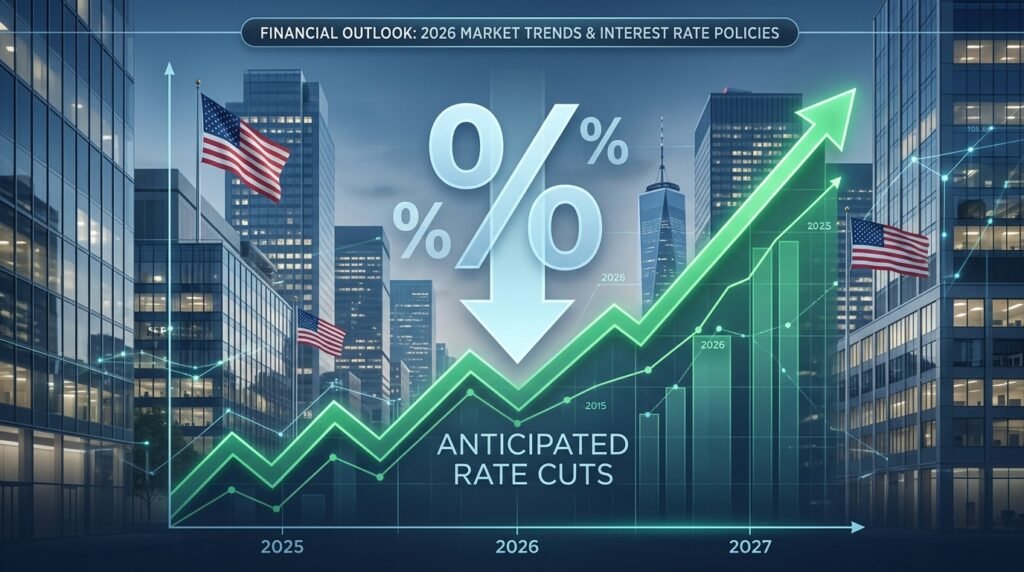
Here’s the reality: The Federal Reserve has already cut interest rates six times since September 2024, bringing the federal funds target range down to 3.50%–3.75% as of mid-2026. And according to the nonpartisan Congressional Budget Office (CBO), the Fed is expected to cut rates at least once more in 2026, with the rate potentially settling near 3.4% before 2028.
Why does this matter for everyday investors? Because lower interest rates create predictable winners in the stock market — specifically certain sectors that borrow heavily, pay dividends, or benefit from cheaper capital. If you know which stocks to target, you can position your portfolio ahead of the crowd.
But there’s a second problem most beginner investors face: brokerage fees and account minimums eating into returns before you even begin. The good news? In 2026, many top brokerages are offering zero-commission trading, cash bonuses, and transfer fee reimbursements — and there’s a clear step-by-step process to claim them.
In this guide, you’ll learn:
- Why 2026 rate cuts create specific stock market opportunities
- Which 5 U.S. stocks are best positioned to benefit
- How to open a brokerage account and claim fee waivers and cash bonuses
- Exactly which documents you’ll need to get started
Let’s dive in.
Section 1: What Are Interest Rate Cuts — And Why Do They Move the Stock Market?
Understanding the Fed’s Role (In Plain English)
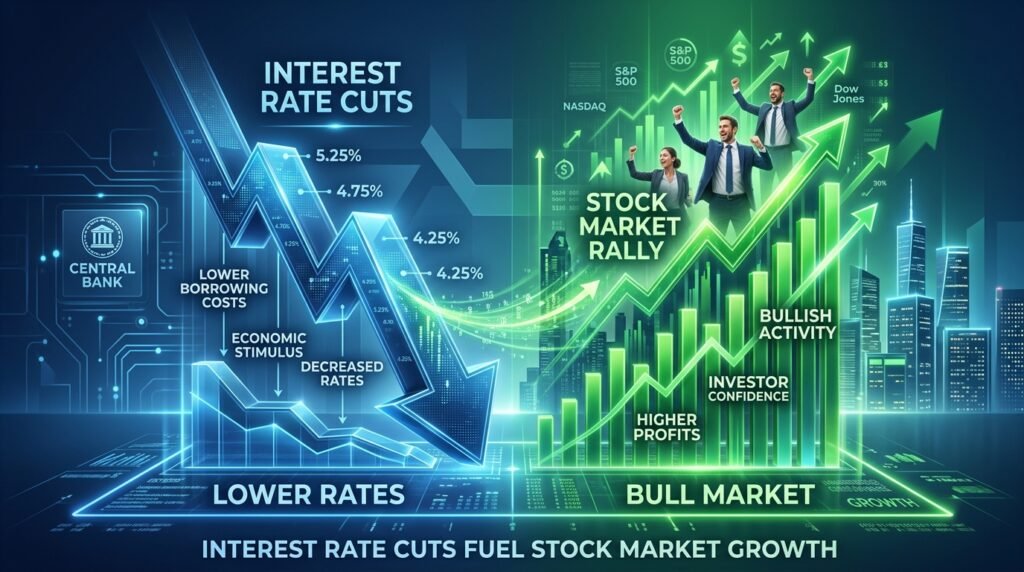
The Federal Reserve (commonly called “the Fed”) is America’s central bank. One of its most powerful tools is setting the federal funds rate — the interest rate at which banks lend money to each other overnight. This rate acts as a floor for borrowing costs across the entire economy.
When the Fed cuts this rate:
- It becomes cheaper for businesses to borrow money
- Mortgage rates tend to fall
- Bond yields decrease, making fixed-income investments less attractive
- Investors rotate into dividend-paying stocks and growth equities to find better returns
In short: money gets cheaper, and stocks that rely on cheap money or compete with bonds for investor attention tend to soar.
The 2026 Rate Environment — What the Data Says
Here’s where things stand as of June 2026:
| Metric | Current Status |
|---|---|
| Fed Funds Target Range | 3.50% – 3.75% |
| Rate Cuts Since Sept. 2024 | 6 cuts (–175 basis points total) |
| CBO Projected Terminal Rate | ~3.4% by end of Trump’s term |
| Fed Rate Cuts Expected in 2026 | 1–2 additional cuts projected |
| Inflation (PCE, 2026 Projection) | ~2.7% |
| GDP Growth Forecast (2026) | ~2.2% – 2.4% |
Key takeaway: The Fed has signaled at least one more cut in 2026. Sectors with high sensitivity to interest rates — utilities, REITs, financials, housing, and tech — are the prime beneficiaries. Investors who position themselves now, before cuts are fully priced in, can capture the most upside.
Section 2: Top 5 U.S. Stocks to Benefit from 2026 Interest Rate Cuts

These picks are based on current analyst consensus, sector fundamentals, and documented sensitivity to rate environments. They span a range of risk profiles appropriate for beginner-to-intermediate retail investors.
Important: All stock selections below are for informational and educational purposes only. Past performance does not guarantee future results. Always conduct your own research or consult a licensed financial advisor before investing.
Stock #1: Prologis (PLD) — The Industrial REIT Giant
Sector: Real Estate Investment Trust (REIT) Ticker: PLD (NYSE) Why It Benefits: REITs are among the most direct beneficiaries of rate cuts. They borrow heavily to acquire and develop properties, so lower rates directly reduce their cost of capital. They also compete with bonds for income-seeking investors — when bond yields fall, REITs’ dividend yields become more attractive.
Why Prologis Specifically:
- Prologis is the world’s largest industrial logistics REIT, owning approximately 1.3 billion square feet of warehouse and logistics space across e-commerce and supply chain hubs
- It has a “Strong Buy” analyst consensus with a projected EPS growth trajectory and 12 consecutive years of dividend growth
- Dividend yield: approximately 3.16% (as of early 2026)
- The e-commerce sector’s continued demand for warehousing creates a structural tailwind beyond just rate cuts
Ideal For: Income-focused investors who want dividends plus potential capital appreciation.
Stock #2: Digital Realty Trust (DLR) — The Data Center REIT
Sector: Data Center REIT Ticker: DLR (NYSE) Why It Benefits: Like all REITs, Digital Realty Trust benefits from falling rates through lower borrowing costs and increased investor appetite for yield. But DLR carries an additional structural tailwind: artificial intelligence.
Why Digital Realty Specifically:
- Owns and operates data centers globally, with surging demand driven by AI infrastructure build-out
- Carries a “Strong Buy” analyst consensus with a +34% analyst price target upside as of early 2026
- Dividend yield: approximately 3.3%, with annual dividend of about $4.88 per share
- In a rate-cut environment, data center REITs enjoy both the yield-seeking rotation and an AI-driven demand boom — a powerful double catalyst
Ideal For: Investors who want exposure to both rate-cut tailwinds AND the AI infrastructure megatrend.
Stock #3: NextEra Energy (NEE) — The Utility Powerhouse
Sector: Utilities Ticker: NEE (NYSE) Why It Benefits: Utility stocks are among the most interest-rate-sensitive equities in the entire market. They carry significant debt loads (to fund infrastructure), pay reliable dividends, and compete directly with bonds for income investors. When rates fall, utility stocks typically re-rate sharply higher.
Why NextEra Specifically:
- America’s largest electric utility, with massive renewable energy investments (solar, wind) creating a long-term growth story atop its regulated rate base
- Has increased its dividend for over 31 consecutive years — qualifying as a Dividend Aristocrat
- As the U.S. economy electrifies (EVs, AI data centers), NextEra sits at the intersection of rate-cut benefits and structural electricity demand growth
- The AI data center boom is reversing a decade of near-flat U.S. power demand growth, directly benefiting utilities with grid infrastructure
Ideal For: Conservative, income-oriented investors who want stability, dividends, and rate-cut upside.
Stock #4: AT&T (T) — The Debt-Heavy Telecom Turnaround
Sector: Telecommunications Ticker: T (NYSE) Why It Benefits: AT&T carries approximately $120 billion in net debt — which means every basis point of rate reduction directly reduces its interest burden. Nearly $9.3 billion of that debt was set to mature by mid-2026, making refinancing at lower rates a major near-term catalyst.
Why AT&T Specifically:
- The company has dramatically simplified its business (divesting WarnerMedia) and is now laser-focused on its core wireless and fiber businesses
- High dividend yield makes AT&T a “bond proxy” — when bond yields fall, high-yield stocks like T become much more attractive to income investors
- Rate cuts reduce the $3.3 billion in semi-annual interest expense AT&T was incurring in 2025, directly improving earnings power
- Fiber internet subscriber growth adds a growth catalyst to a traditionally defensive stock
Ideal For: Value investors looking for a high-yield, income-generating stock with meaningful rate-cut upside.
Stock #5: Freeport-McMoRan (FCX) — The Copper Play
Sector: Materials / Mining Ticker: FCX (NYSE) Why It Benefits: This is the most growth-oriented pick on the list. Copper demand is surging due to renewable energy infrastructure, EV manufacturing, and AI data center construction — all of which are copper-intensive. Rate cuts typically stimulate economic activity and manufacturing, boosting commodity demand.
Why Freeport-McMoRan Specifically:
- World’s largest publicly traded copper producer
- Copper supply is increasingly constrained while demand is structurally rising — Fidelity’s 2026 sector outlook specifically highlights copper stocks as beneficiaries of both rate cuts and energy infrastructure build-out
- Cheaper borrowing costs also reduce FCX’s capital expenditure burden as it develops new mining projects
- Silver and other materials are secondary tailwinds
Ideal For: Growth-oriented investors comfortable with commodity volatility who want exposure to the electrification and AI infrastructure super-cycle.
Quick Reference: 2026 Rate-Cut Stock Summary
| Stock | Ticker | Sector | Dividend Yield (Approx.) | Risk Level | Primary Catalyst |
|---|---|---|---|---|---|
| Prologis | PLD | Industrial REIT | ~3.2% | Moderate | Rate cuts + e-commerce demand |
| Digital Realty Trust | DLR | Data Center REIT | ~3.3% | Moderate | Rate cuts + AI infrastructure |
| NextEra Energy | NEE | Utilities | ~2.8% | Low-Moderate | Rate cuts + electrification |
| AT&T | T | Telecom | ~5.5% | Low-Moderate | Debt refinancing + fiber growth |
| Freeport-McMoRan | FCX | Materials | ~0.8% | Higher | Copper demand + rate stimulus |
Dividend yields are approximate figures based on publicly available data as of mid-2026 and are subject to change. Always verify with the company’s investor relations page before investing.
Section 3: How to Apply for Brokerage Fee Waivers — Step-by-Step Guide
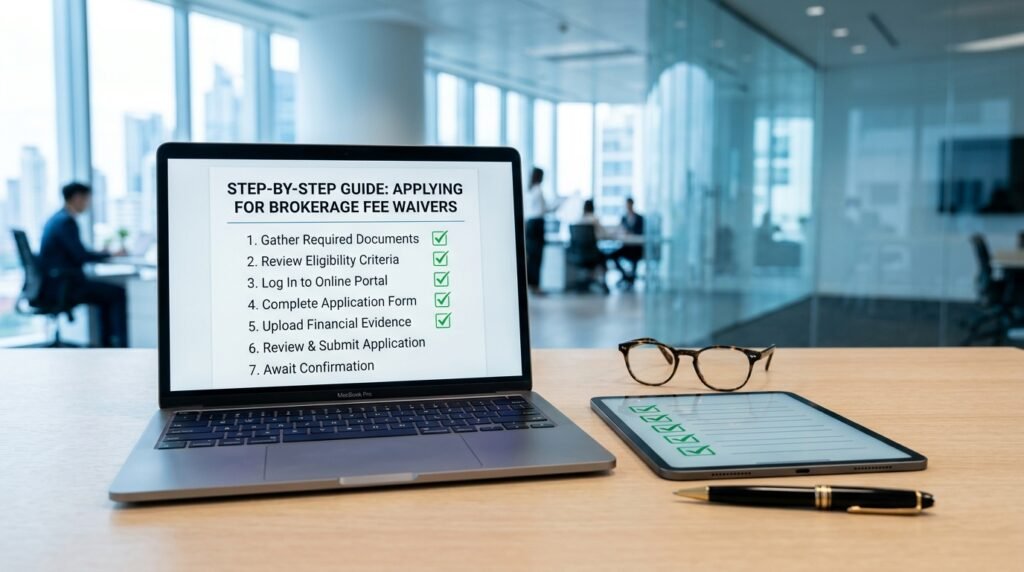
Here’s something the financial media rarely explains clearly: you don’t have to pay commissions to start investing in 2026. Most major U.S. brokerages now offer $0 commission on U.S. stocks and ETFs, plus cash bonuses and transfer fee reimbursements for new accounts.
Here’s exactly how to claim them.
Step 1: Choose the Right Zero-Commission Brokerage for Your Needs
Before anything else, pick a platform that matches your experience level and investment style:
| Brokerage | Best For | Commission on Stocks/ETFs | Notable 2026 Bonus |
|---|---|---|---|
| Charles Schwab | Beginners + full-service | $0 | Deposit $50, get $50 in free fractional shares (Stock Slices™) |
| Fidelity | Long-term investors, IRAs | $0 | Promotions vary; dividend match programs via Plynk (Fidelity-owned) |
| Robinhood | Mobile-first beginners | $0 | Free stock (up to $200) on sign-up; 3% IRA match with Gold plan |
| Webull | Active traders, research tools | $0 | Promotional offers for new deposits |
| SoFi Active Investing | All-in-one finance users | $0 | Integrated banking + investing with bonus offers |
Recommendation for beginners: Start with Charles Schwab or Fidelity for their educational resources, customer service, and reliable platforms. Use Robinhood if you prefer a streamlined mobile experience and want to start with very small amounts.
Step 2: Gather Your Required Documents Before You Apply
Have these ready — it makes the application take less than 10 minutes:
- Government-issued photo ID (driver’s license or U.S. passport)
- Social Security Number (SSN) — required for tax reporting purposes
- Bank account and routing number — to link your funding source
- Current mailing address — must match your ID
- Employment information (employer name, job title, income range) — for regulatory purposes
- Email address — for account verification and trade confirmations
Note: You must be at least 18 years old and a U.S. resident to open a standard individual brokerage account. Non-U.S. citizens may need to provide additional documentation (e.g., ITIN, visa information).
Step 3: Open Your Account Online (Takes 5–10 Minutes)
- Go directly to the brokerage’s official website (always type the URL directly; don’t click email links to avoid phishing scams)
- Click “Open an Account” or “Get Started”
- Select account type: For most beginners, choose Individual Brokerage Account (taxable). For retirement, choose Roth IRA (best for younger investors) or Traditional IRA
- Fill in your personal information — name, address, SSN, employment details
- Answer the investor profile questionnaire (risk tolerance, investment goals, trading experience) — answer honestly; this helps the broker suggest appropriate products
- Agree to the Customer Agreement and disclosures
- Verify your identity — most platforms do this automatically; some may ask you to upload a photo of your ID
Step 4: Fund Your Account and Unlock Your Bonus
- Link your bank account using your routing and account numbers
- Make your initial deposit — many platforms have $0 minimums, but bonuses often require a minimum deposit:
- Schwab: Deposit $50 → receive $50 in free fractional shares
- Robinhood: No minimum deposit needed for free stock sign-up bonus
- Schwab (referral bonus): Deposits of $500,000+ unlock up to $1,000 bonus
- Confirm the deposit — funds typically arrive in 1–3 business days via ACH transfer (electronic bank transfer)
- Once funds are available, the bonus credit (free stock or cash) is typically applied within 1 week
Step 5: Claim ACATS Transfer Fee Reimbursements (If Switching Brokers)
If you already have a brokerage account and want to switch to a new one without selling your investments, you can use an ACATS transfer (Automated Customer Account Transfer Service). This moves your stocks directly from one broker to another.
Here’s the important part: your old broker may charge an outgoing transfer fee (typically $75–$100), but your new broker will often reimburse it:
- Robinhood: Reimburses ACATS fees up to $75 when you transfer at least $7,500 in eligible assets
- Other brokers: Check the “promotions” or “offers” page before transferring — many competitive brokers actively reimburse transfer fees to win your business
How to request reimbursement:
- Complete your ACATS transfer to the new brokerage
- Keep your old brokerage statement showing the transfer fee charged
- Contact the new brokerage’s customer support (phone, chat, or secure message)
- Submit the statement showing the fee; reimbursement typically appears within 5–15 business days
Step 6: Place Your First Trade — Zero Commission
Once your account is funded:
- Search for the stock ticker (e.g., type “PLD” for Prologis)
- Click “Buy”
- Choose between:
- Market Order: Buys immediately at current price (best for liquid large-cap stocks)
- Limit Order: Sets a maximum price you’re willing to pay (better price control)
- Enter your dollar amount or number of shares — many platforms now allow fractional shares, so you can invest as little as $1 in any stock
- Review and confirm your order
- You’ll receive a trade confirmation via email or in-app notification
Commission charged: $0. You keep 100% of your investment.
Section 4: Required Documents Checklist

Before starting any brokerage application in 2026, confirm you have all of the following:
Personal Identification
- Valid U.S. driver’s license OR U.S. passport (not expired)
- Social Security Number (SSN) or Individual Taxpayer Identification Number (ITIN)
- Date of birth
Financial Information
- Bank name, routing number, and account number (for ACH funding)
- Employment status (employed, self-employed, retired, student, unemployed)
- Annual income range (approximate is fine — this is for regulatory compliance under FINRA rules)
- Net worth range (approximate — again, for regulatory suitability purposes)
Contact Information
- Current U.S. mailing address
- Valid email address
- Phone number (for 2-factor authentication)
For IRA Accounts (Retirement Accounts)
- Previous year’s earned income amount (you can only contribute up to what you earned, or the IRS annual limit — whichever is lower)
- 2026 IRA contribution limits: $7,000/year (under age 50); $8,000/year (age 50 and older — the extra $1,000 is called a “catch-up contribution”)
For ACATS Transfers (Switching Brokers)
- Most recent statement from your current brokerage (showing account number and asset values)
- Confirmation of any transfer fees charged by the outgoing broker (for reimbursement claim)
5 Common Mistakes Beginner Investors Make (And How to Avoid Them)
Mistake #1: Waiting for the “Perfect” Time to Start
Market timing is notoriously difficult even for professionals. A better approach: dollar-cost averaging — investing a fixed dollar amount (say, $100/month) regardless of market conditions. This automatically buys more shares when prices are low and fewer when prices are high.
Mistake #2: Ignoring Tax-Advantaged Accounts
If you’re investing for retirement, always max out your Roth IRA ($7,000/year in 2026) before putting money into a taxable brokerage account. Roth IRA growth is tax-free, and withdrawals in retirement are not taxed.
Mistake #3: Concentrating in One Stock or Sector
Even if you’re confident in Prologis, don’t put all your money into a single REIT. Diversify across sectors — a mix of the 5 stocks above, or a low-cost index ETF like the Vanguard Total Stock Market ETF (VTI), spreads your risk.
Mistake #4: Paying Unnecessary Fees
Zero-commission trading is the standard in 2026. If you’re still paying per-trade commissions, switch brokers. The ACATS transfer process described above makes this completely free at the new brokerage.
Mistake #5: Selling During Market Dips
Rate-cut environments are generally positive for stocks, but volatility still happens. History shows that investors who stay the course during dips consistently outperform those who panic-sell. Build a plan and stick to it.
Your Next Step: Start Investing in 2026’s Rate-Cut Opportunity
The window to position yourself ahead of 2026’s anticipated interest rate cuts is open right now. The five stocks covered in this guide — Prologis (PLD), Digital Realty Trust (DLR), NextEra Energy (NEE), AT&T (T), and Freeport-McMoRan (FCX) — represent a cross-section of sectors historically proven to benefit from falling rates, backed by current 2026 analyst data and economic forecasts.
And thanks to zero-commission brokerage platforms and active sign-up bonuses, the barrier to getting started has never been lower.
READY TO START? HERE’S YOUR ACTION PLAN:
Step 1: Choose a brokerage from the table above that fits your needs
Step 2: Gather your SSN, bank account info, and photo ID
Step 3: Open your account online (10 minutes or less)
Step 4: Claim your sign-up bonus by making your first deposit
Step 5: Research the 5 stocks above and make your first $0-commission trade
Frequently Asked Questions
Q: Do I need a lot of money to start investing in stocks? A: No. With fractional shares, you can start with as little as $1 on platforms like Schwab, Robinhood, and Fidelity. Many accounts have no minimum deposit requirement.
Q: Are zero-commission brokerages actually free? A: Stock and ETF trades are truly $0 commission at the major platforms. Brokerages make money through other means, including payment for order flow, margin interest, and premium subscription plans. For basic buy-and-hold investing, you will not pay trading commissions.
Q: What is a REIT, and do I get dividends? A: A Real Estate Investment Trust (REIT) is a company that owns income-producing real estate. By law, REITs must distribute at least 90% of their taxable income to shareholders as dividends. This makes them one of the best dividend-paying stock categories available to regular investors.
Q: Will interest rate cuts definitely happen in 2026? A: The Congressional Budget Office and multiple major financial institutions project at least one more cut in 2026, but this is not guaranteed. The Fed’s decisions depend on inflation and employment data. Always invest based on your own financial goals, not solely on rate cut predictions.
Q: Is my money safe in a brokerage account? A: Brokerage accounts at member firms are protected by the Securities Investor Protection Corporation (SIPC) up to $500,000 (including $250,000 for cash claims) in the event a brokerage firm fails. SIPC does not protect against investment losses due to market fluctuations.
As you know, nothing in life comes easily. I hope you find this information useful. Thank you.
Disclaimer
This blog post is for informational and educational purposes only and does not constitute financial, investment, legal, or tax advice. The stock picks, brokerage promotions, fee structures, and regulatory figures mentioned in this article are based on publicly available information as of June 2026 and are subject to change at any time.
All investing involves risk, including the potential loss of principal. Past performance of any stock or sector does not guarantee future results. Interest rate forecasts are projections by third-party institutions (CBO, Goldman Sachs, iShares, Fidelity) and are not guaranteed outcomes.
Brokerage bonuses, fee structures, transfer reimbursements, and account minimums are subject to change by each brokerage at any time. Always verify current terms and conditions directly on each brokerage’s official website before opening an account.
IRA contribution limits are set by the IRS and are accurate as of 2026. Please consult the IRS website at irs.gov or a qualified tax professional for personalized tax guidance.
SIPC protection information is provided for general reference only. For complete information, visit sipc.org.
The author and publisher of this post are not registered investment advisors, broker-dealers, or licensed financial planners. Readers should consult a licensed financial professional before making any investment decisions.
Leave a Reply